Nonfiction Book Bans Raise New Questions About What Students Can Learn
New reports show nonfiction is becoming a larger part of school and library book disputes, shifting the debate toward access to history, biography and factual learning.
Save Article
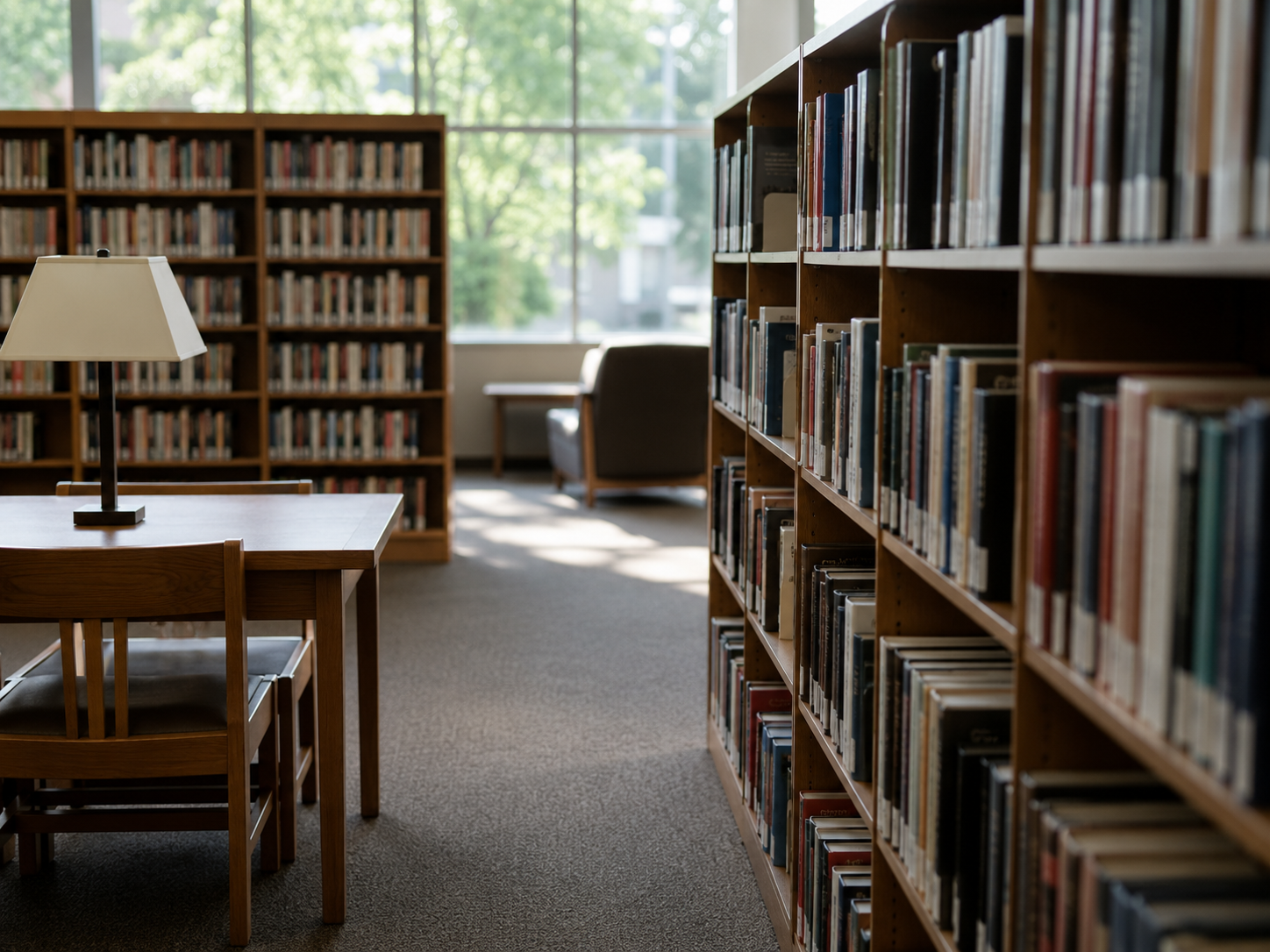
Recent reports show nonfiction books are becoming a larger part of school and library access disputes. Editorial illustration by TheDailyGlobe.
Key Facts
- PEN America reported that nonfiction made up 29% of unique titles banned in public schools during the 2024-2025 school year.
- The American Library Association reported 4,235 unique titles challenged in 2025 across public, school and university libraries.
- PEN America has characterized the rise in nonfiction bans as part of a broader pattern of anti-intellectualism.
- Book challenges affect schools and libraries across multiple states, though local processes and definitions can vary.
- PEN America school-ban data and ALA library-challenge data are related but not identical measures.
A school library is often where students first meet subjects that are bigger than the classroom: history, science, biography, civil rights, public health, religion, war, government, identity and the private lives of people who shaped public life.
That is why the latest book-ban data matters beyond the usual argument over controversial novels. New reporting and advocacy data show nonfiction titles have become a larger part of school and library access disputes, raising a more specific question: what happens when fights over books move deeper into the shelves students use to understand real people and real events?
The answer is not as simple as saying every challenge is the same or every local decision has the same motive. Parents, school boards, librarians, teachers and advocacy groups often approach these disputes from different concerns. But the shift toward nonfiction changes the stakes because nonfiction is tied directly to factual learning, civic context and students' exposure to documented experience.
Why Nonfiction Changes the Book-Ban Debate
Book disputes have often been discussed through fiction: novels assigned in English class, young-adult books in school libraries, or stories that parents and officials say are not age-appropriate. Those debates can be serious, but nonfiction brings a different issue into view.
Nonfiction books often help students understand how events happened, how people lived, how institutions worked and how public arguments developed. A removed nonfiction book may mean less access to biography, history, science writing, memoir, journalism or civic explanation.
That does not mean every challenged nonfiction title is automatically appropriate for every grade level or every shelf. Schools routinely make age, curriculum and collection decisions. The harder question is whether the review process is narrow, transparent and educationally grounded, or whether broad removal campaigns are shrinking the range of factual material students can encounter.
What the Numbers Show
PEN America reported that nonfiction represented 29% of unique titles banned in public schools during the 2024-2025 school year. The organization has described the trend as a sign of anti-intellectualism, a judgment that should be understood as PEN America's interpretation of the data, not a neutral government finding.
The American Library Association, looking more broadly at public, school and university libraries, reported 4,235 unique titles challenged in 2025. That figure provides national context, though it should not be treated as the same measurement as PEN America's school-ban data. A challenge, a restriction, a review and a ban can mean different things depending on the organization counting them and the local process involved.
That difference matters. A title temporarily pulled for review is not always the same as a book permanently removed from student access. A parent complaint is not always the same as a districtwide policy. Careful reporting has to hold those distinctions in place.
The Local Process Still Matters
Book access disputes often begin locally, and local details can change the meaning of a case. Some challenges focus on age appropriateness. Some focus on sexual content, race, gender, religion, violence, political themes, or how history is presented. Some involve school board policies. Others involve library collection rules or state laws.
That is why it is too broad to describe all parents, librarians or school boards as acting from one motive. A parent may have a narrow concern about one book. A librarian may be defending professional collection standards. A school board may be responding to state rules, local pressure or its own policy judgment. The public argument becomes less useful when those differences are flattened.
Still, nonfiction removals deserve special attention because they can affect how students encounter factual material about the world. Even when a local review is justified, the public should be able to see what standard is being applied, how long the review lasts and whether students retain access to other credible materials on the same subject.
What Remains Unclear
Several important questions remain unsettled. It is not always clear how many removals are temporary versus long-term. Districts may classify restrictions, challenges, reviews and removals differently. Public reporting may also depend on what local officials disclose and what advocacy groups are able to track.
The longer-term effect on students is also harder to measure. A single book's removal may not erase a subject from a school. But repeated removals across topics can narrow what students are likely to find when they browse, research or ask questions outside a formal lesson.
That is the practical concern for families and communities. The debate is not only about whether one title stays on one shelf. It is also about whether students have access to a broad, credible nonfiction collection that helps them learn about the real world with context.
What to Watch Next
The next signals will come from state laws, district policies, court challenges and annual reports from library and free-expression organizations. Those sources will help show whether nonfiction continues to make up a larger share of disputes or whether the trend levels off.
Readers should also watch how local districts define their processes. Are books removed before review or after? Are decisions public? Are librarians and teachers involved? Are students left with credible alternatives on the same subject?
Those questions are less dramatic than the loudest version of the book-ban debate, but they are more useful. If nonfiction is becoming a bigger target in school and library disputes, the issue is not only what students are allowed to read. It is what students are allowed to learn about the world they are preparing to enter.
Reporting note: Reporting draws on cultural institution materials, education and library reports, reputable reporting, public records, and reviewed background materials. This article was produced with AI-assisted research and reviewed by an editor before publication.