Cooking Keeps Family History Alive
Family recipes are more than instructions. They can carry memory, place, migration, grief, celebration and belonging across generations.
Save Article
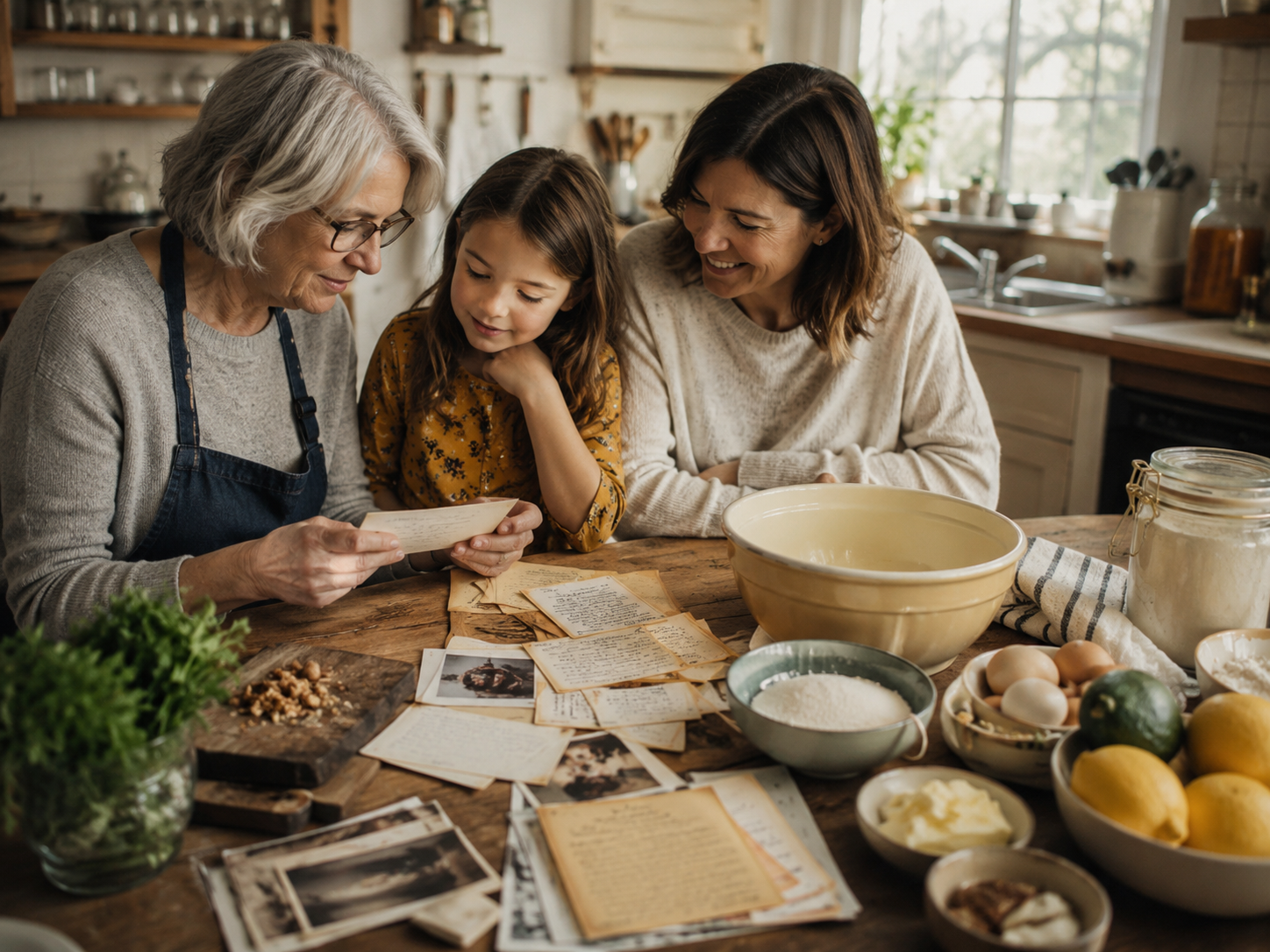
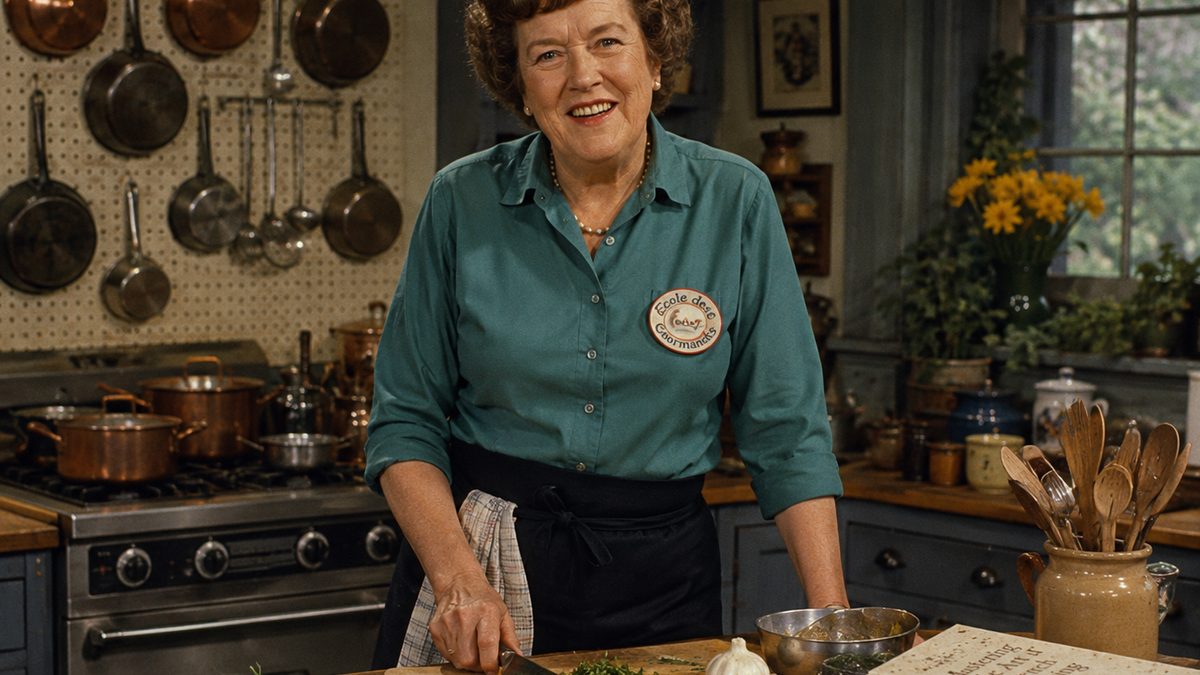
Family recipes can carry memory, place and tradition across generations. Editorial illustration by TheDailyGlobe.
Key Facts
- The Smithsonian’s National Museum of American History treats food as a way to understand U.S. history and culture.
- USDA’s Eating and Health Module of the American Time Use Survey collects information related to grocery shopping, eating patterns and meal preparation.
- The Bureau of Labor Statistics publishes American Time Use Survey results that track how people spend time across work, household activities and leisure.
- Recent research using American Time Use Survey data has examined changes in home cooking among U.S. adults from 2003 to 2023.
Most families have at least one dish that carries more than flavor.
It may be a soup a grandmother made without measuring, a casserole that appeared at every funeral, a holiday bread that only one uncle knew how to get right, a pot of beans that stretched through a hard week, or a dessert remembered less for the recipe than for the person who set it on the table.
Cooking can feel ordinary, especially on a tired weeknight. It can be a chore, a budget strategy, a source of stress or one more task between work, school, errands and sleep. But inside the most ordinary meals, families often preserve history.
A Recipe Can Be a Family Record
A recipe card can look simple: ingredients, steps, oven temperature, a note in the margin. But many family recipes are closer to records than instructions. They can tell where people came from, what they could afford, who taught whom, what was grown nearby, what was saved for special occasions and what had to be stretched when money was tight.
Food history works that way on a larger scale too. The Smithsonian’s National Museum of American History uses food to explore American history and culture, a reminder that meals are not separate from the country’s story. What people cook can reflect migration, labor, region, agriculture, technology, trade, religion, class and family life.
The same is true in a home kitchen, just on a smaller and more personal scale. A family recipe may carry a place name no one visits anymore, a substitution made during lean years, a holiday practice brought across a border, or a flavor tied to a neighborhood that changed long ago.
Not Every Tradition Is Written Down
Some food memory lives on paper. Much of it does not.
Many people learned by standing nearby: watching dough by feel, listening for the sound of onions hitting hot oil, seeing how much spice fit in a palm, knowing when rice was ready by smell or when a sauce had the right shine. Those lessons can be hard to record because they were never taught as measurements.
That is part of what makes family cooking powerful and fragile. A dish can survive for decades through repetition, then disappear when the person who knew it best stops cooking. The recipe may not be lost because anyone meant to lose it. It may be lost because no one asked in time, or because life got busy, or because the next generation did not know which ordinary meal would later feel irreplaceable.
Modern Life Changes the Table
Federal time-use data helps show why cooking cannot be separated from daily life. USDA’s Eating and Health Module of the American Time Use Survey collects data related to food activities, while BLS publishes broader American Time Use Survey results showing how people divide time among work, household activities and leisure.
That matters because home cooking depends on time, money, energy, access and confidence. A person working unpredictable hours may experience cooking differently than a retiree, a single parent, a college student, a farm family, a recent immigrant, a shift worker or a household with several generations under one roof.
Recent research using American Time Use Survey data has examined changes in home cooking among U.S. adults from 2003 to 2023. The emotional meaning of cooking cannot be fully captured by time-use data, but the data helps ground a basic point: cooking is not just culture in the abstract. It competes with the real hours of the day.
Food Memory Is Not Always Simple Nostalgia
It is tempting to romanticize family cooking as if every kitchen were warm, generous and uncomplicated. Real life is rarely that neat.
Some people inherit recipes with joy. Others inherit silence, scarcity, pressure, gender expectations, grief or complicated family histories. Some families had abundant tables. Others made meals out of necessity and sacrifice. Some traditions were preserved proudly. Others were changed, hidden or lost through migration, assimilation, poverty, illness or conflict.
A serious culture story should leave room for all of that. Cooking can be love, but it can also be labor. A recipe can be a gift, but it can also carry the memory of who was expected to do unpaid work. A holiday dish can bring people together while also reminding them who is missing.
That complexity does not weaken the meaning of family food. It makes the meaning more honest.
What Readers Can Notice
The next time an old family dish appears, it may be worth asking more than whether it tastes right.
Who first made it? Was it tied to a region, a church, a farm, a country, a holiday, a hardship or a person? Was it written down, or carried by memory? Did the recipe change because ingredients were expensive, unavailable or replaced in a new place? Who did the cooking, and who got the credit?
Those questions do not turn dinner into homework. They simply recognize that ordinary food can hold history before anyone thinks to preserve it.
Community cookbooks, local food archives, oral histories and family recipe boxes all matter for the same reason: they catch pieces of daily life that formal history often misses. They preserve what people actually made, shared, stretched, celebrated and remembered.
Not every recipe survives. Not every tradition stays unchanged. Maybe that is part of the story too. Families move, blend, adapt and improvise. A dish passed down through generations may not be exactly the same dish anymore, but it can still carry the handprint of the people who made it before.
Cooking is not only about feeding the present. Sometimes it is how families keep speaking to the future.
Reporting note: Reporting draws on Smithsonian food-history materials, USDA and BLS time-use resources, recent home-cooking research, and reviewed background materials. This article was produced with AI-assisted research and reviewed by an editor before publication.