Colbert’s Final Week Marks a Turning Point for Late-Night Television
Stephen Colbert’s final week on CBS is more than the end of one show. It marks the close of a familiar broadcast habit as late-night television adjusts to clips, streaming, podcasts, and changing audience routines.
Save Article
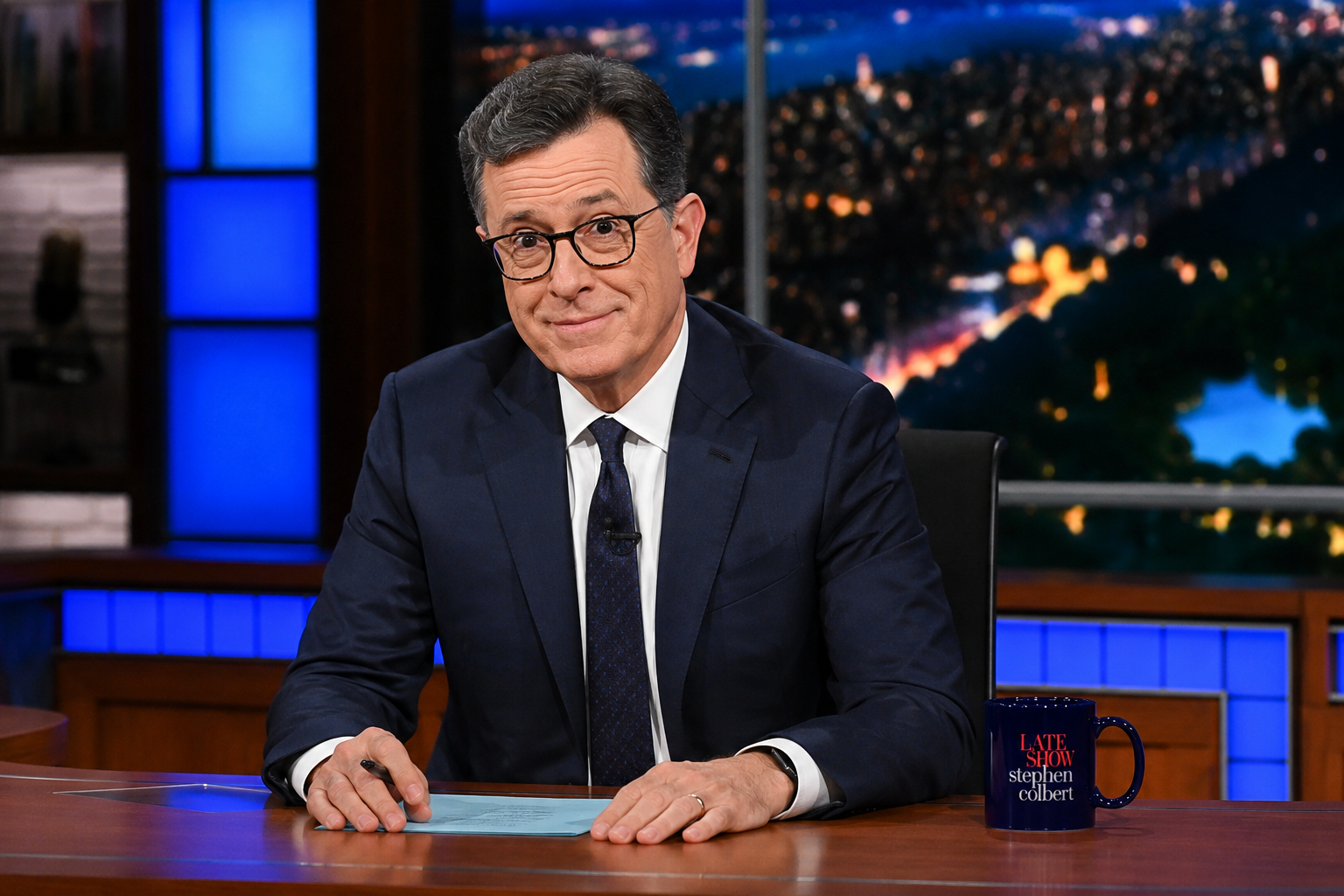
Stephen Colbert’s final week on The Late Show comes as traditional late-night television faces changing audience habits. Image generated for TheDailyGlobe.
Key Facts
- CBS previously announced that The Late Show with Stephen Colbert would end in May 2026 and that the Late Show franchise would be retired.
- CBS’s official show page says Colbert took over as host, executive producer, and writer on Sept. 8, 2015.
- Entertainment Weekly reported on May 19 that Colbert’s final episode would air May 21 and would be extended.
- Current reporting frames the end of the show as part of a broader shift in late-night television economics and audience behavior.
- CBS has not disclosed every internal business factor behind the decision.
Stephen Colbert’s final week on CBS is not only a farewell to one host. It is also a marker for a kind of television that once helped set the rhythm of American nights.
CBS previously announced that The Late Show with Stephen Colbert would end in May 2026 and that the Late Show franchise would be retired. CBS’s official show page says Colbert took over as host, executive producer, and writer on Sept. 8, 2015. Entertainment Weekly reported on May 19 that Colbert’s final episode would air May 21 and would be extended.
For viewers, the story is bigger than whether they watched Colbert every night. Late-night television used to be built around appointment viewing: a monologue, guests, a band, a desk, and the shared sense that many people were watching roughly the same thing at roughly the same time. That habit has been weakening for years as comedy, interviews, political commentary, and celebrity moments move through clips, podcasts, streaming platforms, and social media.
The End of a Familiar TV Routine
The Late Show franchise carried a particular idea of television: one network, one time slot, one host, and a nightly audience that knew where to find the show. Colbert inherited that tradition in 2015, following David Letterman’s long run, and kept it alive during a decade when politics, news, celebrity culture, and internet habits kept changing around him.
That is why the final week feels larger than one cancellation. A show can end for financial, business, programming, or audience reasons, and those factors can overlap. But the retirement of the franchise itself is the clearest cultural signal. CBS is not simply changing hosts. It is closing a long-running broadcast format under that name.
Late-night shows still produce moments people recognize. A sharp monologue can travel widely. A celebrity interview can be clipped. A musical performance can find a second life online. But the way many viewers encounter those moments has changed. They may see one segment the next morning, not sit through a full episode at night.
Why Late-Night Looks Different Now
The late-night business was built for a media world with fewer choices. Viewers watched broadcast television, advertisers paid for that attention, and hosts became familiar because they appeared in living rooms night after night.
That model has been strained by changing habits. Viewers can now get jokes from TikTok, interviews from podcasts, commentary from YouTube, and clips from social feeds before they ever turn on a television. Younger audiences especially may know late-night hosts through short segments rather than full broadcasts.
This does not mean late-night comedy has disappeared. It means the center of gravity has moved. The desk and monologue still exist, but they compete with formats that are cheaper, faster, more niche, and easier to share. That changes the value of a nightly broadcast show, even when the host remains well known.
The Politics Should Be Handled Carefully
Colbert’s show was often political, and some criticism of CBS’s decision has included political-motive claims. Those claims should be handled carefully. The available source basis for this draft does not support treating political motive as confirmed fact.
A useful article does not need to turn the final week into a partisan fight. The clearer story is about media change. Colbert’s run intersected with a period when late-night hosts became more openly political, but the end of the show also reflects broader pressure on the economics and habits of late-night television.
That distinction matters because it keeps the article from becoming narrower than the event itself. Viewers may have strong opinions about Colbert’s comedy or politics. But the retirement of The Late Show franchise is also about how broadcast television is adapting to a fragmented audience.
What Remains Unclear
CBS has not disclosed every internal business factor behind the decision. Public reporting can describe the broader pressures facing late-night television, but it cannot fully reconstruct every calculation inside the company.
It also remains unclear what fills the cultural space left behind. Late-night comedy may keep moving toward clips and digital distribution. Networks may try different formats. Hosts, writers, and producers may find audiences through podcasts, streaming, live shows, or social platforms. The final week answers when Colbert’s run ends, but not what replaces the old late-night habit.
That uncertainty is part of why the story matters. A show can have a final episode. A viewing habit fades more slowly.
Why Readers Should Care
Late-night television has long been one way Americans processed the day. It mixed jokes, interviews, politics, music, celebrity, and public mood into a familiar format. Even people who did not watch every night understood the role these shows played.
Colbert’s final week is a reminder that shared media rituals are harder to maintain now. Audiences are more scattered. Attention moves faster. A joke may reach millions of people, but not necessarily through the broadcast that produced it. That changes how comedy spreads and how cultural moments form.
The practical takeaway is simple: the end of The Late Show with Stephen Colbert is not just the end of an 11-year hosting run. It is also the close of a broadcast franchise that belonged to an older media order. Late-night will continue in some form, but the era when one nightly show could reliably gather a mass audience around the same desk is harder to sustain.
That makes Colbert’s final week worth watching with some perspective. It is a farewell, but it is also a signpost. The comedy, commentary, and interviews are not going away. They are moving through a different media system.
Reporting note: Reporting draws on CBS announcements and show materials, Entertainment Weekly reporting, Washington Post media analysis, and reviewed background materials. This article was produced with AI-assisted research and reviewed by an editor before publication.