Retail Earnings Show Shoppers Are Still Spending, But Selectively
Recent results from major retailers suggest shoppers have not stopped spending, but they are making sharper choices about where their money goes.
Save Article
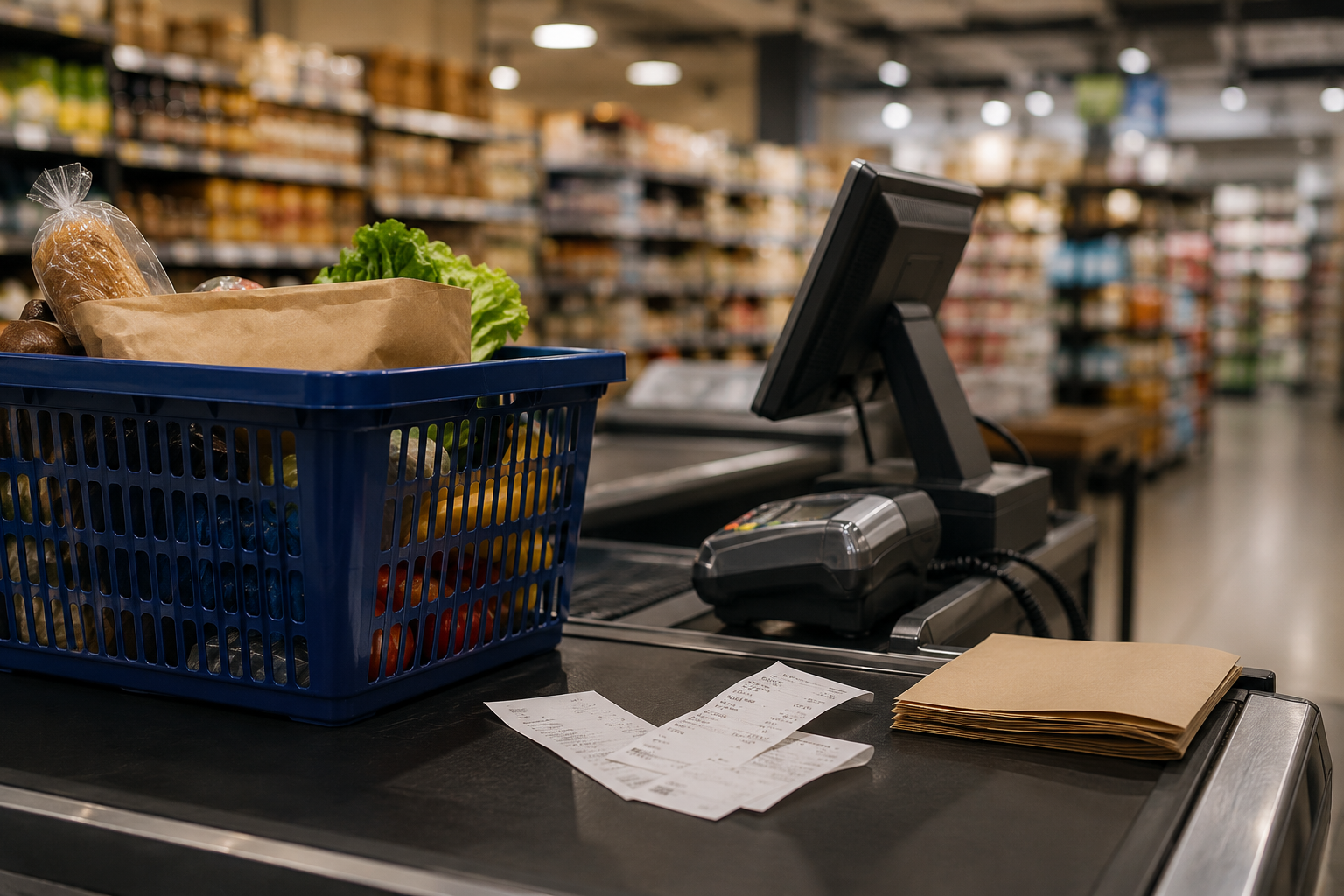
Retail earnings offer clues about where shoppers are still spending and where household pressure may be changing choices. Editorial illustration by TheDailyGlobe.
Key Facts
- AP reported that Dollar Tree, Kohl's, Best Buy, Hormel and Snowflake helped support market gains with better results.
- Dollar Tree reported Q1 2026 comparable store net sales growth of 3.5%.
- Dollar Tree reported Q1 adjusted diluted earnings per share from continuing operations of $1.74.
- Best Buy reported higher profit and sales, with demand cited in gaming consoles, computing, mobile phones and services.
- Business reporting cited housing-market weakness as a pressure point for appliance demand.
Shoppers have not simply shut their wallets. They are choosing more carefully.
That is the useful signal inside the latest retail earnings. AP reported that companies including Dollar Tree, Kohl's, Best Buy, Hormel and Snowflake helped support market gains with better results. Dollar Tree reported Q1 2026 comparable store net sales growth of 3.5%, while Best Buy reported higher profit and sales, with business reporting pointing to demand in gaming consoles, computing, mobile phones and services.
Those numbers do not mean every household is comfortable. They do suggest that consumers are still spending when the value, need or timing makes sense. The more important question is where that spending is holding up, where it is weakening, and what company results can actually tell readers about household pressure.
What Retailers Are Seeing
Retail earnings are one of the cleaner windows into consumer behavior because they show where money is actually moving. Surveys can tell us how people feel. Earnings show what companies are selling, how margins are holding up and whether shoppers are responding to prices, promotions or specific product categories.
Dollar Tree's results point to continued demand in discount retail. The company reported 3.5% comparable store net sales growth for Q1 2026 and adjusted diluted earnings per share from continuing operations of $1.74. Because those are company-reported metrics, they should be read as part of the company's financial picture, not as a full measure of household health.
Still, discount-store demand can say something real about shoppers. When budgets are tight, consumers may look harder for lower prices, smaller purchases or stores where they feel their dollars stretch further. That can support discount retailers even when families are cautious elsewhere.
Electronics Demand Is More Uneven
Best Buy's results show another side of the consumer picture. The company reported higher profit and sales, and business reporting cited demand in gaming consoles, computing, mobile phones and services.
That does not mean shoppers are buying everything equally. Electronics spending can depend on replacement cycles, promotions, new product releases, school and work needs, and whether consumers feel comfortable making larger purchases.
Housing weakness is one reason the picture is mixed. Business reporting cited the housing market as a pressure point for appliance demand. That makes sense: when fewer people move, remodel or buy homes, demand for some big-ticket household items can soften.
What Earnings Do Not Prove
Stronger retail earnings should not be turned into a broad claim that consumers are financially healthy. Company results can improve for many reasons: better inventory management, cost cuts, higher prices, promotions that pull demand forward, strong performance in a few categories or easier comparisons with a weaker period.
They also do not show all income groups equally. Higher-income shoppers may continue spending while lower-income households cut back. Some consumers may keep buying essentials while delaying discretionary purchases. Others may be spending with credit rather than income growth.
That is why the best read is selective spending, not across-the-board strength. The latest results show resilience in certain companies and categories, but not a clean bill of health for every household.
Why This Matters for Households
Retailers are watching the same pressures families are feeling: prices, rent, mortgage rates, credit-card balances, insurance costs, gas prices and job security. When household budgets tighten, shoppers often make tradeoffs before they stop spending entirely.
That can mean switching stores, buying private-label products, waiting for sales, delaying appliances, stretching older electronics longer or choosing one big purchase instead of several smaller ones.
For companies, those choices show up in sales, margins and guidance. For readers, they show how the economy can look steady in the aggregate while still feeling strained month to month.
What to Watch Next
The next signals will come from retail sales data, company guidance updates, promotional activity, appliance demand and consumer-confidence readings. Together, they will help show whether shoppers are staying resilient or becoming more defensive.
Readers should also watch whether retailers talk more about trade-down behavior, smaller basket sizes, weaker discretionary demand or pressure in big-ticket categories. Those details often say more about household behavior than a single earnings headline.
For now, the picture is not that shoppers are fine or that shoppers are tapped out. It is more practical than that: people are still spending, but many appear to be choosing carefully. Retail earnings are showing the choices, not ending the debate over household pressure.
Reporting note: Reporting draws on company investor materials, business reporting, market reporting, and reviewed background materials. This article was produced with AI-assisted research and reviewed by an editor before publication.