High Gas Prices Put New Pressure on Memorial Day Travel
Gasoline prices are back near the center of household-budget worries as Memorial Day travelers face the highest pump prices in years.
Save Article
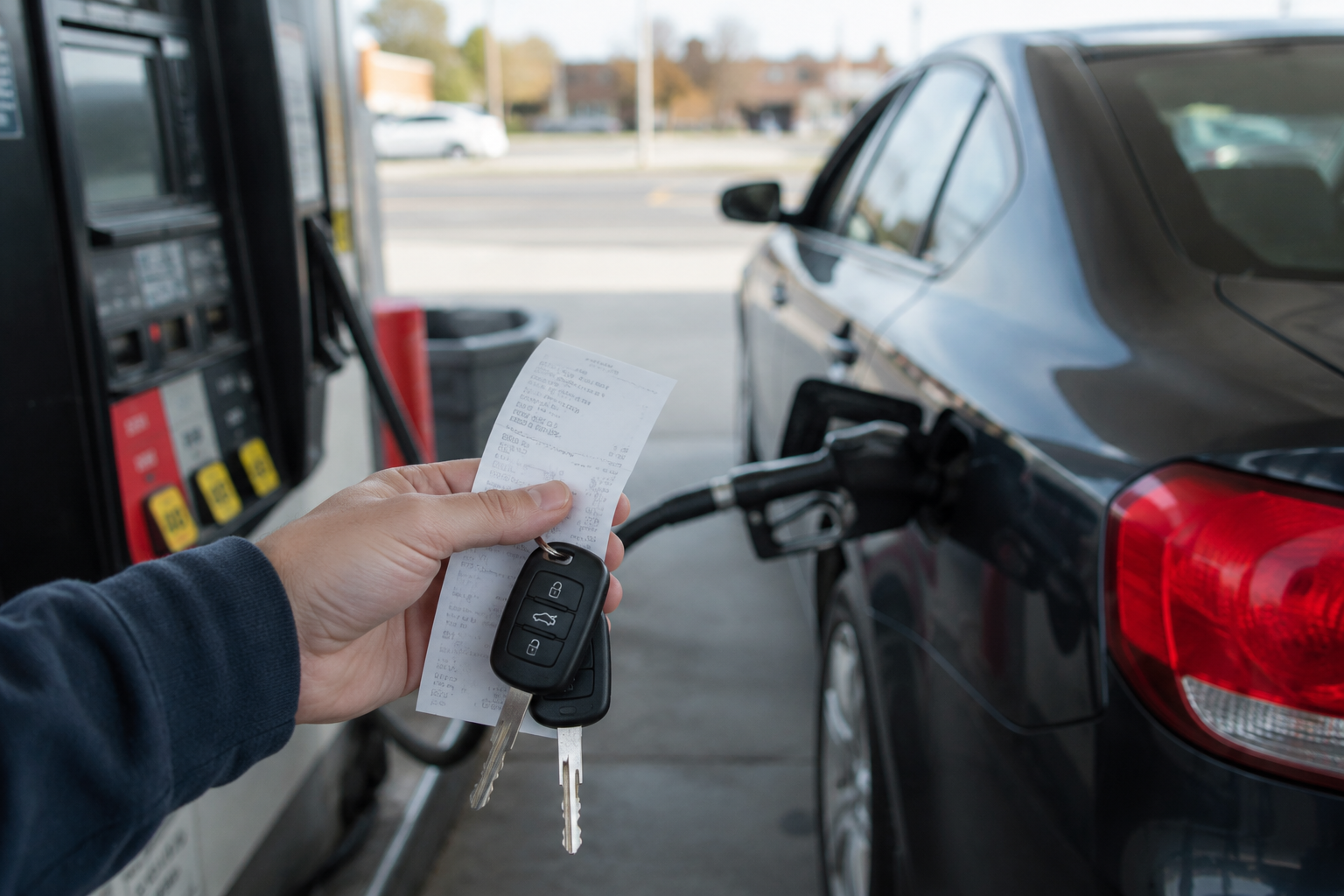
Gasoline prices are back near the center of household-budget worries as Memorial Day travelers face the highest pump prices in years. Editorial illustration by TheDailyGlobe.
Key Facts
- AAA listed the national average for regular gasoline at $4.564 on May 21, 2026.
- ConsumerAffairs reported that Memorial Day weekend travelers face the highest gas prices in four years.
- CBS News reported U.S. motorists were facing the highest gasoline prices since 2022 heading into the summer driving season.
- AAA’s fuel-price dashboard tracks national and state-level gasoline prices that can vary widely by region.
- Higher fuel prices can affect travel budgets, commuting costs and transportation-linked business expenses.
Gasoline prices are putting new pressure on Memorial Day travel plans, with the national average for regular gas at $4.564 a gallon on May 21, according to AAA.
That price lands at a difficult moment for households. Memorial Day weekend is the unofficial start of the summer driving season, when many families are already paying for hotels, meals, tickets, car maintenance and time away from work. Higher fuel costs do not necessarily cancel trips, but they make the math harder.
For many readers, gas prices are not an abstract economic signal. They are one of the few prices people see in large numbers from the road, and one of the costs that can hit both vacation travel and ordinary routines. A higher pump price can affect a long weekend drive, a daily commute, delivery costs and the price pressure businesses feel moving goods and workers around.
Why Memorial Day Prices Matter
Memorial Day weekend is a useful moment to understand gas prices because it brings two things together: a large number of people on the road and a season when fuel demand usually gets more attention. When gas prices are high at the start of that period, households notice quickly.
ConsumerAffairs reported that holiday travelers are facing the highest gas prices in four years, with the national average hovering around $4.56 a gallon. CBS News reported that motorists were facing the highest gasoline prices since 2022 heading into the summer driving season.
Those figures do not mean every household is paying the same amount. Gasoline is one of the most regional prices in the economy. State taxes, refinery access, distribution costs, local competition and regional fuel requirements can all affect what drivers see at the pump. The national average is a broad signal, not a receipt for every family.
Still, the national number matters because it captures the direction of the pressure. A family planning a road trip may not care about the national average in theory. But if the price at the local station is also up, the trip budget can change fast.
How Gas Prices Hit Household Budgets
Gas is different from many other purchases because it is both visible and hard to avoid. Some households can delay a new appliance, skip a restaurant meal or cut a subscription. It is harder to avoid fuel when work, school, medical visits, errands or family responsibilities depend on driving.
For Memorial Day travelers, the effect can be straightforward. A longer trip costs more when every gallon costs more. That can leave less room for meals, lodging, entertainment or other spending during the trip. For households already stretched by other prices, even a holiday weekend can become a tighter calculation.
Commuters feel the pressure differently. A family that drives the same route to work each week may not change behavior much in the short term, but the monthly cost rises anyway. For workers who cannot easily switch to transit, remote work or a closer job, fuel prices can act like a steady drain.
The pressure is often heavier for households that live farther from jobs, schools, grocery stores or medical care. A high gas price does not land evenly. It can be a minor annoyance for one driver and a major budget problem for another.
Why Businesses Care Too
Fuel costs do not stop with family cars. Many businesses depend on transportation, whether through delivery vans, service trucks, freight carriers, ride-share drivers, construction crews, sales routes or employees commuting to job sites.
When fuel becomes more expensive, some businesses absorb the cost for a while. Others pass part of it along through delivery fees, service charges, higher prices or tighter margins. That process is not always immediate, and it does not look the same across industries, but transportation costs are part of how everyday prices move through the economy.
Small businesses can feel the squeeze quickly. A local contractor, florist, restaurant, repair service or delivery-heavy business may not have much room to ignore fuel costs. Larger companies may have more ways to manage the increase, but they still have to account for it.
That is why gas prices can affect inflation expectations even when they are only one part of the consumer budget. People see the signs. Businesses see the receipts. The cost is familiar, repeated and easy to compare with last month or last year.
What Remains Unclear This Summer
The central uncertainty is whether prices keep rising through the summer or ease if oil prices fall. CBS News reported that analysts expect fuel prices could continue rising during the summer driving season, but forecasts depend on conditions that can change.
Fuel prices are affected by more than one cause. Crude oil prices, refinery operations, seasonal fuel blends, demand, taxes, distribution problems and global events can all matter. That makes it risky to blame one factor unless the evidence clearly supports it.
Regional differences also make the story uneven. Some drivers may face prices well above the national average, while others may pay less. That means the summer gas-price story will not feel the same in every state or every household.
It is also unclear how much high gas prices will change travel behavior. Some families may shorten trips, combine errands or spend less elsewhere. Others may travel anyway because plans are already made, school is ending, or family events are fixed on the calendar. Higher prices create pressure, but they do not automatically produce one uniform response.
The Bigger Budget Picture
The reason gas prices draw so much attention is not only the price itself. It is what the price represents inside a household budget. Fuel sits at the intersection of work, family, travel and everyday logistics.
A higher pump price can make a holiday trip more expensive, but it can also make the ordinary week feel more costly. That is why gas prices can quickly become part of a broader conversation about whether paychecks are keeping up with daily life.
For readers, the useful takeaway is not panic and not prediction. It is clarity. Gas prices are high heading into Memorial Day weekend. The national average does not describe every local experience. The summer path remains uncertain. But the pressure is real for households and businesses that depend on driving.
Memorial Day travel will still happen. Families will still visit relatives, head to beaches, drive to parks and take long-planned trips. The difference this year is that the cost of filling the tank is harder to ignore, and for many households, that makes the rest of the budget feel tighter before summer has even begun.
Reporting note: Reporting draws on AAA fuel-price data, ConsumerAffairs reporting, CBS News reporting, and reviewed background context on household transportation costs. This article was produced with AI-assisted research and reviewed by an editor before publication.