Nebraska Monitors Hantavirus Exposure After Cruise Passenger Tests Positive
Federal and state health officials said monitoring and quarantine efforts are underway after a cruise passenger returning to Nebraska tested positive for hantavirus exposure.
Save Article
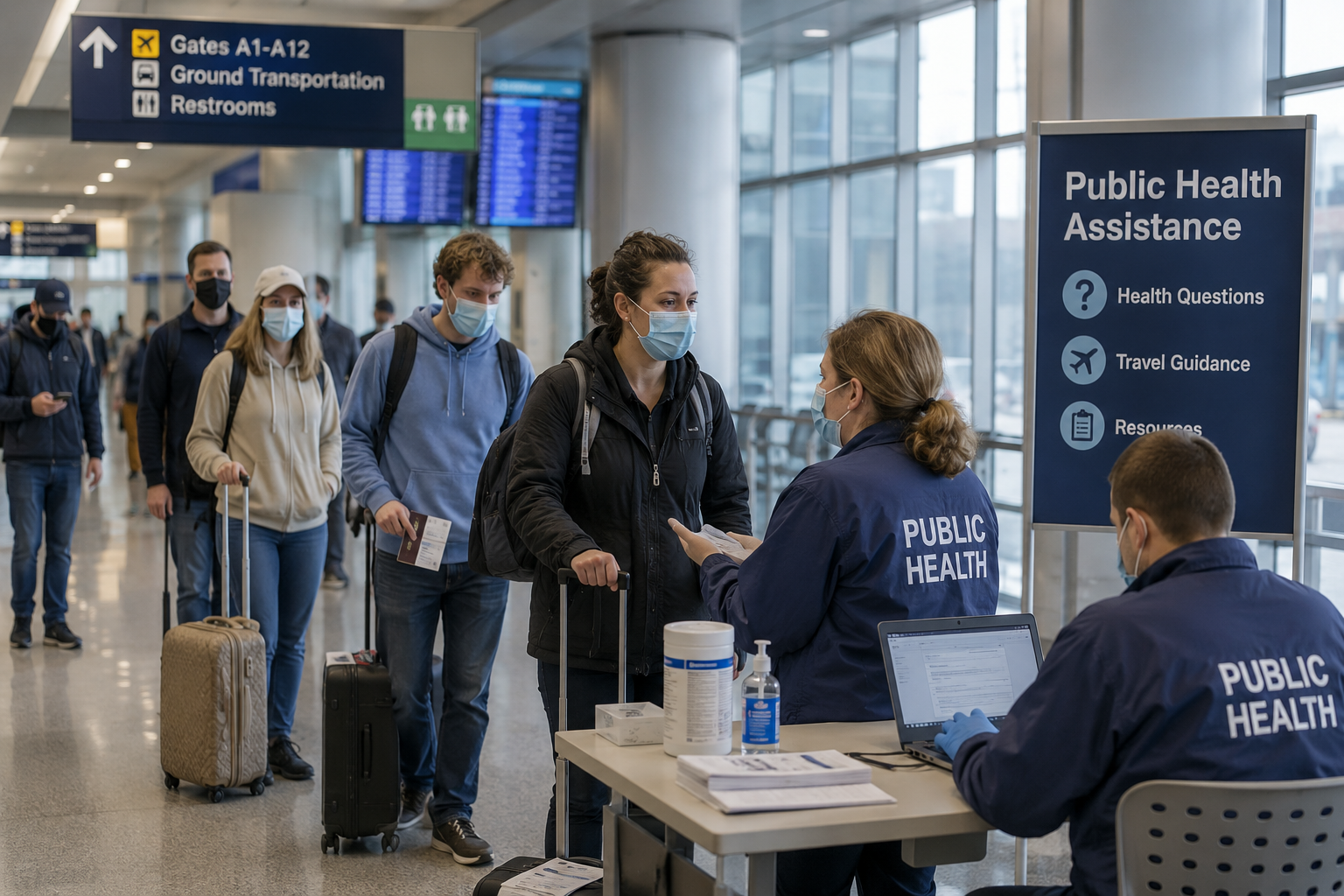
Federal and state health officials said monitoring and quarantine efforts are underway after a cruise passenger returning to Nebraska tested positive for hantavirus exposure. Editorial illustration by TheDailyGlobe.
Key Facts
- A cruise passenger returning to Nebraska tested positive for hantavirus exposure.
- Additional individuals are under quarantine monitoring.
- Federal and state health agencies are involved in the response.
- Officials said containment and monitoring measures are active.
- Authorities have not described the situation as a broad public-health emergency.
Federal and Nebraska health officials said Monday they are monitoring possible hantavirus exposure after a passenger returning from a cruise tested positive, prompting quarantine and follow-up efforts involving multiple agencies.
Authorities confirmed that additional individuals connected to the case are being monitored under quarantine protocols while public health teams work to assess any potential risk of further spread. Officials emphasized that the response is focused on containment, monitoring, and communication with people who may have had contact with the passenger.
State and federal agencies have not described the situation as a widespread public-health threat, and officials stressed that monitoring measures are precautionary. Health agencies said the goal is to identify possible exposure early and provide guidance to anyone who may have been affected.
What Officials Confirmed
According to statements cited by ABC News, CBS News, and federal health officials, the confirmed case led to a coordinated response involving both state and federal public-health agencies. Officials said the passenger recently returned from a cruise and later tested positive, leading authorities to begin tracing possible contacts and reviewing exposure concerns.
Nebraska health authorities said monitoring efforts include communication with people who may have interacted with the traveler. Quarantine observation is being used for some individuals while health officials continue evaluating whether additional testing or follow-up is needed.
Public-health officials also emphasized that the response is intended to limit uncertainty and ensure that anyone potentially exposed receives accurate information. Agencies involved in the monitoring effort have encouraged people to follow guidance from local health departments rather than rely on rumors or social media speculation.
Understanding Hantavirus
Hantavirus is a rare but serious illness most commonly linked to exposure to infected rodents or materials contaminated by rodents. The virus is not commonly associated with large outbreaks, and health officials generally treat suspected exposure cases with targeted monitoring rather than broad public restrictions.
Symptoms can vary and may initially resemble other illnesses, which is one reason public-health agencies often move carefully when evaluating possible exposure situations. Health officials did not release extensive medical details about the passenger Monday, citing privacy considerations.
Authorities also noted that hantavirus cases in the United States remain uncommon. Public-health experts have long emphasized that most Americans face very low day-to-day risk, though individual exposure situations are still treated seriously because the illness can become severe.
How the Monitoring Process Works
In situations involving potentially contagious or high-concern illnesses, health agencies typically identify people who may have had close contact with an infected individual and then monitor them for symptoms over a set period of time. Officials said Monday's actions are part of that standard containment approach.
Quarantine monitoring does not necessarily mean that additional people are infected. In many cases, it is used as a precaution while authorities gather more information. Health agencies said the current focus is on tracking possible exposure and ensuring that any symptoms are reported quickly.
Federal health officials also stressed that containment measures are designed to reduce uncertainty and help local communities respond calmly. Agencies involved in the response said they are continuing to coordinate with healthcare providers and public-health departments.
What Readers Should Know About Risk
Officials said there is no indication at this time of a broader public-health emergency connected to the case. Public-health authorities have not issued travel restrictions or wider public warnings beyond the targeted monitoring effort.
Health agencies encouraged people to pay attention to official updates and avoid spreading unverified claims online. Officials also emphasized that public-health monitoring is intended to prevent situations from escalating and to provide reassurance when possible.
Experts generally advise that people concerned about hantavirus exposure should seek information from healthcare providers or local health departments, especially if they believe they may have been in contact with infected rodents or contaminated areas. In the Nebraska case, officials said the current response remains focused on identified contacts connected to the cruise passenger.
What Happens Next
State and federal health agencies are expected to continue monitoring identified individuals over the coming days while reviewing any additional information tied to the confirmed case. Officials said updates would be provided if the situation changes or if new public guidance becomes necessary.
For now, authorities are emphasizing caution without alarm. The response underway in Nebraska reflects a standard public-health containment process aimed at limiting uncertainty, protecting potentially exposed individuals, and keeping the public informed with verified information rather than speculation.
Health officials also reiterated Monday that early monitoring and communication are key parts of managing potential exposure events. Agencies involved in the response said they are continuing to coordinate across local, state, and federal levels as the monitoring effort moves forward.
Reporting note: Reporting draws on ABC News, CBS News, HHS statements, and reviewed public-health background materials. All claims This article was produced with AI-assisted research and reviewed by an editor before publication.