College Sports Pay Rules Are Testing Who Gets to Govern the New System
College sports has entered a new pay era, but the bigger fight now is over who controls the rules, monitors compliance, and keeps the system consistent.
Save Article
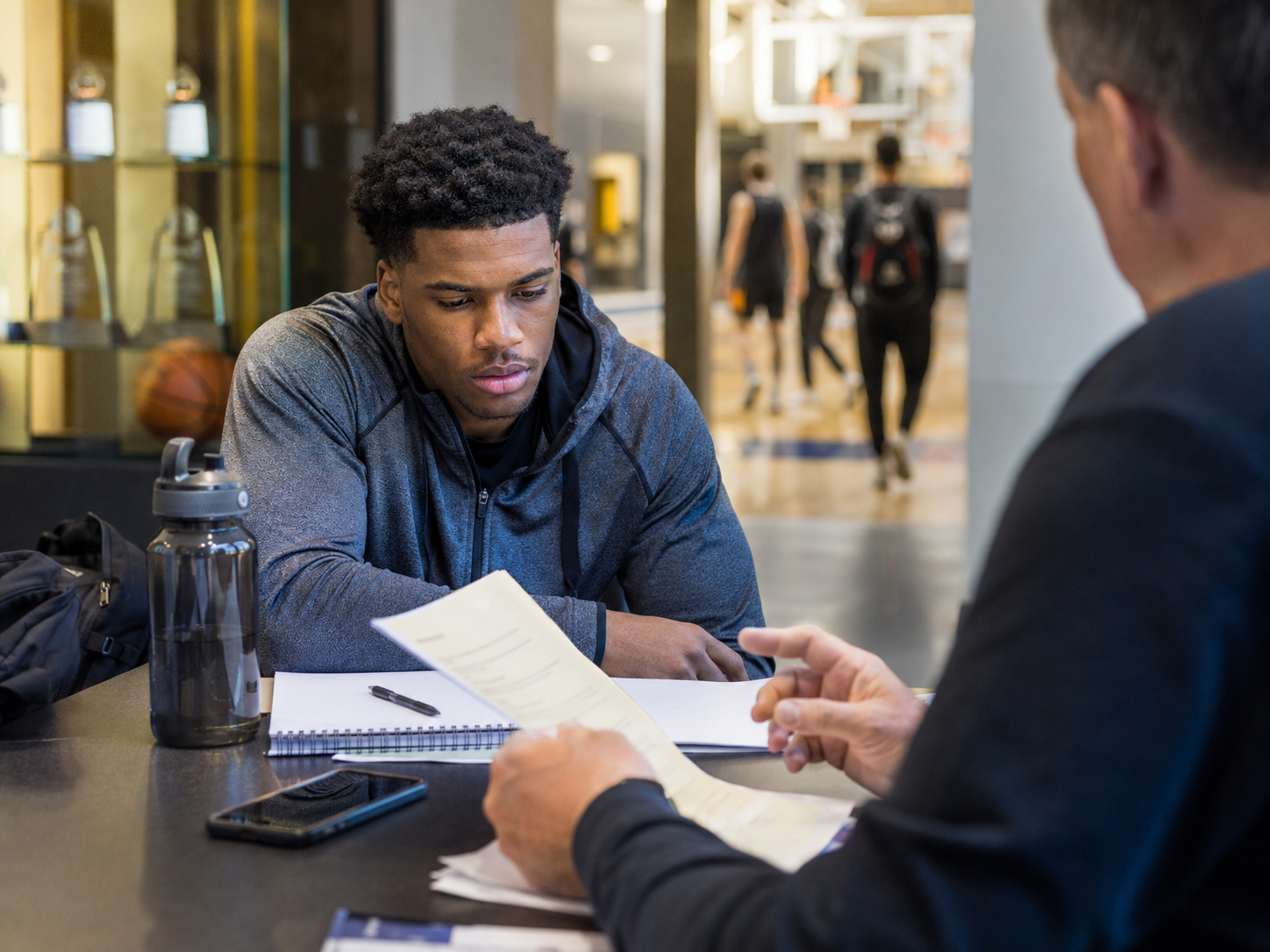
College sports has entered a new pay era, but the bigger fight now is over who controls the rules, monitors compliance, and keeps the system consistent. Editorial illustration by TheDailyGlobe.
Key Facts
- The House settlement allows participating schools to share revenue directly with student-athletes.
- The College Sports Commission says the 2025-26 revenue-sharing cap is $20.5 million per school.
- The College Sports Commission oversees NIL Go and revenue-sharing compliance processes tied to the settlement.
- CBS reported that Big Ten leaders are exploring self-governance amid frustration with the College Sports Commission and stalled congressional action.
- It remains unclear whether major conferences will pursue a separate governance model or whether Congress will act on college sports legislation.
College sports has entered a new pay system, but the next fight is not only about how much athletes can receive. It is about who gets to govern the rules now that schools can share revenue directly with student-athletes.
The House settlement allows participating schools to share revenue with athletes, and the College Sports Commission says the 2025-26 revenue-sharing cap is $20.5 million per school. The commission also oversees NIL Go and revenue-sharing compliance processes tied to the settlement.
For fans, athletes, parents, and schools, this matters because college sports is no longer operating under the old amateur model or a loose NIL marketplace alone. It is becoming a money-distribution system with caps, compliance checks, reporting duties, and growing frustration over who controls enforcement.
What Changed for Schools and Athletes
The basic change is that participating schools can now share revenue directly with student-athletes under the House settlement framework. That moves college sports into a more formal pay structure, even though it still sits inside a system with schools, conferences, collectives, boosters, the NCAA, and the new College Sports Commission all involved in different ways.
Revenue sharing is different from the earlier NIL era. NIL deals involve athletes being paid for the use of their name, image, and likeness. Revenue sharing allows schools themselves to distribute money to athletes under the settlement system and cap.
That difference is why governance matters. Once schools are paying athletes directly, the system needs rules for reporting, limits, enforcement, and compliance. Without that, schools with different resources and different interpretations could operate under uneven standards.
Why the College Sports Commission Matters
The College Sports Commission is part of the new enforcement structure. Its materials describe its role in the House settlement system, including revenue-sharing compliance and NIL Go.
In plain English, the commission is supposed to help manage the new pay environment so schools and athletes are not left with a free-for-all. That includes reviewing certain NIL-related activity and helping enforce the revenue-sharing framework tied to the settlement.
But creating a compliance body does not automatically settle the politics of college sports. Conferences and schools have different levels of money, different competitive pressures, and different views about how fast rules should be enforced. That makes the commission’s authority important and contested.
Conference Frustration Is Now Part of the Story
CBS reported that Big Ten leaders are exploring self-governance amid frustration with the College Sports Commission and stalled action in Congress. That does not mean a breakaway model has happened, and it should not be treated as a settled outcome.
It does show the pressure building around the new system. Major conferences may want more control over how rules are made and enforced, especially if they believe the current structure is too slow, too unclear, or not suited to the realities of top-level college football and basketball.
The risk is fragmentation. If different parts of college sports try to govern themselves separately, schools and athletes could face a patchwork of rules. That may make compliance harder and could deepen the gap between the richest programs and everyone else.
What Congress Could Still Change
Congress remains part of the background because federal legislation could create a more uniform national framework for college athlete compensation. But the source material says congressional action has stalled, and it remains unclear whether lawmakers will act.
That leaves college sports trying to manage a national business with a mix of settlement terms, NCAA implementation materials, commission processes, conference pressure, and school-level decisions.
For athletes, the uncertainty affects more than headlines. It can shape how payments are structured, how NIL deals are reviewed, what schools are allowed to offer, and whether rules are applied consistently across programs.
What Remains Unclear
The biggest open question is whether major conferences will pursue a separate governance model. The CBS reporting points to exploration and frustration, not a completed break from the current system.
It is also unclear how consistently the new system will be enforced across schools and collectives. A cap is only as strong as the reporting and enforcement around it.
The careful takeaway is that college athlete pay is no longer just an NIL story. It is now a governance story. The new system has money, rules, and compliance structures. What it does not yet have is full agreement over who should be in charge.
Reporting note: Reporting draws on College Sports Commission materials, NCAA implementation materials, CBS Sports reporting, Yahoo-linked governance context, and reviewed sports business background. This article was produced with AI-assisted research and reviewed by an editor before publication.