College Sports Boycott Campaign Links Athletics, Recruiting, and Voting Rights
A new NAACP and Congressional Black Caucus campaign is using college athletics as a pressure point in a voting-rights fight, but its recruiting impact remains uncertain.
Save Article
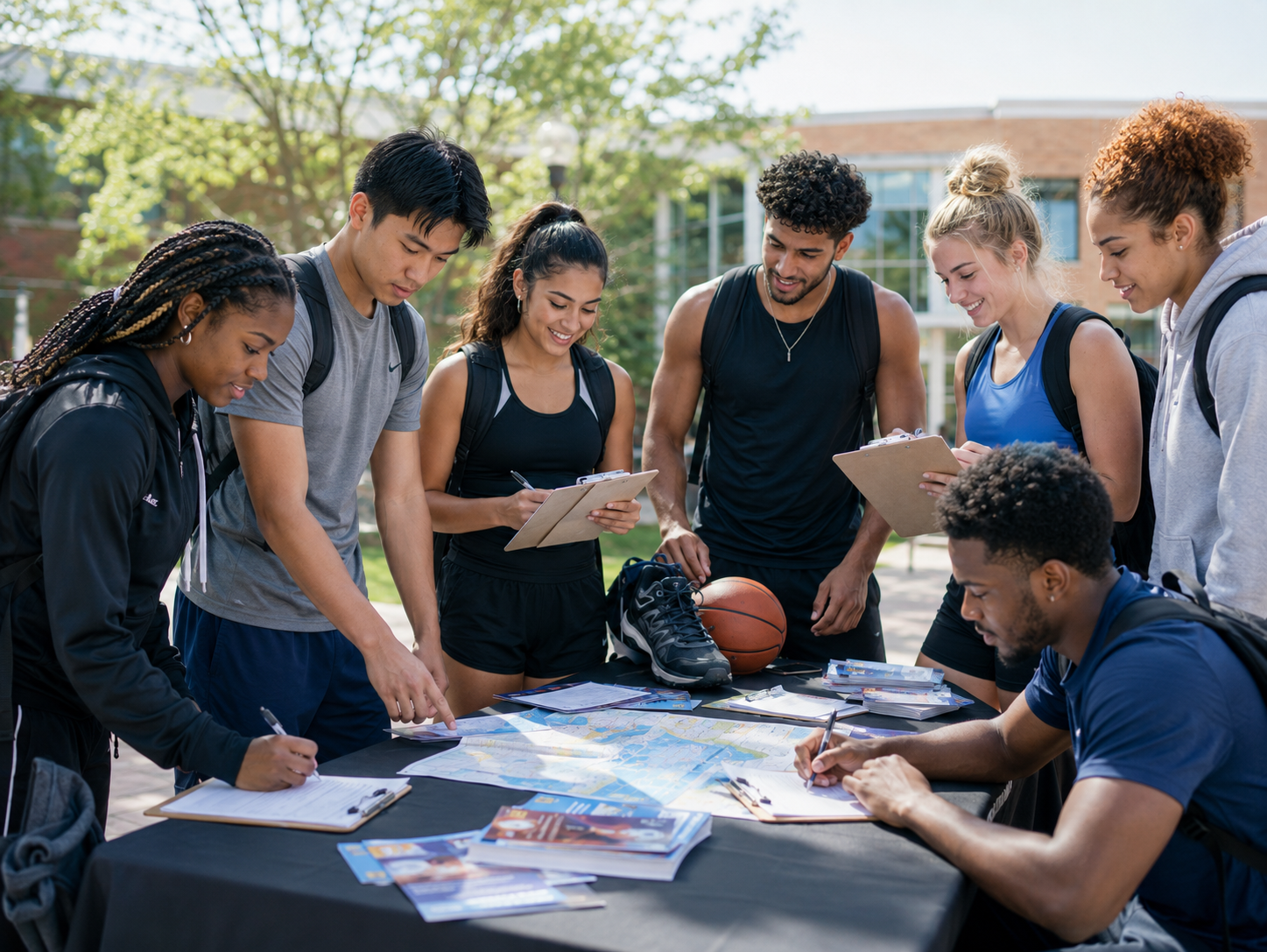
A new NAACP and Congressional Black Caucus campaign is using college athletics as a pressure point in a voting-rights fight, but its recruiting impact remains uncertain. Editorial illustration by TheDailyGlobe.
Key Facts
- AP reported that the NAACP and Congressional Black Caucus launched an “Out of Bounds” campaign.
- The campaign urges athletes and supporters to avoid public university athletic programs in some Southern states.
- The campaign is tied to voting rights, redistricting, and college sports influence.
- It remains unclear whether the campaign will affect recruiting decisions.
- It also remains unclear whether athletes, families, coaches, or schools will respond publicly.
A new campaign from the NAACP and Congressional Black Caucus is trying to use college sports as leverage in a voting-rights fight, showing how athletics can become part of a much larger civic argument.
Associated Press reported that the groups launched an “Out of Bounds” campaign urging athletes and supporters to avoid public university athletic programs in some Southern states. The campaign is tied to concerns over voting rights, redistricting, and the influence college sports can carry in public life.
For readers, the story matters because college sports is not only entertainment. In many states, major athletic programs help shape school identity, recruiting attention, alumni money, television value, local pride, and political visibility. That makes them a possible pressure point when advocacy groups want public institutions and state leaders to pay attention.
What the Campaign Is Asking
The campaign asks athletes and supporters to avoid certain public university athletic programs in some Southern states, according to AP reporting. That makes recruiting one of the campaign’s most visible pressure points.
The request is not the same as a direct policy change. It is an advocacy strategy. The groups are trying to connect the choices athletes and families make with broader political and civil-rights disputes in the states where those schools operate.
That distinction matters. The campaign can make a public argument and encourage athletes to consider civic issues when making decisions. It cannot, by itself, determine where athletes enroll, how families weigh opportunities, or how universities respond.
Why College Sports Is the Pressure Point
College athletics has unusual power because it sits at the center of several systems at once. It affects universities, state pride, television audiences, donor interest, local economies, and the public image of schools.
That is especially true in football and basketball, where major programs can bring national attention to campuses and states. A recruiting class can become a public story. A star athlete can become a symbol for a school. A boycott campaign aimed at athletes therefore reaches beyond the scoreboard.
The campaign’s logic is that sports influence can create public pressure. But whether that pressure becomes measurable is a separate question. Advocacy attention is not the same as lost recruits, changed laws, or altered university policy.
What Remains Hard to Measure
The biggest unknown is whether the campaign will affect recruiting decisions. Athletes and families already weigh many factors, including playing time, coaching, education, scholarships, location, development, professional opportunity, family needs, and campus culture.
Some may view voting rights and redistricting as important parts of that decision. Others may not. Some coaches or schools may respond publicly. Others may stay quiet. The available source material does not show how athletes, families, coaches, or university leaders will react.
It is also unclear whether the campaign will broaden beyond its initial target states. If it grows, the sports and political pressure could become more visible. If it remains limited, its impact may depend on whether individual athletes or prominent programs engage with it.
Keeping Advocacy Claims Separate From Effects
The campaign is rooted in advocacy claims about voting rights, redistricting, and public accountability. Those claims should be attributed to the groups making them unless supported by separate records or official findings.
That does not make the campaign unimportant. It simply means readers should separate three things: what the campaign asks people to do, what the groups say the campaign is about, and what measurable effect it actually has on recruiting or university pressure.
For now, the confirmed development is the launch of a campaign using college sports as civic leverage. The unanswered question is whether athletes, families, schools, or state leaders will treat that pressure as symbolic, practical, or something in between.
Reporting note: Reporting draws on Associated Press reporting, NAACP public materials, Congressional Black Caucus materials, and reviewed college sports and civic background. This article was produced with AI-assisted research and reviewed by an editor before publication.