New Climate Outlook Shows Why Heat Planning Is Becoming a Near-Term Issue
A new WMO climate update projects high odds of record-level global heat by 2030, making heat, water and disaster planning more immediate for communities.
Save Article
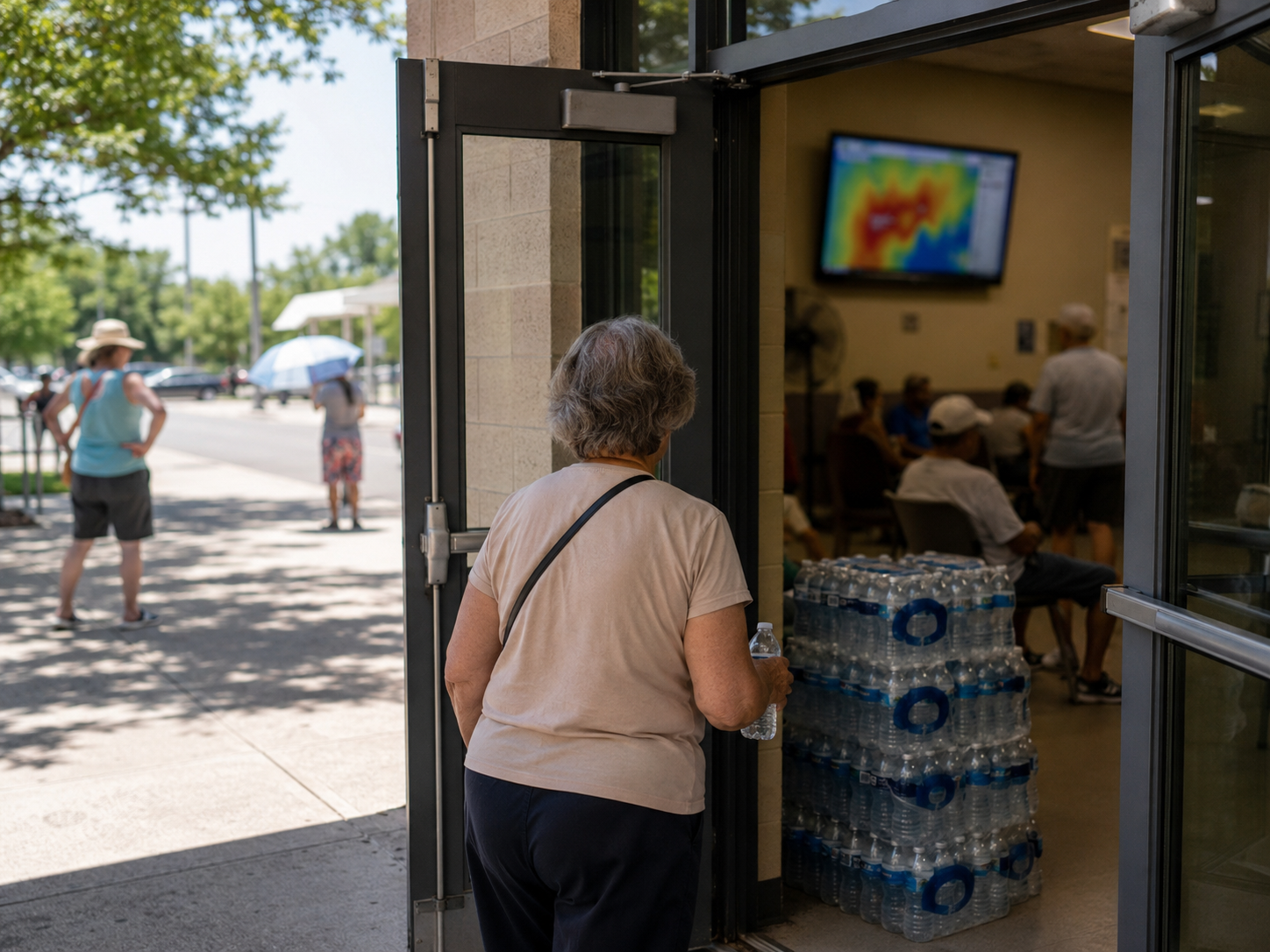
Near-term climate forecasts matter most when they help communities plan for heat, storms, water stress and public health risks. Editorial illustration by TheDailyGlobe.
Key Facts
- WMO's annual-to-decadal prediction page lists a new Global Annual to Decadal Climate Update for 2026 to 2030.
- The update was produced by the UK Met Office as WMO's lead centre for annual-to-decadal climate prediction.
- Associated Press reported a 91% chance that at least one year from 2026 to 2030 will temporarily exceed 1.5 degrees Celsius above the 1850 to 1900 average.
- Associated Press reported an 86% chance that at least one year from 2026 to 2030 will surpass 2024 as the hottest year on record.
- The Guardian reported a 75% chance that the 2026 to 2030 average will exceed 1.5 degrees Celsius above the pre-industrial average.
Heat is no longer only a summer discomfort. For many communities, it is becoming a planning problem: how to keep homes cool, protect older residents, prepare schools and workplaces, manage water supplies and keep emergency systems ready when extreme weather strains daily life.
A new World Meteorological Organization climate update puts that near-term planning problem into sharper focus. The WMO's Global Annual to Decadal Climate Update for 2026 to 2030 projects a high chance of record-level global heat during the next five years, according to reporting on the agency's findings.
What The Forecast Says
The WMO update is not a local weather forecast. It does not say which city will have the hottest day, which county will get the next flood, or which neighborhood will face the worst smoke. It describes global and regional climate probabilities over a five-year period.
The headline finding is serious: the next five years are expected to carry a strong chance of record or near-record heat. AP reported that the update projects a 91% chance that at least one year from 2026 to 2030 will temporarily exceed 1.5 degrees Celsius above the 1850 to 1900 average.
That temporary annual exceedance needs careful explanation. It is not the same as permanently breaching the Paris Agreement threshold, which is measured over a longer period. But it is still an important warning sign because it shows how close the planet is running to levels that intensify climate risks.
Why This Is A Planning Story
The practical issue is not only whether the planet sets another temperature record. It is what that kind of heat does to people and systems.
Higher temperatures can affect public health, electricity demand, outdoor work, school schedules, crop stress, water supplies, insurance costs and emergency response. Heavy rain, drought and wildfire risk can also become harder to manage when communities are dealing with more heat at the same time.
For households, that can mean thinking about cooling, medications, older relatives, children, pets and backup plans during heat waves. For local governments, it can mean cooling centers, water planning, stormwater systems, emergency alerts and support for residents who cannot easily escape extreme heat.
What The Numbers Do Not Tell Us
Global averages can help explain the direction of risk, but they do not tell every community what will happen on the ground. A hotter planet does not produce the same result everywhere at the same time.
Regional impacts will vary. Some places may face more dangerous heat. Others may see changes in rainfall, drought or storm risk. The exact timing of records, the development of El Nino conditions and the local effects in any given season remain uncertain.
That uncertainty should not be read as a reason to ignore the forecast. It means the forecast is best used as a planning signal, not a day-by-day prediction. The confirmed message is that the risk of record-level heat over the next five years is high.
What Readers Should Watch Next
The next useful updates will come from seasonal outlooks, local weather agencies, WMO updates and public-health guidance. In the United States, NOAA seasonal outlooks and local heat advisories will matter more for day-to-day decisions than a global five-year forecast.
Readers should also watch whether 2027 or another year in the forecast window sets a new global temperature record. If that happens, the important question will not only be whether a record was broken. It will be whether communities had enough time and clear enough information to prepare.
The WMO update is not a doomsday script. It is a warning that the next few years may bring heat risks that are close enough to plan for now.
Reporting note: Reporting draws on World Meteorological Organization climate forecast materials, UK Met Office synthesis, established science reporting, and reviewed climate context. This article was produced with AI-assisted research and reviewed by an editor before publication.