Lawsuits Challenge New $1.8 Billion Fund for Claims of Government “Weaponization”
Legal challenges to a new DOJ-backed fund raise questions about settlement authority, federal spending power, and how political retaliation claims should be handled.
Save Article

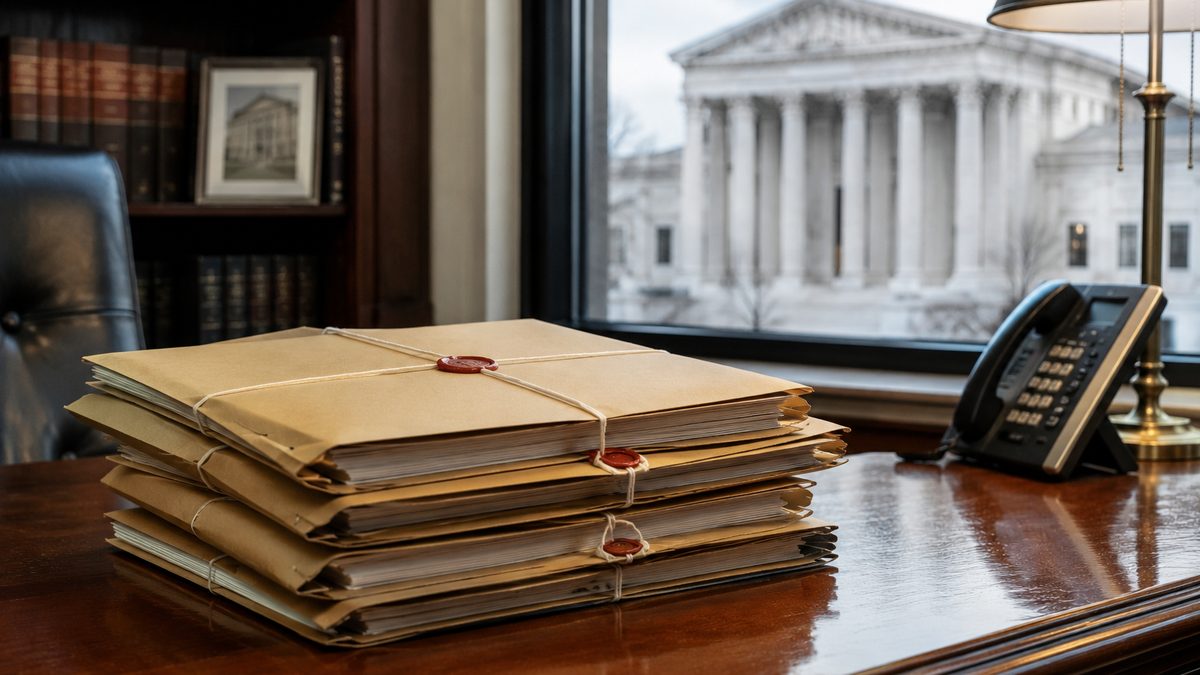
Legal challenges to a new DOJ-backed fund raise questions about settlement authority, federal spending power, and how political retaliation claims should be handled. Editorial illustration by TheDailyGlobe.
Key Facts
- The Justice Department announced an Anti-Weaponization Fund tied to the settlement of President Donald J. Trump v. Internal Revenue Service.
- AP reported that critics of President Trump filed lawsuits to block payouts from the $1.776 billion fund.
- Democracy Forward said a coalition of organizations and individuals sued to block what it called a taxpayer-funded payout scheme.
- PBS NewsHour published a DOJ memo summary describing how the fund was presented to Republican senators.
- Local reporting said New Haven joined one lawsuit seeking to block disbursements from the fund.
Lawsuits challenging a new Justice Department-backed Anti-Weaponization Fund are putting a large federal settlement process before the courts.
The Justice Department announced the fund on May 18, describing it as tied to the settlement of President Donald J. Trump v. Internal Revenue Service. AP reported that critics of President Trump filed lawsuits seeking to block payouts from the $1.776 billion fund.
For readers, the issue is not only whether specific people should receive payments. The bigger question is how far the executive branch can go when using settlement authority, what role Congress has over federal spending, and whether courts will allow the fund to operate while the legal challenges continue.
What DOJ Says the Fund Is For
The Justice Department describes the Anti-Weaponization Fund as a process to hear and redress claims from people who suffered what the administration calls “weaponization” or “lawfare.” That is the administration’s stated frame, and it should be treated as such.
The fund is connected to a settlement involving Trump and the Internal Revenue Service. PBS NewsHour published a summary of a DOJ memo to Republican senators describing how the fund would work. The public debate now centers on whether that settlement mechanism can lawfully support a fund of this size and purpose.
Settlement funds are not unusual by themselves. Governments settle lawsuits and sometimes create processes for paying claims. What makes this dispute different is the amount of money involved, the political context, and the question of who decides how federal money can be used.
What the Lawsuits Allege
The plaintiffs argue that the fund lacks lawful authority, bypasses Congress’s spending power, and could reward political allies. Those are allegations and legal arguments, not court findings.
Democracy Forward said a coalition of organizations and individuals sued to block what it called a taxpayer-funded payout scheme. That phrase reflects the plaintiffs’ characterization, not a neutral description of the fund.
Local reporting also said New Haven joined one lawsuit seeking to block disbursements. That adds a local-government plaintiff to a fight that is national in scope because it concerns federal money, Justice Department authority, and the limits of executive action.
Why Spending Power Matters
Congress controls federal spending. The executive branch administers programs, enforces laws, and settles cases, but it does not have unlimited power to create payment systems outside the boundaries set by law.
That is why the fund raises a serious institutional question. If courts treat the fund as a lawful settlement mechanism, DOJ may have room to proceed under the settlement process it announced. If courts see it as an improper use of federal money, they could pause or block payouts.
The dispute is also about accountability. A fund based on claims of political targeting or government abuse requires standards for who qualifies, what evidence is needed, how decisions are made, and who reviews the process. Those details matter because public money is involved.
What Courts May Need to Decide
The immediate question is whether a federal court will pause or block payments while the lawsuits move forward. A pause would not decide the full case, but it could prevent disbursements before judges rule on the legal claims.
Courts may also have to decide whether the fund fits within DOJ’s settlement authority or crosses into spending decisions that belong to Congress. That is a legal question with practical consequences: if the fund moves forward, money could be paid out under the standards DOJ sets; if it is blocked, the administration may have to defend or redesign the process.
Another unresolved question is who would qualify for payments and what standards the DOJ commission would use. Without those answers, it is difficult to know how broad the fund could become or how claims would be evaluated.
What Remains Unclear
The lawsuits are still developing. It remains unclear whether a court will block payouts, whether the fund will be narrowed, or whether DOJ will be allowed to continue the process as announced.
It also remains unclear how courts will treat the political context. Plaintiffs are challenging the fund as unlawful and politically tilted. DOJ is presenting it as a way to redress claims of government weaponization. The court process will have to separate political arguments from the legal question of authority.
For now, the clearest takeaway is that a major federal fund has moved from administration announcement to courtroom challenge. The outcome could shape not only this fund, but also how future administrations use settlement power when federal money and political accountability collide.
Reporting note: Reporting draws on Justice Department materials, wire reporting, plaintiff-side legal materials, PBS NewsHour reporting, local reporting, and reviewed legal context. This article was produced with AI-assisted research and reviewed by an editor before publication.