Alabama Map Order Shows How Fast Voting Rights Rules Are Changing
The Supreme Court allowed Alabama to use a disputed congressional map this year, putting a fast-moving redistricting fight back in front of voters, courts, and election officials.
Save Article
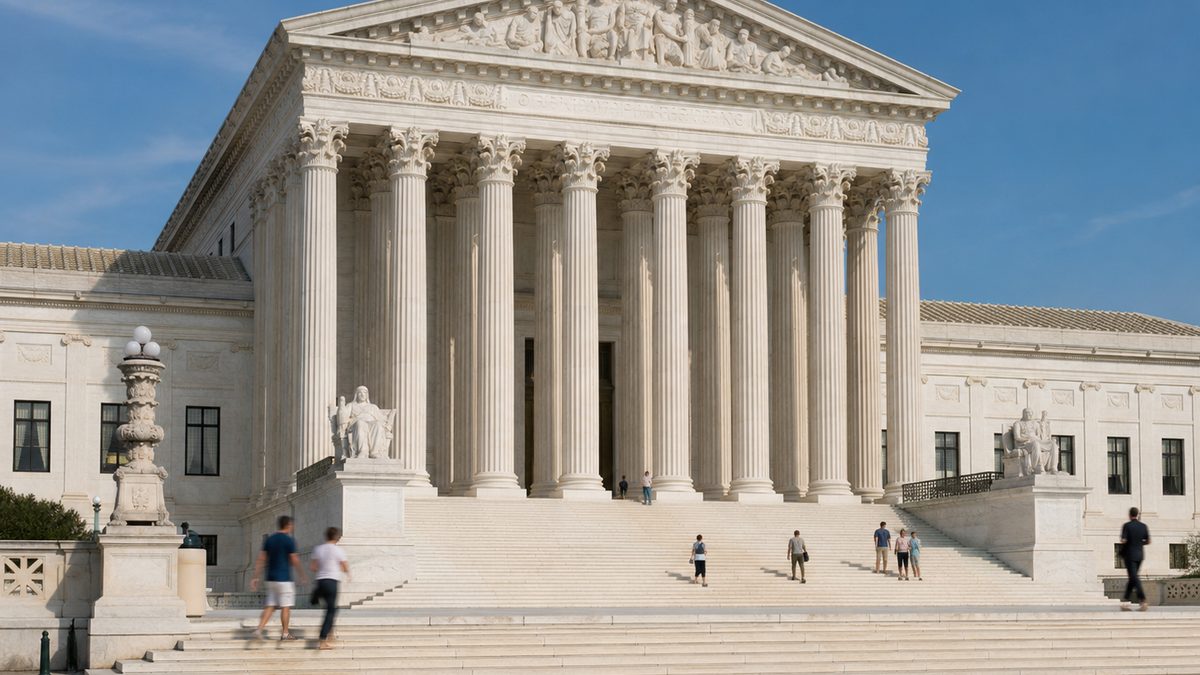
A Supreme Court order allowed Alabama to use a disputed congressional map this year. Editorial illustration by TheDailyGlobe.
Key Facts
- The Supreme Court allowed Alabama to use a disputed congressional map for this year's elections.
- The order blocked a lower-court ruling that had found intentional discrimination.
- The three liberal justices dissented.
- The dispute is part of a broader redistricting and Voting Rights Act legal fight.
- It remains unclear whether later litigation will alter the map after this election cycle.
Congressional maps can feel abstract, but they decide something very concrete: which communities are grouped together, which candidates voters see on the ballot, and how power is divided before anyone casts a vote.
That is why a new Supreme Court order involving Alabama matters beyond one state. The Court allowed Alabama to use a disputed congressional map for this year's elections, blocking a lower-court ruling that had found the map intentionally discriminated against Black voters.
What the Court Did
The Supreme Court's order changed the immediate election landscape by allowing Alabama to move forward with the map it sought to use this year. The action did not settle every legal question in the case, but it paused the effect of the lower-court ruling for the current election cycle.
The lower court had found that the map was tied to intentional discrimination. Alabama disputed that framing, and the Supreme Court's order allowed the state map to be used while the litigation continues. The three liberal justices dissented from the Court's action.
That distinction matters. The order affects what map is used now, but it does not give ordinary readers a simple final answer to every underlying question about voting rights, race, partisanship, and redistricting law.
Why It Matters for Representation
Redistricting is the process of drawing political boundaries. Those lines can shape which communities are kept together, which voters have a realistic opportunity to elect preferred candidates, and how congressional seats are likely to be contested.
In Alabama, the dispute has centered on how Black voters are represented in the state's congressional map. Reporting reviewed by TheDailyGlobe shows that the map at issue creates one majority-Black district out of seven, in a state where Black residents make up more than a quarter of the population.
Supporters of Alabama's position have argued that the state should not be forced to use lines they view as improperly race-based. Challengers have argued that the map weakens Black voters' ability to elect candidates of their choice and violates voting rights protections. Those arguments are legal claims in an active dispute, not neutral facts by themselves.
The Bigger Voting Rights Fight
The Alabama order comes during a period of rapid change in redistricting law. Courts are weighing how the Voting Rights Act applies when race, party, geography, and community boundaries overlap. That makes each order important not just for one election, but for how states and lower courts understand the rules.
The practical effect is that voters, candidates, election officials, and advocacy groups may have to respond quickly to court decisions that arrive close to election deadlines. A map can be challenged, blocked, revived, or sent back for further litigation while campaigns and election offices are already preparing.
That does not mean every redistricting case is the same. Each case depends on its record, the map, the state's arguments, the challengers' claims, and the legal standard the court applies. But Alabama shows how quickly the rules around representation can shift when emergency orders and election calendars collide.
What Remains Unclear
Several questions remain open. Later litigation could still alter the map after this election cycle. Similar cases in other states may be affected, but the exact effect will depend on the facts and legal posture of those cases.
It is also unclear what the full practical effect will be on representation. Some analysts and advocates have described partisan effects, but those projections should be treated as analysis rather than court-confirmed fact.
What to Watch Next
The next things to watch are related map challenges, additional lower-court proceedings, and whether the Supreme Court takes further action in Alabama or similar cases.
For readers, the core point is straightforward: court orders can shape congressional representation before voters ever reach Election Day. The Alabama order is a reminder that voting rights law is not static, and that the legal rules around maps are moving quickly.
Reporting note: Reporting draws on Associated Press reporting, Supreme Court order materials, court records, redistricting background, and reviewed legal context. This article was produced with AI-assisted research and reviewed by an editor before publication.