The Supreme Court Should Explain Emergency Orders That Shape Public Life
Emergency orders can be necessary, but when the Supreme Court acts quickly in major public disputes, explanation is part of accountability.
Save Article
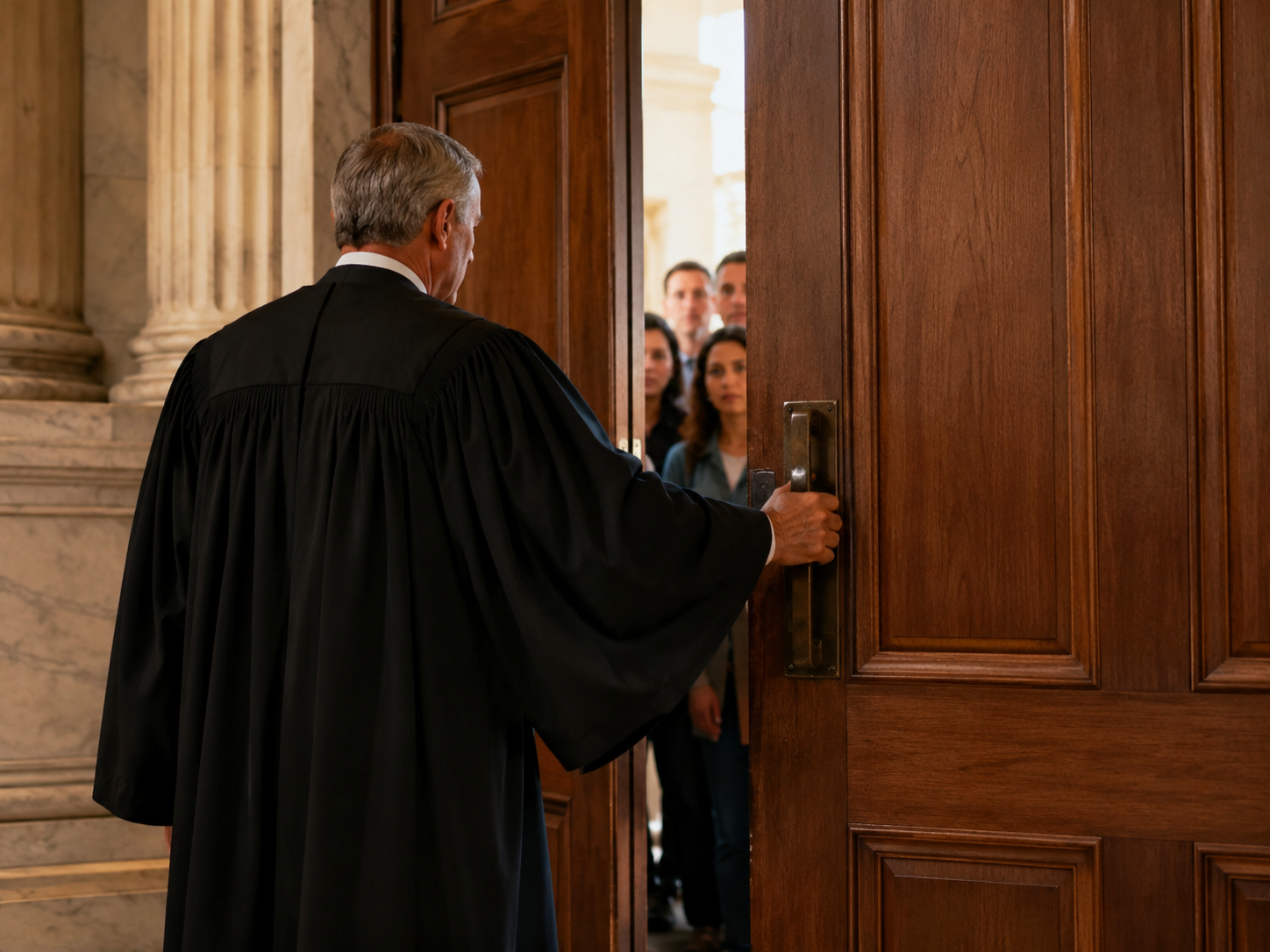
Emergency orders can be necessary, but when the Supreme Court acts quickly in major public disputes, explanation is part of accountability. Editorial illustration by TheDailyGlobe.
The Supreme Court sometimes has to act quickly. That is not the problem.
The problem is when the Court acts quickly in disputes that shape public life and gives the public little more than a short, unsigned order. In those moments, explanation is not a luxury. It is part of accountability.
This is especially true on the Court's emergency docket, sometimes called the shadow docket by critics and court watchers. These orders can decide what happens while a case is still unfinished. They may pause a lower court ruling, allow a government policy to continue, or block an action before the justices have taken the case through the full merits process.
Speed Can Be Necessary
The fair counterargument deserves to be taken seriously. Courts cannot always wait months for full briefing and oral argument. Some disputes involve deadlines, lower court orders, government programs, elections, enforcement actions, or claims of harm that cannot easily be fixed later.
In those situations, emergency relief can be a necessary part of the legal system. A party may ask the Supreme Court to pause something while appeals continue. The justices may have to decide quickly whether the lower court ruling should stand for now or be put on hold.
That is not the same thing as deciding the final merits of the case. An emergency order can be temporary. It can reflect a judgment about timing, harm, lower court rulings, or the likelihood of success without fully resolving every legal question.
The Court should not be forced into writing a full-length opinion every time it handles an emergency request. That would defeat the purpose of having an emergency process in the first place.
But Silence Has a Cost
Still, the need for speed does not erase the need for public reasoning.
The Supreme Court publishes orders and docket information through official Court pages, and many matters are disposed of through unsigned orders. Some of those orders are routine. Others are not. When an order affects a major government policy, individual rights, state authority, federal power, or a dispute already commanding national attention, the public deserves enough explanation to understand what the Court did and why.
A short explanation does not have to settle the full case. It can say what legal standard the Court applied. It can explain whether the decision is narrow. It can identify what the Court is not deciding. It can give lower courts and the public a clearer sense of how to read the order.
Without that, people are left to guess. Advocates fill the gap. Partisans fill the gap. Commentators fill the gap. The public sees the outcome but not the reasoning, and trust in the institution becomes harder to sustain.
Transparency Is Not a Partisan Demand
House Judiciary Democrats announced legislation aimed at increasing transparency around Supreme Court emergency-docket decisions, and Courthouse News reported that the proposal targets unexplained emergency or shadow docket orders. Readers can agree or disagree with the specific legislation. The broader principle should not belong to one party.
A Court with enormous constitutional authority should be willing to explain itself when its emergency actions affect major public questions. That standard should apply regardless of which party benefits from a given order, which administration is in power, or which side of a case someone supports.
Transparency does not weaken the Court. Done well, it strengthens the Court by showing that decisions are grounded in law rather than preference, pressure, or convenience.
The Public Needs More Than an Outcome
Brennan Center materials describe the emergency docket as involving procedural matters and emergency requests such as stays. That procedural language can make the process sound small. But the real-world effects are not always small.
If a lower court blocks a policy and the Supreme Court allows it to resume, people may feel the effect immediately. If the Court pauses a rule or lets a law take effect while litigation continues, agencies, states, businesses, schools, families, and individuals may have to adjust before the final case is decided.
That is why explanation matters. The public needs to know whether the Court is making a narrow procedural judgment or sending a broader signal. Lower courts need guidance. Lawyers need to understand the standard. Citizens need to understand what changed and what remains unresolved.
A democracy should not ask people to accept major legal consequences on faith alone.
A Reasonable Standard
The Supreme Court does not need to write essays for every order. It does not need to turn emergency rulings into full merits opinions. But high-impact emergency orders should come with meaningful explanations.
That could mean a brief statement of reasoning. It could mean identifying the legal standard that controlled the result. It could mean recording votes more clearly when the public effect is large. It could mean making plain that the Court is not deciding the final merits, only the emergency request before it.
The exact reform can be debated. The principle should be easier: when the Court uses emergency power in cases that shape public life, it should not leave the country guessing.
Speed may sometimes be necessary. Silence is not. The Supreme Court's legitimacy is stronger when the public can see not only what the justices decided, but why.
Reporting note: Reporting draws on Supreme Court orders and docket materials, congressional materials, Courthouse News reporting, Brennan Center legal context, and reviewed background materials used to ground the argument. This article was produced with AI-assisted research and reviewed by an editor before publication.