Libraries Are Becoming a Front Line in America’s Trust Fight
Public libraries still serve everyday community needs, but new data shows how debates over books and access are putting them under sharper pressure.
Save Article
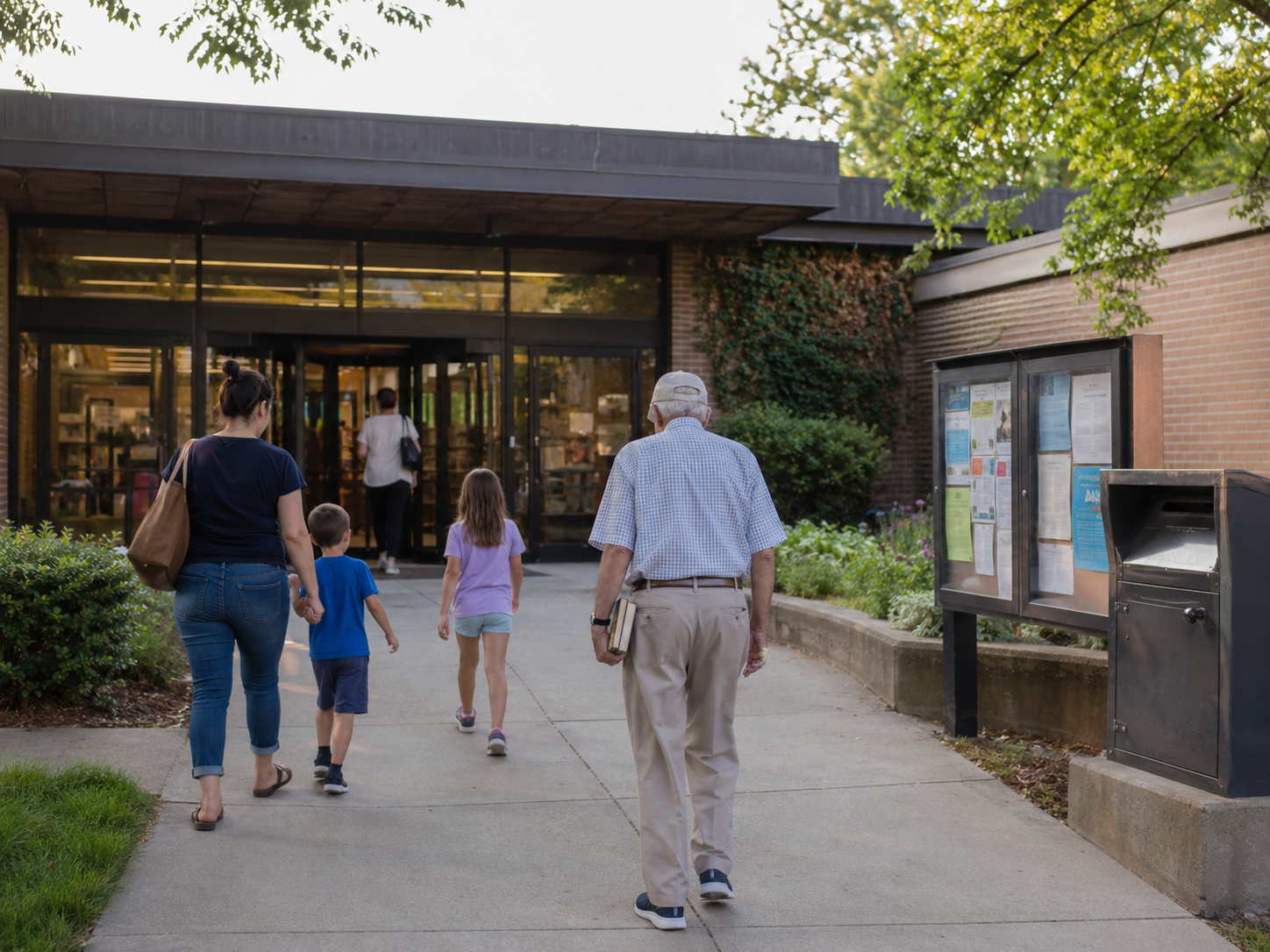
Public libraries are increasingly caught between everyday community service and larger debates over books, trust, and access to information. Editorial illustration by TheDailyGlobe.
Key Facts
- The American Library Association reported 713 attempts to censor library materials and services in 2025.
- ALA reported 4,235 unique titles challenged in 2025.
- ALA said Banned Books Week brings together librarians, booksellers, publishers, journalists, teachers and readers around free expression and access to ideas.
- The Institute of Museum and Library Services describes public library data as a tool for understanding library services and changes across the country.
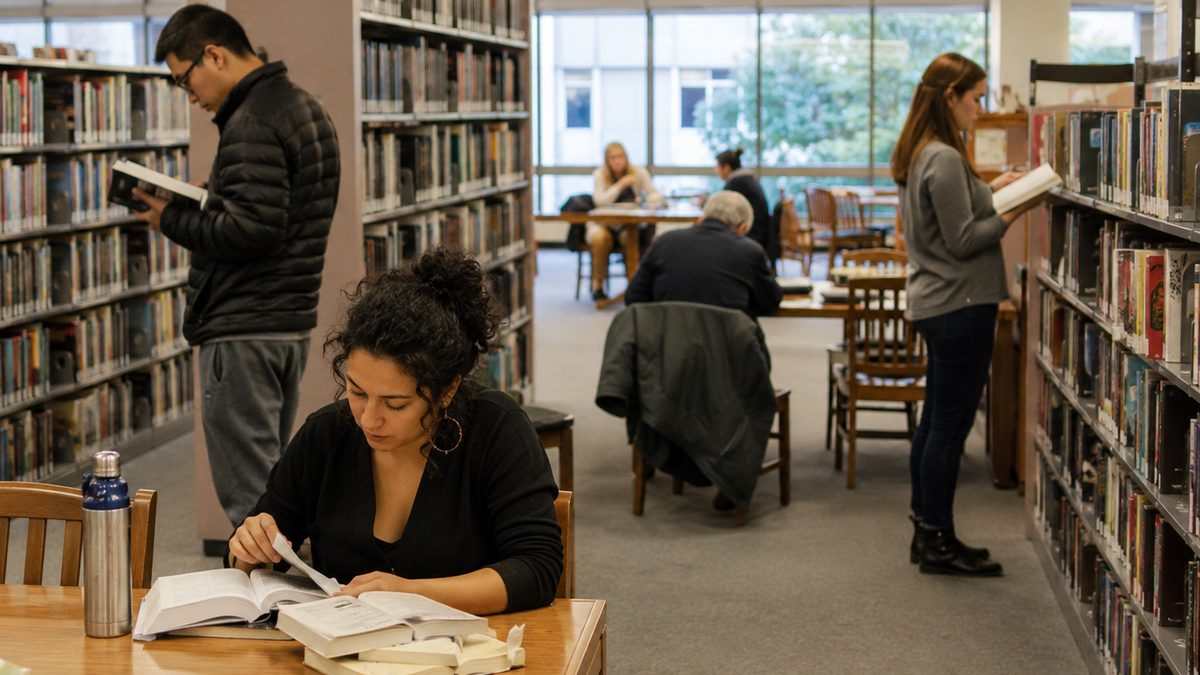
For many families, the public library is still one of the simplest civic spaces in American life: a place for books, computers, children’s programs, job help, quiet tables, local notices and a little time indoors without buying anything.
But libraries are also becoming places where national arguments arrive locally. Disputes over books, programs, public funding, children’s access, parental authority and trust in institutions are now showing up in library board meetings, local budgets and community conversations that used to draw far less attention.
More Than a Book-Shelf Fight
The latest ALA figures show continued pressure on library materials and services. The numbers do not capture every local dispute, and ALA’s work is closely tied to free-expression advocacy. Still, the documented challenges show that the issue is broader than a few high-profile titles.
That distinction matters. A library dispute may begin with one book, one display, one program or one complaint. But the argument often grows into something larger: who gets to decide what belongs in a public collection, how children should be protected, how parents’ concerns should be heard, and how much professional judgment librarians should have.
Those questions are not abstract for the people involved. For a parent, the issue may feel like a question of age-appropriate access. For a librarian, it may feel like a question of professional standards and public service. For a student, older adult, job seeker or regular reader, it may affect what information is available in a familiar community space.
Why Libraries Carry So Much Weight
Libraries are often treated as cultural spaces, but they are also public infrastructure. The Institute of Museum and Library Services tracks public library data to help understand services and changes across the country. That framing is useful because libraries are not only about books. They are part of how communities provide access to information, internet service, public programs and civic life.
That role helps explain why library disputes can become so heated. A public library is funded and governed locally, but it serves many kinds of people at once. Parents, children, retirees, students, workers, researchers, teachers, newcomers and people without reliable internet may all depend on the same building for different reasons.
When trust is strong, that shared role can make libraries feel like one of the few remaining common spaces. When trust weakens, the same openness can become a source of conflict. People may disagree not only over a book or program, but over whether the institution itself is listening to the community.
The Local Nature of the Conflict
It would be too simple to describe library disputes as one side against another. Local concerns vary. Some parents and community members say they want more control over what children can access. Librarians and free-expression advocates often argue that restrictions can limit the range of ideas, stories and information available to the public.
Both the concerns and the consequences depend on local decisions. A challenged item may be reviewed and kept, moved, restricted, temporarily removed or permanently withdrawn. A library board may revise collection policies. A local government may debate funding. A state legislature may consider broader rules affecting libraries or school libraries.
That is why the library story is not only a national argument about censorship or parenting. It is a local governance story. The people making decisions are often school boards, library boards, city councils, county officials, administrators and librarians who must apply policy in real communities.
What Remains Unclear
The available data shows pressure on libraries, but it does not settle what happens next. It remains unclear whether local disputes will intensify or decline in 2026, whether public trust in libraries will shift, or how funding and staffing may be affected in communities facing repeated conflict.
It is also unclear how much national attention will change local library behavior. Some systems may respond with clearer review procedures. Others may become more cautious about collections, displays or programs likely to draw complaints. Some communities may reaffirm broad access, while others may adopt tighter rules.
Readers should watch library board decisions, local budget fights, state legislation, Banned Books Week activity and future censorship data. The key question is not only which books are challenged. It is whether libraries can keep serving as trusted public spaces while carrying more of the country’s arguments through their doors.
Reporting note: Reporting draws on American Library Association data, institutional library materials, public library survey context, free-expression resources, and reviewed background materials. This article was produced with AI-assisted research and reviewed by an editor before publication.