How to Read a Classic Without Treating It Like Homework
Classic books do not have to be trophies, assignments or tests. They can be read slowly, questioned honestly and returned to later.
Save Article
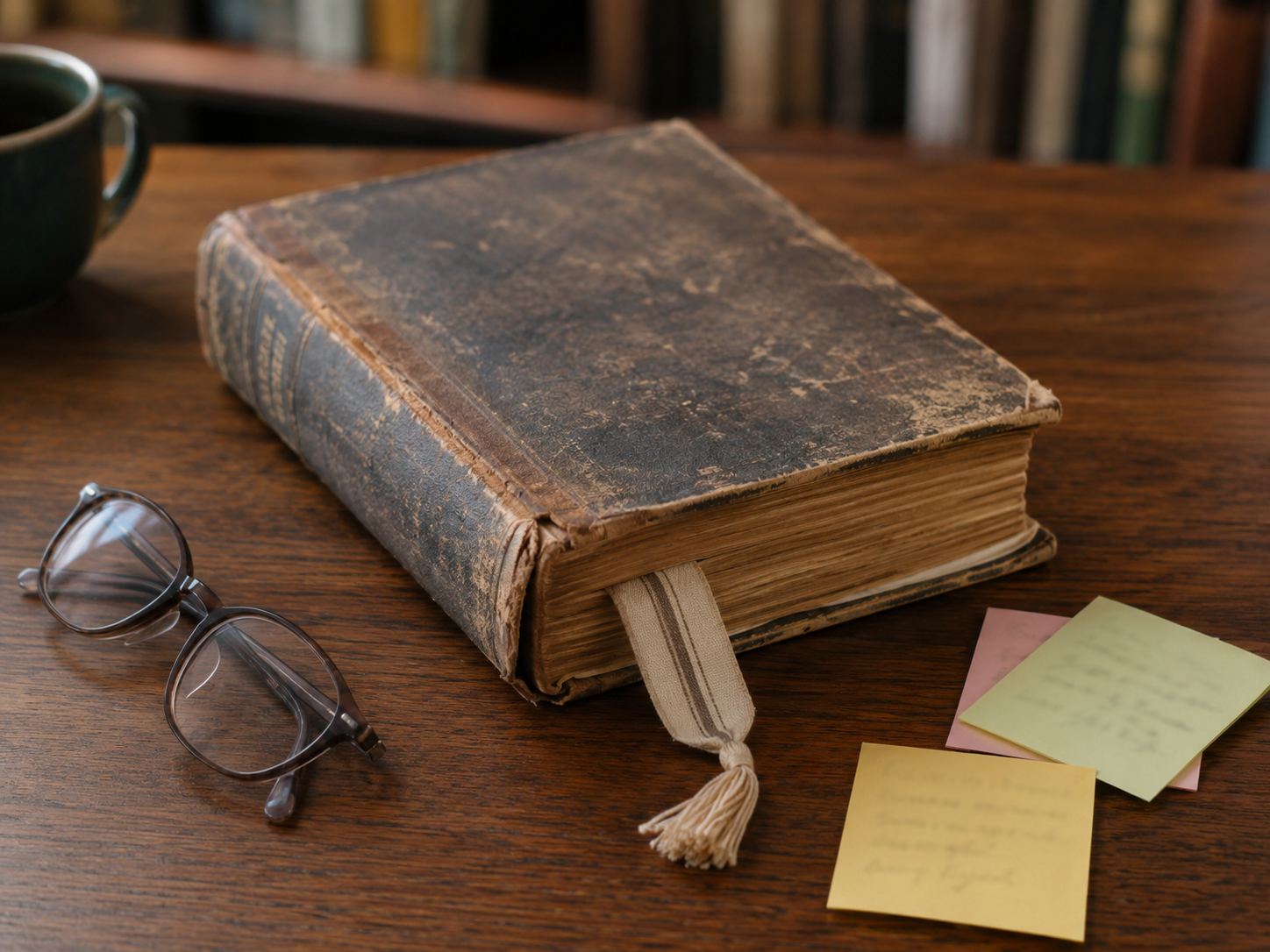
Classic books can feel more approachable when readers treat them as conversations rather than assignments. Editorial illustration by TheDailyGlobe.
Key Facts
- Pew Research Center reported in 2026 that most U.S. adults had read at least part of a book in the previous year.
- Pew also reported that print books remain more common than digital or audio formats among U.S. adults.
- The National Endowment for the Arts tracks literary reading through national arts participation research.
- Library research remains part of the broader picture of how readers access books, reading programs and public culture.
A person picks up a classic novel and immediately feels like they are back in school.
The book may be famous. The cover may look serious. The introduction may use words that sound more like a lecture than an invitation. Somewhere in the back of the mind is the old feeling that there will be a quiz, a thesis statement or someone nearby ready to say the reader missed the point.
That is a hard way to meet a book. Classics are not trophies. They are not punishments. At their best, they are conversations across time, and a reader is allowed to enter that conversation slowly.
A Classic Is Not a Test
Many readers carry a school-shaped idea of classic literature. A classic is something assigned, decoded, summarized and written about under pressure. That approach can teach useful skills, but it can also leave people thinking old books belong only to experts, teachers or people who already know what they are supposed to admire.
A better starting point is simpler: a classic is a book that has stayed in conversation longer than most. It may be beautiful, difficult, strange, funny, dated, wise, irritating or uneven. It may speak clearly in one season of life and feel distant in another.
The reader does not have to worship it. The reader only has to meet it honestly.
Reading Still Has a Place
Pew Research Center reported that most U.S. adults had read all or part of at least one book in the prior year, and that print remains more common than digital or audio formats among U.S. adults. Those findings do not mean every person reads the same way, or that print is better than every other format.
Audiobooks, e-books, library copies, used paperbacks and digital editions can all bring readers to a book. The format matters less than the encounter. A classic heard while driving can still be a classic. A public-domain copy on a phone can still open a door.
That matters because reading culture now competes with constant distraction. A book asks for a different rhythm. It does not need to be consumed all at once, and it does not need to become a performance.
Start With Curiosity, Not Guilt
The worst reason to read a classic is because an invisible committee has decided a serious person should have finished it already.
Guilt makes reading smaller. Curiosity makes it livable. A reader can begin with a question: Why has this book lasted? What kind of world did it come from? What does it notice about people? What feels familiar? What feels wrong, dated or uncomfortable? Why did this sentence survive in someone else’s memory?
Those questions leave room for respect without requiring obedience. Some classics deserve admiration. Some deserve argument. Some deserve a second chance later. Some may not be the right book for a reader at that moment.
Notes Can Help, But They Should Not Take Over
A reader should not be embarrassed to use help. Introductions, footnotes, reading guides, library programs and book groups can make an older book easier to enter. Historical context can explain references, language, customs and conflicts that are not obvious anymore.
The National Endowment for the Arts tracks literary reading through arts participation research, while libraries remain part of how communities connect readers with books and reading culture. That broader context matters because literature is not only private. It is also shared through classrooms, libraries, families, book clubs and public discussion.
Still, the support should serve the reading. A guide can open the door, but it should not replace walking through it. The reader is allowed to spend time with the story before worrying about what everyone else has said.
Not Every Classic Meets Every Reader
There is no shame in struggling with a classic. Some are long. Some move slowly. Some use older language. Some reflect assumptions that deserve criticism. Some require patience that a tired reader may not have after work, caregiving, school or daily responsibilities.
That does not make the reader uncultured. It may simply mean the timing is wrong, the edition is unhelpful, the translation is not working, or the book is better approached with others.
Reading habits also vary by age, access, education, income, time and comfort with literary language. A person with a strong local library, quiet reading time and encouragement from teachers or family enters the world of classics differently than someone who was taught that literature was mainly a source of grades.
What Readers Can Try Next
A classic can be made less intimidating by lowering the pressure. Read a chapter at a time. Skip the long introduction until later. Use a library copy. Try an audiobook. Read with a friend. Keep a few notes. Look up only what truly blocks understanding. Let confusion sit for a while before deciding the book has failed.
Readers can also watch for local library programs, reading groups, public-domain editions, school reading lists and future book reviews that treat literature as something to enter, not something to display.
The goal is not to finish a cultural checklist. The goal is to find out whether an old book still has something to say.
Sometimes it will. Sometimes it will not. But the reader does not need permission from a classroom, critic or canon to begin. A classic becomes less like homework the moment a person is allowed to read it as a living conversation.
Reporting note: Reporting draws on Pew Research Center book-reading data, National Endowment for the Arts literary-reading materials, library research context, and reviewed background materials. This article was produced with AI-assisted research and reviewed by an editor before publication.