Why Water Scarcity Is Becoming One of the Region’s Biggest Challenges
Across the Middle East and North Africa, water scarcity is affecting households, farms, schools and public services, forcing governments and families to adapt to growing pressure on a basic necessity.
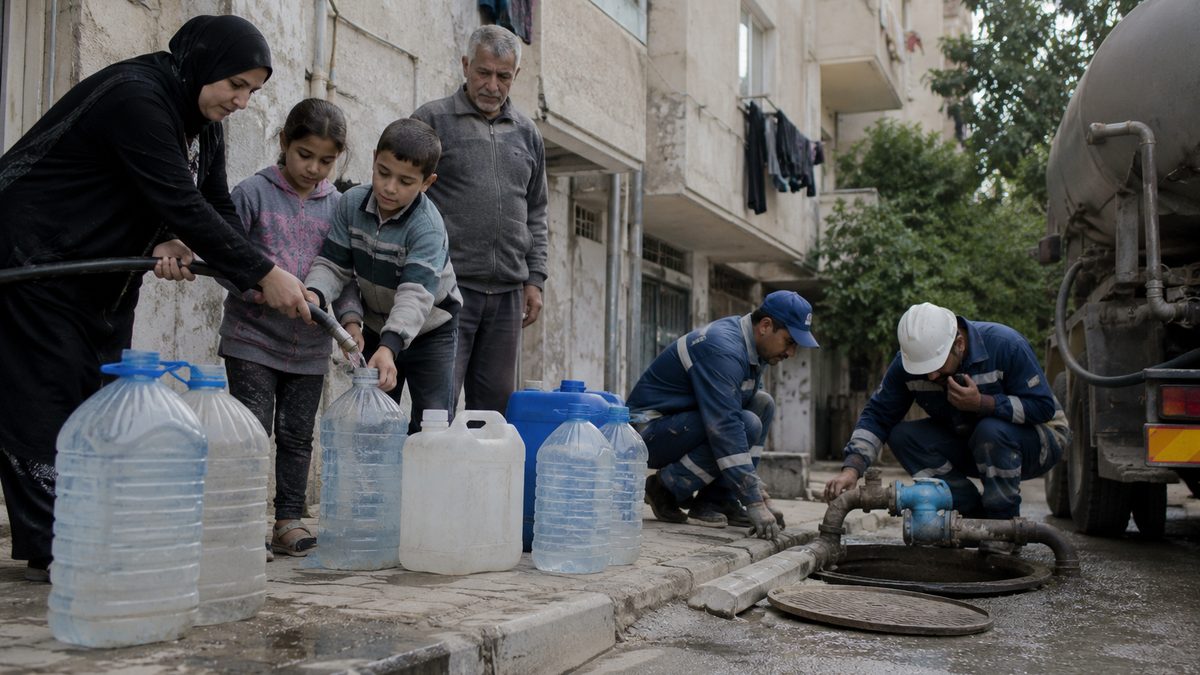
Water scarcity in the Middle East and North Africa affects families, farms, sanitation, food systems and public services. Editorial illustration by TheDailyGlobe.
Key Facts
- The World Bank says people across the Middle East and North Africa face unprecedented water scarcity.
- UNICEF describes MENA as the most water-scarce region in the world.
- UNICEF reports that 11 of the world's 17 most water-stressed countries are located in the MENA region.
- Water scarcity can affect sanitation, agriculture, food production and public health.
- Experts say solutions require a combination of infrastructure, conservation, governance and long-term planning.
For some families, turning on a faucet is something they rarely think about. For others, access to water requires planning. Households may store water for later use, adjust daily routines around supply schedules or worry about whether enough water will be available for cooking, cleaning and basic sanitation.
Those challenges help explain why water scarcity has become one of the most important long-term issues facing parts of the Middle East and North Africa, often called the MENA region. While the problem varies from country to country, international organizations say growing pressure on water systems is affecting households, agriculture, public health and local economies.
More Than a Rainfall Problem
When people hear the phrase water scarcity, they often think only about drought or a lack of rainfall. According to the World Bank and UNICEF, the issue is broader than that. Water systems depend on infrastructure, management, conservation efforts, wastewater treatment, agricultural practices and the ability of governments and utilities to deliver reliable service.
In some communities, aging pipes can lead to losses before water ever reaches homes. In others, growing populations place additional strain on existing systems. Agricultural demand, urban growth and economic development can all increase competition for limited water resources.
That means two neighboring countries may face very different challenges even though both are dealing with water stress. Some struggle with infrastructure gaps. Others focus on managing demand, expanding water reuse or investing in new technologies.
Why Families Feel the Pressure
Water shortages affect far more than household convenience. Reliable access to water is connected to sanitation, hygiene and public health. When water systems become strained, families may face higher costs, reduced access or greater uncertainty about basic services.
Children can be especially vulnerable. UNICEF has warned that water scarcity can increase health risks, affect sanitation and place additional burdens on communities that are already facing economic challenges. Poorer households often have fewer options when supplies become unreliable or more expensive.
Schools, clinics and community facilities can also feel the effects. A water system that struggles to meet demand can create challenges across multiple parts of daily life, even when shortages are not immediately visible.
The Connection to Farms and Food Prices
Agriculture is another major part of the equation. Farms require large amounts of water, and shortages can affect crop production, rural livelihoods and food systems. The exact impact differs by country, crop and local conditions, but water availability remains closely tied to agricultural output across much of the region.
When farming becomes more difficult or expensive, the effects can ripple through food supply chains. Families may ultimately notice those pressures through higher food costs or reduced local production. Water policy therefore becomes more than an environmental issue; it also becomes a question of economic resilience and household affordability.
No Single Solution
Governments across the region are exploring different approaches to water management. These include conservation efforts, wastewater reuse projects, infrastructure upgrades and desalination facilities that convert seawater into usable freshwater.
However, experts caution against viewing any one option as a complete answer. Desalination can expand supplies but often requires major investment and energy resources. Conservation programs can help reduce demand but depend on public participation and effective implementation. Infrastructure improvements can reduce waste but may take years to complete.
The World Bank has argued that institutional reforms and stronger management systems are also important because long-term water security depends not only on supply, but on how resources are allocated and maintained.
What Readers Should Watch Next
Several questions remain unresolved. It is not yet clear which countries will make the fastest progress in strengthening water systems or which approaches will prove most effective over time. Population growth, economic development and climate-related pressures could all influence future outcomes.
In the years ahead, water reuse projects, sanitation investments, agricultural water policies and infrastructure upgrades will provide important clues about how the region is adapting. For readers outside the Middle East and North Africa, the story offers a reminder that water scarcity is rarely just about weather. It is also about pipes, planning, public services and whether families can depend on one of the most basic resources of daily life.
Reporting note: Reporting draws on World Bank reports, UNICEF Middle East and North Africa materials, regional development research, and reviewed background materials. This article was produced with AI-assisted research and reviewed by an editor before publication.