Why Millions of Children Still Never Receive Routine Vaccinations
A global campaign delivered more than 100 million childhood vaccine doses, but health organizations say millions of children still face barriers that keep routine care out of reach.
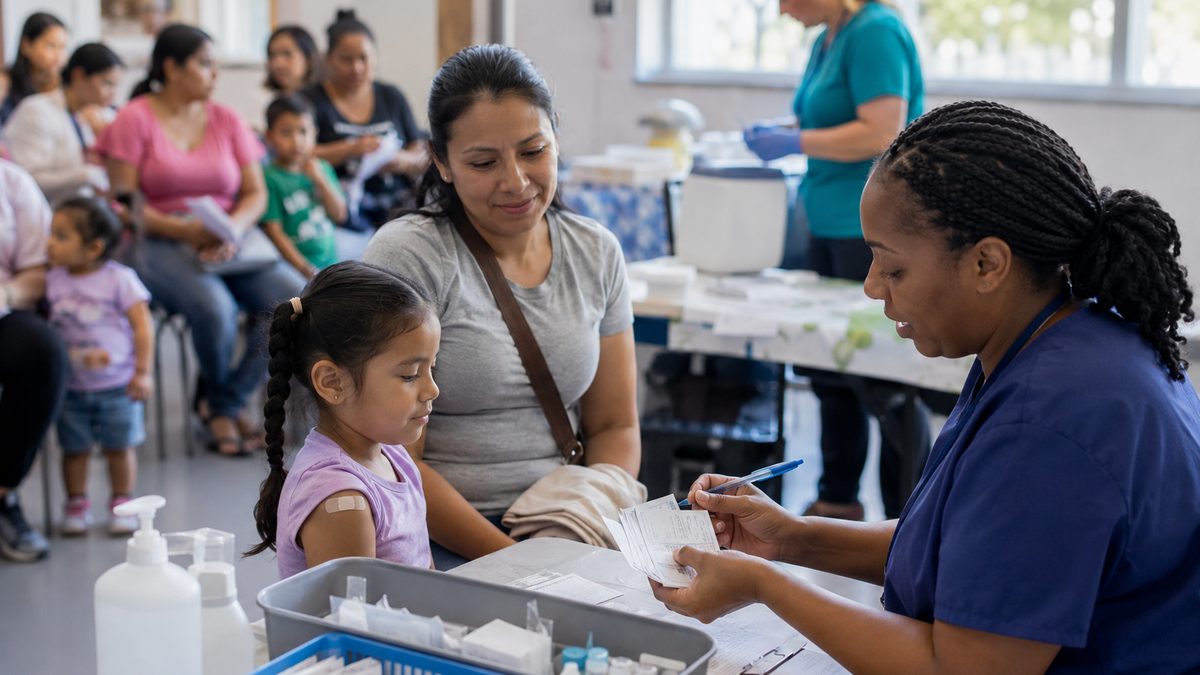
Routine vaccination gaps often reflect real-world access problems, including distance, records, conflict, cost and weak health systems. Editorial illustration by TheDailyGlobe.
Key Facts
- WHO, UNICEF and Gavi said the Big Catch-Up delivered more than 100 million childhood vaccine doses across 36 countries.
- The initiative reached an estimated 18.3 million children between the ages of 1 and 5.
- UNICEF said about 12.3 million of those children were classified as zero-dose children.
- The Big Catch-Up launched during World Immunization Week 2023 and concluded in March 2026.
- Health organizations say routine vaccination gaps can increase the risk of preventable disease outbreaks.
For many families, getting a child vaccinated is not as simple as walking into a nearby clinic. In some communities, the nearest health center may be hours away. In others, parents face transportation challenges, missing medical records, conflict-related disruptions, or health systems that struggle to keep up with demand. Those barriers help explain why millions of children around the world still miss routine vaccinations even when vaccines are available.
That reality sits at the center of a major global vaccination effort that recently concluded after three years of work. Health organizations say the campaign reached millions of children who had fallen behind on routine immunizations, but they also caution that the underlying access problems have not disappeared.
What the Campaign Accomplished
According to WHO, UNICEF and Gavi, the Big Catch-Up delivered more than 100 million childhood vaccine doses across 36 countries. The organizations said the initiative reached an estimated 18.3 million children who needed protection against diseases that routine immunization programs are designed to prevent.
The effort was created after years of disruption that left many children behind on recommended vaccinations. Rather than focusing only on vaccine supply, the campaign aimed to identify children who had been missed entirely and reconnect families with local health services.
The scale of the program is significant, but the organizations involved have not presented it as a complete solution. Instead, they describe it as a catch-up effort intended to help countries rebuild routine vaccination coverage and reduce immunity gaps.
Who Are Zero-Dose Children?
One of the most important numbers reported by UNICEF involves so-called zero-dose children. UNICEF said roughly 12.3 million of the children reached through the initiative had never received any vaccines before being contacted through the program.
The term does not automatically describe a family's beliefs or choices. In many cases, children become zero-dose children because they live in remote areas, have been displaced by conflict, face poverty-related barriers, lack access to transportation, or live in communities where health services are inconsistent.
That distinction matters because vaccination coverage is often discussed as a question of acceptance. Public-health workers frequently encounter a different challenge: reaching families that have limited access to care in the first place.
Why Access Matters as Much as Supply
Vaccines can only protect children if they reach the children who need them. Health organizations point to a long list of practical obstacles that can interrupt routine care. Clinics may be understaffed. Records may be incomplete. Parents may need to miss work to travel to appointments. Communities affected by conflict or displacement may experience repeated interruptions in health services.
Trust also plays a role. Families are more likely to participate in routine care when health systems are stable, familiar and accessible. Building that trust often requires local health workers, reliable communication and consistent follow-up rather than one-time campaigns.
For children, routine vaccinations can also be tied to broader public-health goals. When large numbers of children miss recommended immunizations, communities may become more vulnerable to outbreaks of diseases that health officials work to keep under control through regular vaccination programs.
The Work That Remains
The conclusion of the Big Catch-Up raises a new question: can countries maintain progress after the campaign ends? The answer remains uncertain. WHO, UNICEF and Gavi have highlighted the need for stronger routine immunization systems rather than relying solely on large recovery efforts.
Several important questions remain unanswered. It is not yet clear how quickly some hard-to-reach communities will close remaining coverage gaps. Long-term success will depend on whether local health systems can maintain accurate records, continue follow-up efforts and keep clinics accessible to families.
Public-health experts will also be watching for signs that remaining immunity gaps contribute to future outbreaks. Measles and other vaccine-preventable diseases are often monitored closely because they can reveal where routine coverage remains uneven.
What Readers Should Watch Next
The campaign's headline numbers tell only part of the story. More than 100 million doses were delivered and millions of children were reached, but the larger challenge involves making sure routine care continues after special programs end. Future updates from WHO, UNICEF and national health ministries will provide a clearer picture of whether vaccination coverage is improving in the communities that have historically been the hardest to reach.
The broader lesson is straightforward: access matters. Vaccines may exist, funding may be available and programs may be launched, but children are protected only when families can reliably connect with functioning health services. The success of future vaccination efforts will depend not only on supplies, but on whether clinics, health workers and communities remain connected long after a campaign concludes.
Reporting note: Reporting draws on World Health Organization, UNICEF and Gavi announcements, public-health program data, and reviewed background materials. This article was produced with AI-assisted research and reviewed by an editor before publication.