Why Food Banks Are Serving More Working Families
Food banks are increasingly helping people who have jobs but still struggle to cover groceries, rent, transportation and other basic expenses.
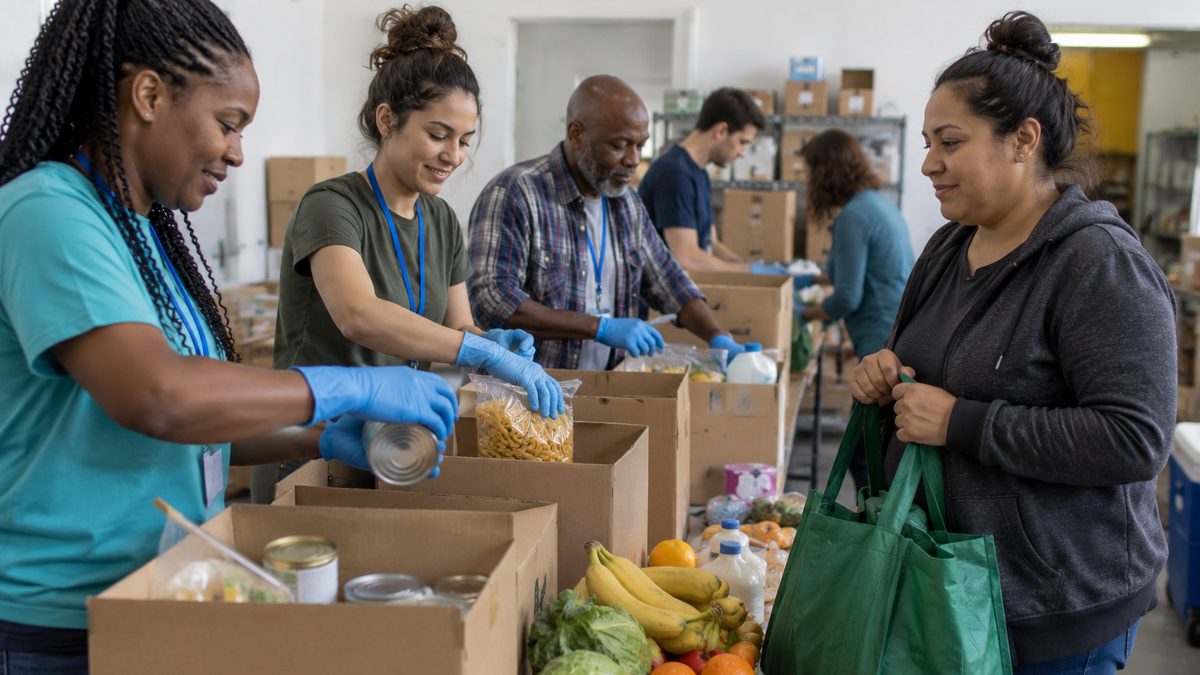
Food banks in North America are increasingly serving families facing pressure from groceries, rent, transportation and other basic costs. Editorial illustration by TheDailyGlobe.
Key Facts
- Food Banks Canada reported nearly 2.2 million monthly food bank visits in HungerCount 2025.
- The organization said monthly food bank use in Canada has doubled since 2019.
- Food Banks Canada reported that 1 in 5 people relying on food banks have jobs.
- Feeding America says its network helped provide billions of meals last year.
- Food bank demand is influenced by housing costs, grocery prices, transportation expenses, wages and public benefits.
For many working parents, the hardest part of the month is not finding a paycheck. It is making that paycheck stretch far enough. Rent is due. The car needs gas. Child care has to be paid. Groceries cost more than they used to. By the time the bills are covered, some households find there is not enough money left for food.
That reality is helping reshape who uses food banks across North America. While food banks have long served people facing unemployment or severe financial hardship, service providers increasingly report seeing working households seeking help. The trend challenges a common assumption that having a job automatically means having enough income to cover basic needs.
What the Numbers Show
Food Banks Canada's HungerCount 2025 report found that food bank use remains at historically high levels. The organization reported close to 2.2 million monthly visits across its network and said usage has doubled since 2019.
One of the report's most notable findings is that many people seeking assistance are employed. According to Food Banks Canada, about one in five food bank users have jobs. That does not mean most users are working, but it does suggest that employment alone is not always enough to prevent food insecurity.
In the United States, Feeding America reports that its network continues to distribute billions of meals annually. While the U.S. and Canadian systems operate differently and face different local conditions, organizations in both countries have highlighted the growing financial strain facing many households.
When the Household Budget Stops Working
Food insecurity is often discussed as a food problem, but many families experience it as a budgeting problem. Housing costs consume a larger share of income in many communities than they did in the past. Transportation expenses can be unavoidable for workers who commute. Child care, health-care costs and unexpected bills can quickly overwhelm a carefully planned budget.
A household may earn enough to avoid traditional poverty measures while still struggling to absorb rising expenses. In that situation, a food bank may become a temporary way to keep the budget balanced when wages do not keep pace with everyday costs.
For families with children, the pressure can be especially difficult. Parents often cut back on their own spending before reducing spending on food for their children. Community food programs and food banks frequently become part of the strategy families use to make it through a difficult month.
Why Demand Remains High
Food bank operators caution against looking for a single explanation. Grocery prices, housing costs, debt obligations, transportation expenses and gaps in public assistance can all contribute to increased demand. The exact mix varies by community and country.
The available data does not establish how much of the increase comes from any one factor. Some communities may be more affected by housing costs. Others may face challenges related to wages, inflation or local economic conditions. That is one reason food banks often describe food insecurity as a symptom of broader financial pressure rather than a stand-alone issue.
The growing number of working users also complicates older assumptions about who needs assistance. A person can work full-time, pay taxes and still face periods when monthly expenses exceed available income.
Questions That Remain Unanswered
Several important questions remain unresolved. It is not yet clear whether food bank demand will decline if grocery inflation eases or housing markets become more affordable. It is also difficult to determine how much of today's demand is linked to wages compared with other household expenses.
Another uncertainty involves the capacity of charitable organizations themselves. Food banks depend on donations, volunteers and community support. If demand remains elevated for an extended period, organizations may face increasing pressure to maintain services.
What Readers Should Watch Next
In the coming months, food bank visit numbers, grocery prices, rent trends and wage growth will provide clues about whether financial pressure on households is easing or continuing. Changes in public assistance programs and child benefits may also affect demand in some communities.
The larger lesson is that food insecurity is not limited to people without jobs. Increasingly, food banks are serving families who work, pay bills and still struggle to make the numbers add up. Understanding that reality helps explain why food bank demand remains high even in communities where many people are employed.
Reporting note: Reporting draws on Food Banks Canada reports, Feeding America materials, nonprofit service data, and reviewed background materials. This article was produced with AI-assisted research and reviewed by an editor before publication.