School Meals Are Becoming Family Budget Support, Not Just Education Policy
Global school meal programs are increasingly part of how governments support child nutrition, classroom readiness and household grocery budgets.
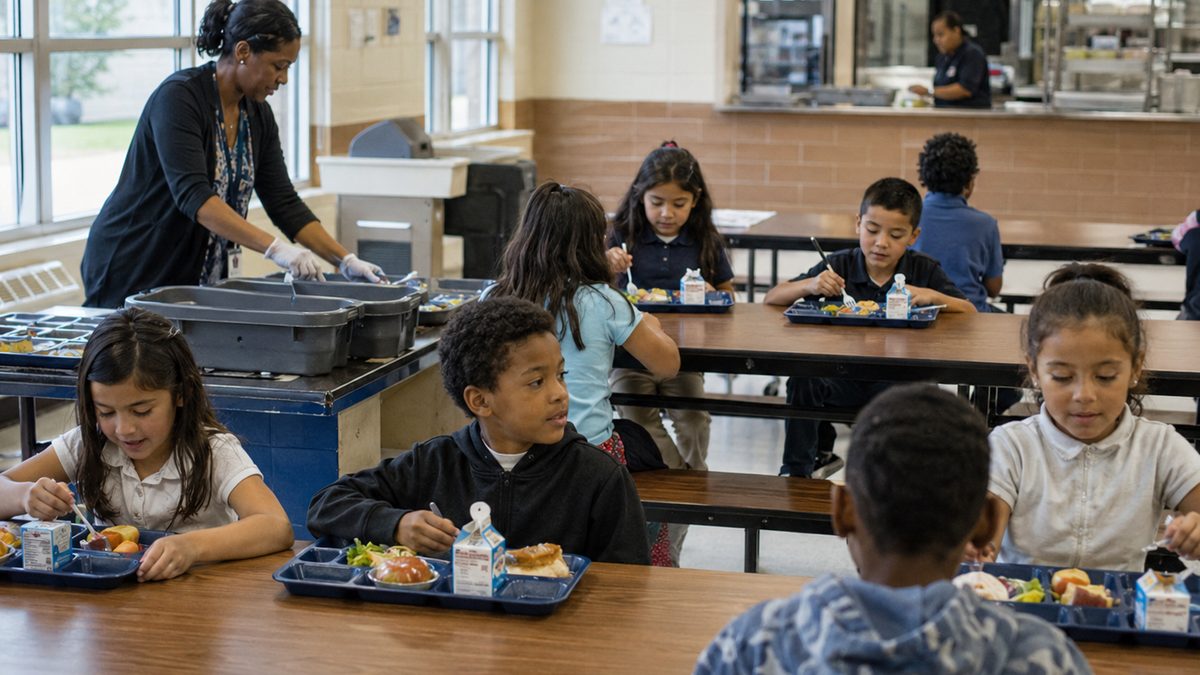
School meal programs can support child nutrition while easing pressure on family grocery budgets. Editorial illustration by TheDailyGlobe.
Key Facts
- WFP's State of School Feeding Worldwide report tracks global school meal coverage, costs and implementation.
- WFP reported that nearly 80 million more children were receiving school meals through government-led programs than in 2020.
- WFP said that increase brought the global total to at least 466 million children.
- The School Meals Coalition database compiles data from government and institutional sources.
- Program quality, meal size, funding and reach vary widely by country.
For a parent trying to stretch groceries through the week, a reliable meal at school can change the day. It can mean one less lunch packed from a thin pantry, one less skipped breakfast, or one child coming home better able to focus because hunger did not shape the school day.
That is why school meals are more than education policy. In many countries, they are also child nutrition policy, family-budget support and a way to keep children connected to school when household costs are rising.
The World Food Programme's State of School Feeding Worldwide report tracks global school meal coverage, costs and implementation. WFP has reported that nearly 80 million more children were receiving school meals through government-led programs than in 2020, bringing the global total to at least 466 million children.
Why One School Meal Can Matter
A school meal may look simple, but for a family under pressure it can carry a lot of weight. Food prices, rent, fuel, transportation and health costs can all compete for the same paycheck. When school provides a meal, even one daily expense becomes more predictable.
The effect is not only financial. A child who eats during the school day may be better prepared to learn, participate and stay through the day. A parent may have one less immediate worry. A household may be able to use limited grocery money for dinner, younger siblings or weekend meals.
That does not mean every program is equally strong. The value of a school meal depends on what is served, how often it is served, whether children can actually access it and whether the program is funded well enough to keep going. But the basic connection is clear: when food is available at school, families may have more room to manage the rest of the week.
What the WFP Data Shows
WFP's school feeding materials show how widely governments are using school meals as part of public support systems. The agency reported that nearly 80 million more children were receiving meals through government-led programs than in 2020, with the global total reaching at least 466 million children.
Those figures should be attributed to WFP and understood in the context of its global reporting. They show scale and growth, not identical conditions everywhere. A school meal program in one country may be nationally funded and stable, while another may depend on tighter budgets, outside support or changing food costs.
The School Meals Coalition database adds another layer by compiling information from government and institutional sources. That kind of data can help show where programs exist and how they are structured, but it does not erase the local differences that matter to families: meal size, food quality, school access, coverage and consistency.
More Than a Classroom Program
School meals sit at the intersection of several public needs. They can support nutrition, help children learn, reduce pressure on households and, in some countries, connect schools to local food systems.
That last point matters because school meal programs can sometimes support farmers, cooks, suppliers and local markets. When governments buy food for schools, those purchases can become part of the local economy. The details vary by country, and the available handoff does not establish how each program handles procurement. But the broader idea is one reason governments and international organizations treat school meals as more than a lunch line.
For families, the policy language is less important than the daily reality. If a child can count on a meal at school, the household has one more dependable support. That can matter especially in communities where food prices have risen or incomes are unstable.
The Funding Question
The main uncertainty is whether governments can sustain school-meal funding during budget pressure. Programs can expand when political will, public money and food systems line up. They can also become vulnerable when budgets tighten or prices rise.
Food inflation can create a second problem. Even when funding continues, higher food costs can affect what programs can buy, how large meals are, how many children are covered or how often meals are served. A program may remain in place while still facing pressure behind the scenes.
That is why global coverage totals are useful but incomplete. They show how many children are reached, but they do not fully explain meal quality, stability or whether a program is keeping pace with the cost of food. A headline number can show growth while local schools still face hard choices.
What Readers Should Watch Next
The next signals to watch are government school-meal budgets, food-price trends, updated coverage data and local procurement programs. Those details will show whether school meals are expanding, holding steady or becoming harder to sustain.
For U.S. readers, the story is not only about conditions abroad. It is a reminder that school meals often do several jobs at once. They help children eat. They help classrooms function. They help parents manage grocery pressure. And in some places, they support local food systems.
The larger lesson is plain: when families are squeezed, a school meal can become part of the household budget even if it never appears on a bank statement. It is not just an education program. For many children and parents, it is one of the practical supports that makes the week a little more manageable.
Reporting note: Reporting draws on World Food Programme school feeding reports, WFP public releases, School Meals Coalition data, and reviewed global child nutrition context. This article was produced with AI-assisted research and reviewed by an editor before publication.