Lead Poisoning Is Hiding in Everyday Places Children Live and Play
UNICEF, WHO and Pure Earth say childhood lead exposure remains widespread, often coming from everyday products, soil, dust, recycling and household materials.
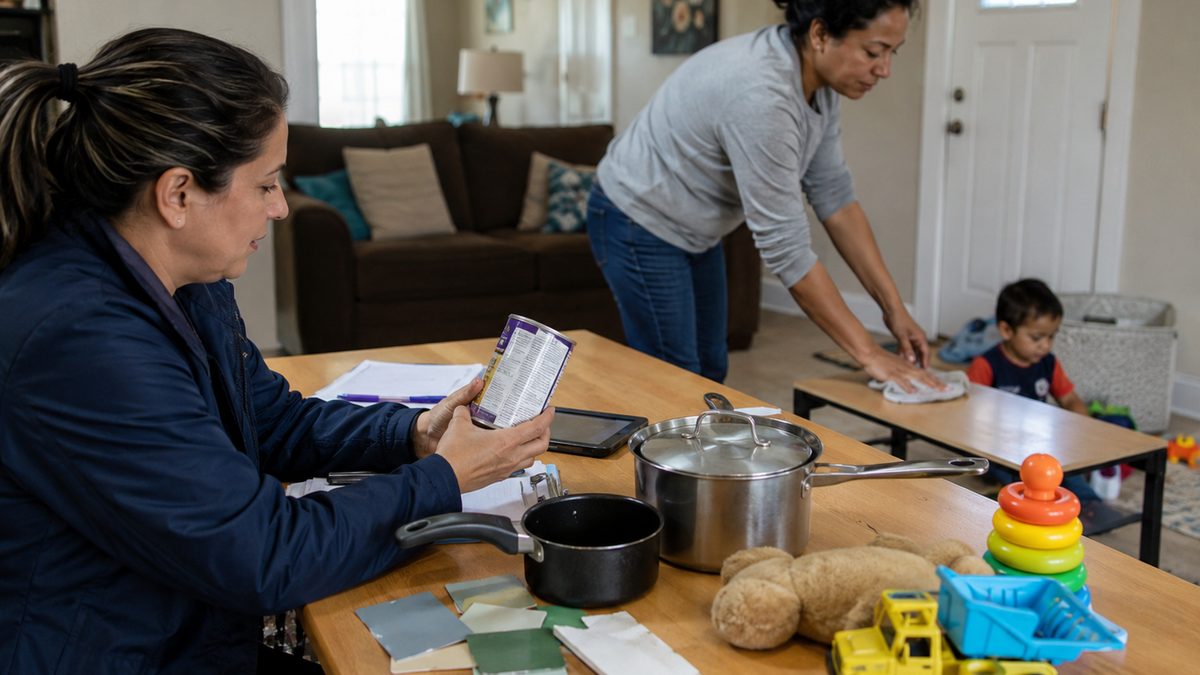
UNICEF says lead exposure can come from everyday environments and products, often without warning. Editorial illustration by TheDailyGlobe.
Key Facts
- UNICEF’s 2026 global framework calls childhood lead poisoning one of the most widespread and preventable threats to children’s health and development.
- UNICEF says more than 1 billion children are exposed to lead through everyday environments and products.
- UNICEF says even low levels of exposure can impair brain development and reduce learning potential.
- UNICEF and Pure Earth’s earlier Toxic Truth report estimated about one in three children globally had blood lead levels at or above 5 micrograms per deciliter, a level requiring action.
- WHO identifies lead poisoning as a serious public-health issue with multiple exposure routes and health effects.
Lead poisoning is easy to misunderstand because people often picture one source: old paint in an old house. That can be a danger, but global health groups say the problem is wider and often harder for families to see.
UNICEF’s 2026 global framework calls childhood lead poisoning one of the most widespread and preventable threats to children’s health and development. The concern is not only what happens in one home or one country. UNICEF says children can be exposed through everyday environments and products, including paint, dyes, cookware, ceramics, cosmetics, toys, spices, soil, dust, unsafe battery recycling and e-waste contamination.
Why Lead Is So Hard to Spot
One reason lead exposure is dangerous is that families often cannot see it, smell it or know it is present without testing. A child may be exposed through dust, soil, a product in the home, a local recycling site or a contaminated supply chain long before anyone connects the source to lead.
That is why public-health groups frame lead poisoning as a systems problem, not a parent-blame story. Families can take concerns seriously, but they usually cannot inspect global supply chains, regulate paint ingredients, police informal battery recycling or guarantee that every product reaching a market is lead-safe.
UNICEF says exposure can happen without warning and can have long-lasting consequences. That makes prevention different from many household safety issues. The best protection often comes before a child is exposed: safer products, testing, regulation, source removal and cleaner recycling systems.
How Lead Can Reach Children
The sources are not the same everywhere. In some communities, old paint and contaminated dust may be a central concern. In others, unsafe recycling of lead-acid batteries or e-waste can contaminate soil, air and nearby homes. In still other places, risk may come through cookware, ceramics, cosmetics, dyes, spices, toys or other consumer products.
UNICEF’s lead poisoning materials identify paints, dyes, cookware, ceramics, cosmetics, toys, spices and contaminated soil or dust among everyday sources. They also point to unsafe recycling of lead-acid batteries and e-waste as major sources in some low- and middle-income settings.
The public-service point is not that every item in those categories is unsafe. It is that lead exposure can come through ordinary routes people may not associate with poisoning. That is what makes the issue hard: the hazard can be hidden inside normal life.
Why Children Are Especially Vulnerable
Children are not just small adults when it comes to lead. Their bodies and brains are developing, and UNICEF says even low levels of exposure can impair brain development and reduce learning potential.
The effects can stretch beyond childhood. UNICEF says lead exposure affects health across the life course, not only during the early years. WHO also identifies lead poisoning as a serious public-health issue with multiple exposure routes and health effects.
That is why the global estimates are so striking. UNICEF says more than 1 billion children are exposed to lead through everyday environments and products. UNICEF and Pure Earth’s Toxic Truth report estimated that about one in three children globally had blood lead levels at or above 5 micrograms per deciliter, a level requiring action. Pure Earth’s summary says up to 800 million children may be affected at or above that threshold, with nearly half living in South Asia.
Prevention Depends on More Than Awareness
Awareness matters, but public-health groups say the problem cannot be solved by awareness alone. If unsafe products continue to reach families, if recycling remains uncontrolled or if communities lack access to testing, many parents will not have the information or tools they need.
The Partnership for a Lead-Free Future says childhood lead poisoning can be cut sharply with coordinated action. UNICEF’s investment case says a $1.6 billion global investment over 15 years could support ending childhood lead poisoning by 2040. The investment case describes that as about $2 per child over 15 years, or less than 15 cents per child annually.
Those figures should not be read as a guarantee that funding alone would solve the problem. They show how public-health groups are trying to frame lead poisoning as preventable harm that can be reduced through national systems, safer markets, testing, enforcement and source removal.
What Remains Unclear
Several practical questions remain. It is not clear which countries will move fastest on product safety, testing and source removal. It is also unclear how many communities have reliable access to blood lead testing, or how quickly informal recycling and unsafe consumer products can be controlled.
Funding and enforcement are also open questions. Rules on paper do not protect children unless governments can test products, monitor contamination, enforce standards and reach families in communities where exposure is most likely.
The next thing to watch is whether governments and global partners turn the growing evidence into routine prevention: safer products, cleaner recycling, better testing access and faster removal of known sources. The main lesson for readers is simple but important. Lead poisoning is not only an old-house problem. It is a hidden child-safety issue that can appear in everyday places children live and play, and the strongest solutions are built before exposure happens.
Reporting note: Reporting draws on UNICEF childhood lead poisoning materials, WHO lead poisoning guidance, Pure Earth and UNICEF reporting, the Partnership for a Lead-Free Future investment case, and reviewed background context. This article was produced with AI-assisted research and reviewed by an editor before publication.