Jordan Refugee Support Is Becoming a Budget and Self-Reliance Test
As displacement stretches into another year, Jordan's refugee response is increasingly focused on balancing humanitarian aid, food security, public services, and long-term self-reliance.
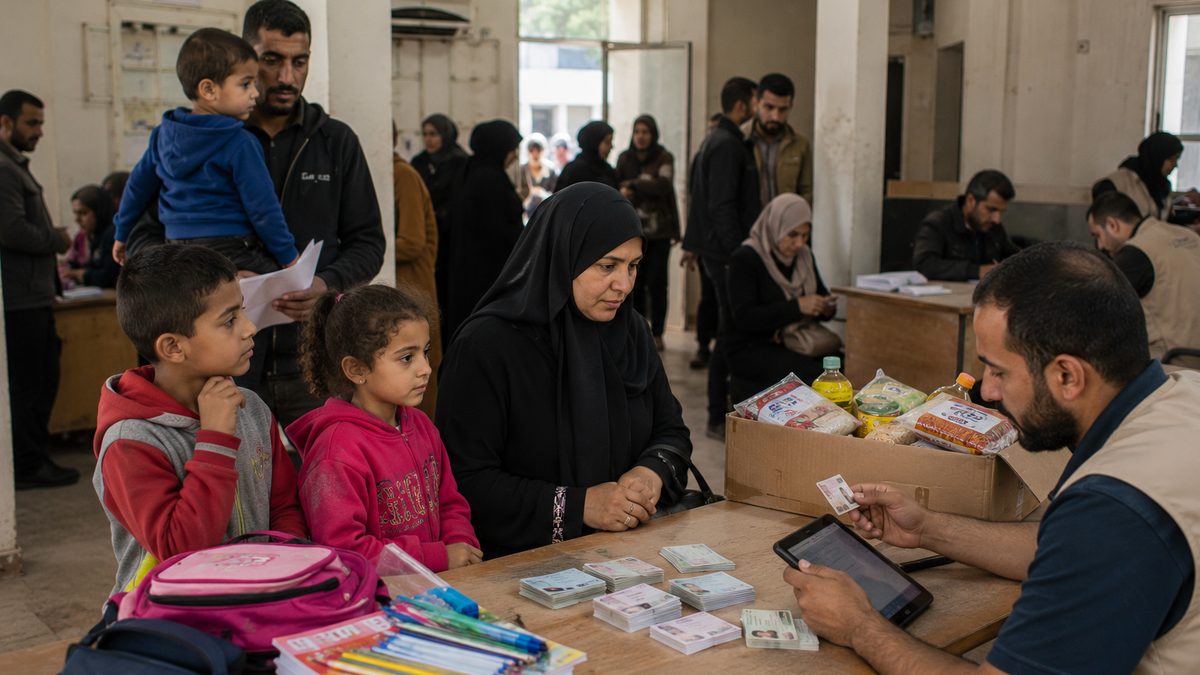
Jordan's long-running refugee response depends on aid funding, food support, host communities and self-reliance programs. Editorial illustration by TheDailyGlobe.
Key Facts
- UNHCR maintains a 2026 funding update for refugee operations in Jordan.
- The World Food Programme says Jordan hosts one of the world's largest refugee populations relative to its size.
- WFP reports that many refugee households continue to face food insecurity.
- ReliefWeb continues to publish humanitarian assessments and socio-economic reporting related to refugees in Jordan.
- Aid agencies increasingly discuss both emergency assistance and longer-term self-reliance programs.
For a refugee family, daily life is often shaped by practical questions. Is there enough money for rent? Will food assistance continue? Can children stay in school? Is there an opportunity to earn an income without depending entirely on aid?
For host countries, the questions are different but closely connected. How can public services support large displaced populations? How long can international aid fill funding gaps? And what happens when a humanitarian response that began as an emergency lasts for years?
Those questions are central to Jordan's refugee situation in 2026, as international agencies continue balancing immediate assistance with efforts aimed at helping families become more self-reliant over time.
From Emergency Response to Long-Term Planning
When large numbers of refugees first arrive in a country, humanitarian efforts often focus on immediate needs such as shelter, food, health care, and safety. Over time, however, the challenge changes.
Jordan has spent years hosting displaced populations, particularly refugees from neighboring conflicts. As a result, the conversation has expanded beyond emergency aid. International organizations and humanitarian groups increasingly focus on how refugee families can access education, employment opportunities, and services that support greater independence.
That shift does not mean humanitarian needs have disappeared. Rather, it reflects the reality that many displaced families have been living in Jordan for extended periods, making long-term planning as important as short-term assistance.
Food Security Remains a Major Concern
Food assistance remains one of the most visible parts of the refugee response. According to the World Food Programme, refugee households in Jordan continue to experience concerning levels of food insecurity, even after years of international support efforts.
Food insecurity can affect more than nutrition. Families facing difficult choices about food spending may also struggle with housing costs, transportation expenses, health care needs, or educational costs. Humanitarian agencies often view these pressures as connected rather than isolated problems.
That connection helps explain why food support programs remain a central part of aid planning even as organizations discuss broader goals related to self-reliance.
The Pressure on Public Systems
Jordan's experience is often discussed as an example of how long-term displacement affects public systems. Schools, health services, local infrastructure, and labor markets may all experience additional demand when large refugee populations remain in a country for extended periods.
At the same time, aid organizations emphasize that refugee populations are not a single group with identical circumstances. Families can face very different economic situations, legal pathways, and support needs depending on where they live and what resources are available to them.
That complexity makes policy decisions difficult. Governments, aid agencies, and donor countries must often balance humanitarian obligations with practical budget realities and long-term development goals.
Why Funding Matters
Much of the system depends on donor funding. UNHCR's 2026 operational updates continue tracking support needs for refugee programs in Jordan, highlighting the importance of sustained financial backing for assistance efforts.
Funding decisions can influence the scale of food assistance programs, education initiatives, community support services, and projects designed to help families move toward greater economic independence. Humanitarian organizations frequently warn that funding uncertainty can complicate long-term planning.
At the same time, available reporting does not establish exactly how funding levels throughout 2026 will affect every program. The situation continues to evolve as agencies assess needs and resources.
What Remains Unclear
Several important questions remain unresolved. It is unclear how donor priorities may shift during the year and whether available funding will fully support planned humanitarian programs.
It is also unclear how return movements, regional conditions, and host-community economic pressures may affect future planning. Humanitarian agencies continue monitoring these developments, but current reporting does not provide definitive answers.
Another uncertainty involves the pace of self-reliance efforts. While many organizations support programs that reduce long-term dependence on aid, outcomes can vary significantly between communities and households.
What Readers Should Watch Next
Future updates from UNHCR, the World Food Programme, and humanitarian survey projects will likely offer the clearest picture of how conditions are changing.
Readers should pay attention to funding updates, food-assistance decisions, socio-economic survey findings, and information about how refugee households are navigating employment, education, and daily living costs.
Jordan's experience highlights a broader reality facing many parts of the world. Displacement is often discussed as a short-term emergency, but in practice it can become a long-running challenge that touches public budgets, food systems, local communities, and the lives of families trying to build stability after years of uncertainty.
Reporting note: Reporting draws on UNHCR operational updates, World Food Programme materials, ReliefWeb humanitarian reporting, and reviewed background materials. This article was produced with AI-assisted research and reviewed by an editor before publication.