How Mobile Banking Changed Everyday Life Across Africa
For many households and small businesses, mobile money has become a practical way to send payments, pay bills and manage financial emergencies when traditional banking is difficult to access.
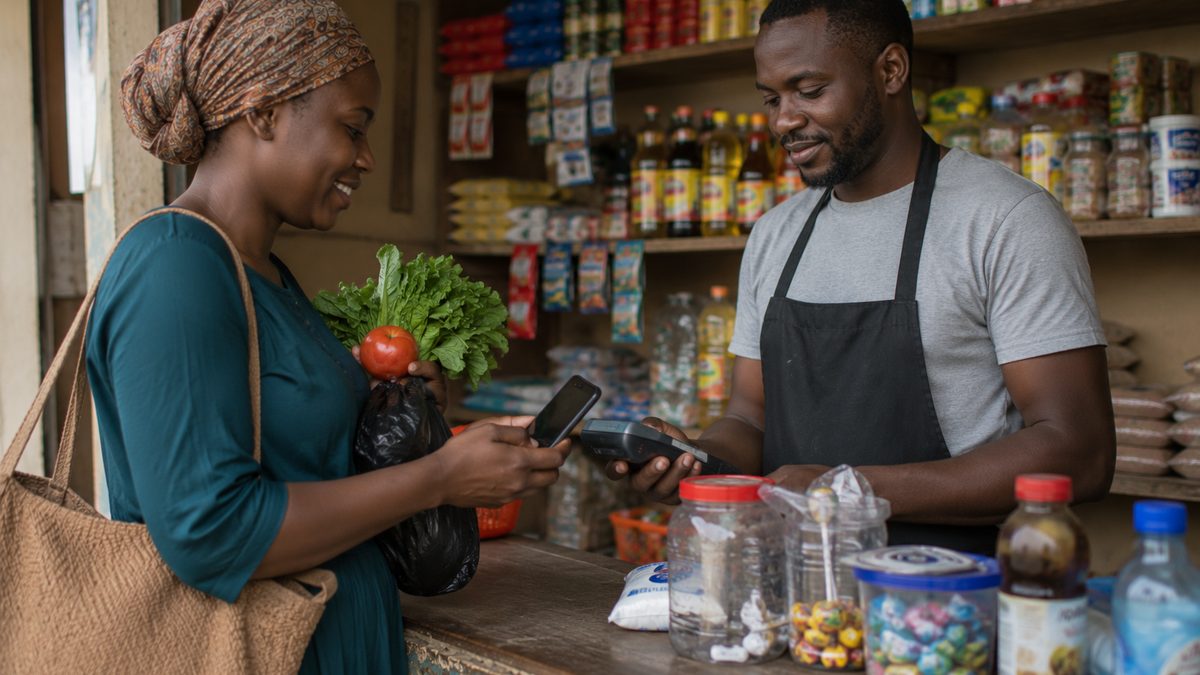
Mobile money has changed how many African households and small businesses send payments, pay bills, save and manage emergencies. Editorial illustration by TheDailyGlobe.
Key Facts
- The IMF's 2025 review of digital payment innovations says mobile money and related technologies have become central policy issues across sub-Saharan Africa.
- GSMA's 2025 industry report tracks continued growth in mobile money services around the world.
- World Bank Global Findex research links digital payments and mobile technology to broader financial inclusion.
- Mobile money can help households send remittances, pay bills and support small-business transactions.
- Experts caution that fees, fraud, outages and unequal access remain ongoing concerns.
A parent needs to send money to a relative in another town. A shop owner has to pay a supplier before opening for the day. School fees are due, and the nearest bank branch may be hours away. For millions of people across Africa, a mobile phone has become the tool that helps solve those everyday financial challenges.
Over the past two decades, mobile money services have transformed how many households and small businesses move, store and receive money. What began as a way to transfer funds through a phone has evolved into a broader financial system that many people use to pay bills, receive wages, support family members and manage emergencies.
From Banking Alternative to Daily Infrastructure
The growth of mobile money is often discussed as a technology story, but for many users it is really a convenience story. Instead of traveling long distances to access banking services, people can often complete routine financial tasks using a phone.
The IMF's 2025 review of digital payment innovations in sub-Saharan Africa notes that mobile money, faster payment systems and other digital financial tools have become important policy topics throughout the region. Policymakers increasingly view these systems as part of everyday economic infrastructure rather than a niche financial service.
That shift reflects how widely mobile payments are used in some countries. Small merchants, transportation providers, workers and families may all participate in the same digital payment ecosystem, creating financial connections that were more difficult to maintain in cash-only environments.
Why Families and Small Businesses Use It
For households, one of the biggest benefits is speed. A family member working in a city can send money to relatives in another community within minutes. Bills can often be paid without standing in line. Emergency support can reach relatives more quickly when unexpected expenses arise.
Small businesses have also found practical uses for mobile payments. A shop owner can receive customer payments, purchase inventory and track transactions without handling as much cash. For businesses operating in areas with limited traditional banking access, mobile money can help simplify routine operations.
World Bank Global Findex research has connected digital payments and mobile technology to broader measures of financial inclusion. Having access to payment tools does not guarantee financial security, but it can provide people with additional ways to participate in the formal economy.
The Limits of the Mobile Money Story
Mobile money's growth does not mean every problem has been solved. Access remains uneven across countries and communities. Some households still lack reliable mobile service, affordable devices or the digital skills needed to use financial applications confidently.
Consumer protection is another concern. Fraud schemes continue to evolve alongside digital payment systems. Users may face risks from scams, unauthorized transactions or account security problems. Service outages can also create challenges when people depend heavily on digital payments for daily transactions.
Fees remain an important issue as well. While digital payments can reduce certain costs, transaction charges can accumulate over time. Regulators and policymakers continue debating how to encourage innovation while protecting consumers from excessive costs or unfair practices.
Why Policymakers Are Paying Attention
As mobile money becomes more deeply integrated into economic life, governments and regulators face new questions. How should payment systems be supervised? What protections should consumers have when problems occur? How can competition be encouraged while maintaining security and reliability?
The IMF notes that digital payment innovations now sit near the center of many financial policy discussions across the region. Those conversations extend beyond technology and touch on economic development, financial inclusion and consumer trust.
What Readers Should Watch Next
Several questions remain unresolved. It is not yet clear how quickly mobile financial services will reach people who remain excluded from existing systems. Regulators continue weighing rules related to fraud prevention, competition and consumer protection. Service reliability and affordability also remain important concerns.
Future World Bank financial inclusion data, updates from regulators and trends in mobile money adoption will offer clues about where the industry is headed. What is already clear is that for many households and small businesses, mobile money has become less about technology and more about everyday life. It is now part of how people pay bills, support relatives, operate businesses and navigate financial challenges in communities across the continent.
Reporting note: Reporting draws on IMF policy research, World Bank financial inclusion data, GSMA industry reporting, and reviewed background materials. This article was produced with AI-assisted research and reviewed by an editor before publication.