How Land Mines Continue to Threaten Families Long After Wars End
For many families, the danger of war does not end when fighting stops. Land mines and unexploded ordnance can keep farms, roads, schools and homes unsafe for years.
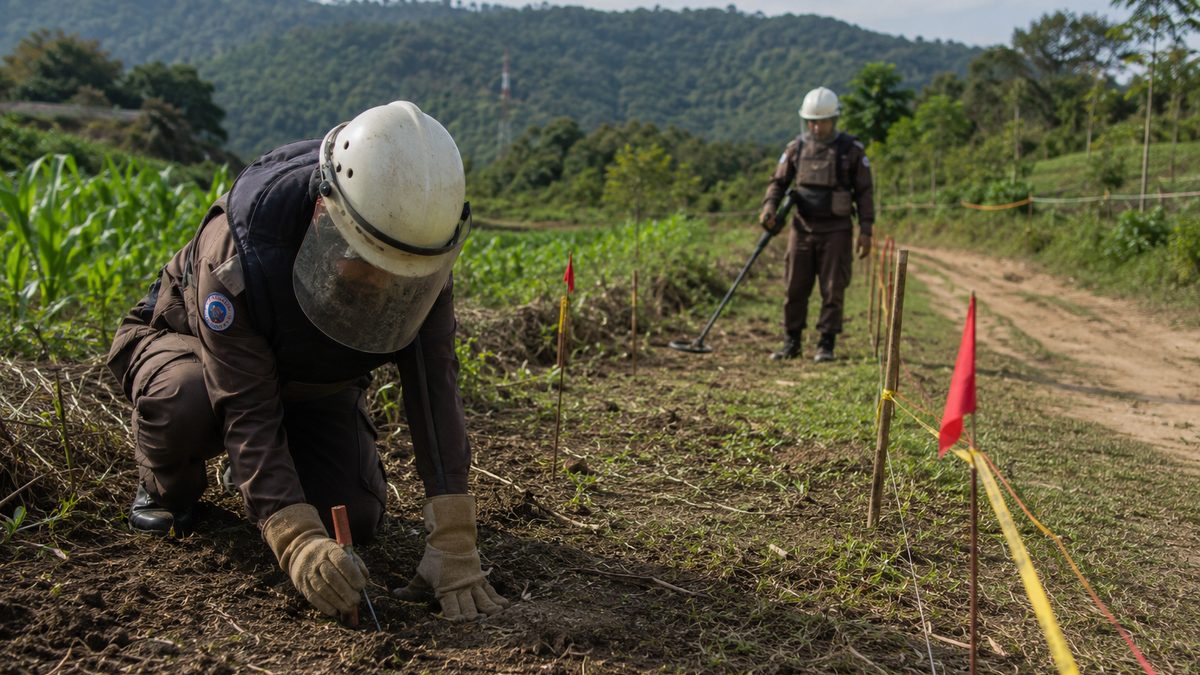
Land mines and explosive remnants of war can threaten families long after fighting ends. Editorial illustration by TheDailyGlobe.
Key Facts
- Landmine Monitor 2025 reported 6,279 people were killed or injured by landmines and explosive remnants of war in 2024.
- The 2024 total was the highest annual casualty figure reported since 2020.
- Civilians accounted for a large share of recorded casualties.
- Mine contamination can delay the safe return of families and slow reconstruction efforts.
- Demining operations are often expensive, technically difficult and time-consuming.
For a family returning home after a conflict, the hardest part may not be rebuilding a house or repairing a damaged field. It may be figuring out whether the ground beneath their feet is safe. A path to school, a road into town, a farm field or a nearby water source can remain dangerous long after the last shots are fired.
That reality helps explain why land mines and unexploded remnants of war continue to affect millions of people years after conflicts fade from international headlines. While wars often end with ceasefires, peace agreements or reduced fighting, the hidden hazards left behind can continue shaping daily life for entire communities.
A Threat That Remains After the Fighting
According to Landmine Monitor 2025, at least 6,279 people were killed or injured by landmines and explosive remnants of war in 2024. The report said the figure was the highest annual total recorded since 2020.
The numbers tell only part of the story. Behind every statistic are communities trying to resume ordinary life. Families returning to their homes may find fields inaccessible. Children may face risks on routes that once connected neighborhoods to schools. Roads needed to deliver food, medical supplies and construction materials may require lengthy surveys before they can be considered safe.
Unlike many wartime dangers, mines often remain hidden. A community may appear calm and stable while dangerous contamination remains buried underground or concealed in damaged structures and surrounding land.
Why Children and Civilians Are Often Most Affected
Landmine Monitor and humanitarian organizations report that civilians make up a large share of casualties linked to mines and explosive remnants of war. Children can be particularly vulnerable because they may not recognize warning signs or understand the risks posed by unfamiliar objects left behind after conflict.
The danger extends beyond direct injuries. Parents may hesitate to let children travel independently. Farmers may avoid productive land. Communities may delay rebuilding efforts because they cannot confirm whether an area is safe. In practical terms, contamination can limit movement and economic activity long before any incident occurs.
Humanitarian organizations frequently describe mine clearance as both a safety issue and a development issue. Removing hazards can help reopen roads, reconnect communities and restore access to schools, markets and health services.
The Long Process of Making Land Safe Again
Demining is often slow work. Teams must survey affected areas, identify hazards, mark dangerous locations and remove explosive devices using specialized equipment and training. The process can take years depending on the size of contaminated areas, terrain, security conditions and available funding.
Even when governments and aid organizations prioritize clearance efforts, progress can be uneven. Some regions are easier to access than others. Weather conditions, damaged infrastructure and continuing instability can complicate operations. In some cases, contamination may not be fully understood until residents begin returning and reporting suspected hazards.
This means communities can face difficult choices. Families may need to decide whether to wait for clearance efforts or return to areas where risks have not been completely assessed. Humanitarian groups generally emphasize risk education alongside clearance work to help communities recognize potential dangers while longer-term solutions continue.
Questions That Remain Unanswered
While annual reports provide valuable tracking data, important questions remain. It is not yet clear how quickly some of the world's most heavily contaminated areas can be surveyed and cleared. Funding levels for mine-action programs, victim assistance and risk education can vary from year to year.
Another uncertainty involves future contamination. Humanitarian organizations continue monitoring reports of mine use in various conflicts, but the long-term effect on future casualty totals remains unknown. New contamination can add to existing challenges and extend recovery timelines for affected communities.
What to Watch Next
Future updates from Landmine Monitor and mine-action organizations will help show whether casualty totals are rising or falling and whether clearance efforts are keeping pace with the need. Observers will also be watching funding commitments, community risk-education programs and the progress of demining operations in heavily affected regions.
For many families around the world, the end of conflict is only the beginning of recovery. Whether communities can safely return home, reopen schools, cultivate farmland and rebuild local economies often depends on a challenge that receives far less attention than the fighting itself: making the ground safe again.
Reporting note: Reporting draws on Landmine Monitor 2025, humanitarian mine-action organizations, casualty tracking data, and reviewed background materials. This article was produced with AI-assisted research and reviewed by an editor before publication.