Digital Access Is Becoming a Basic Household Utility
Internet access and digital payments are now tied to school, work, banking and public services, but affordability, safety and quality gaps still leave many households behind.
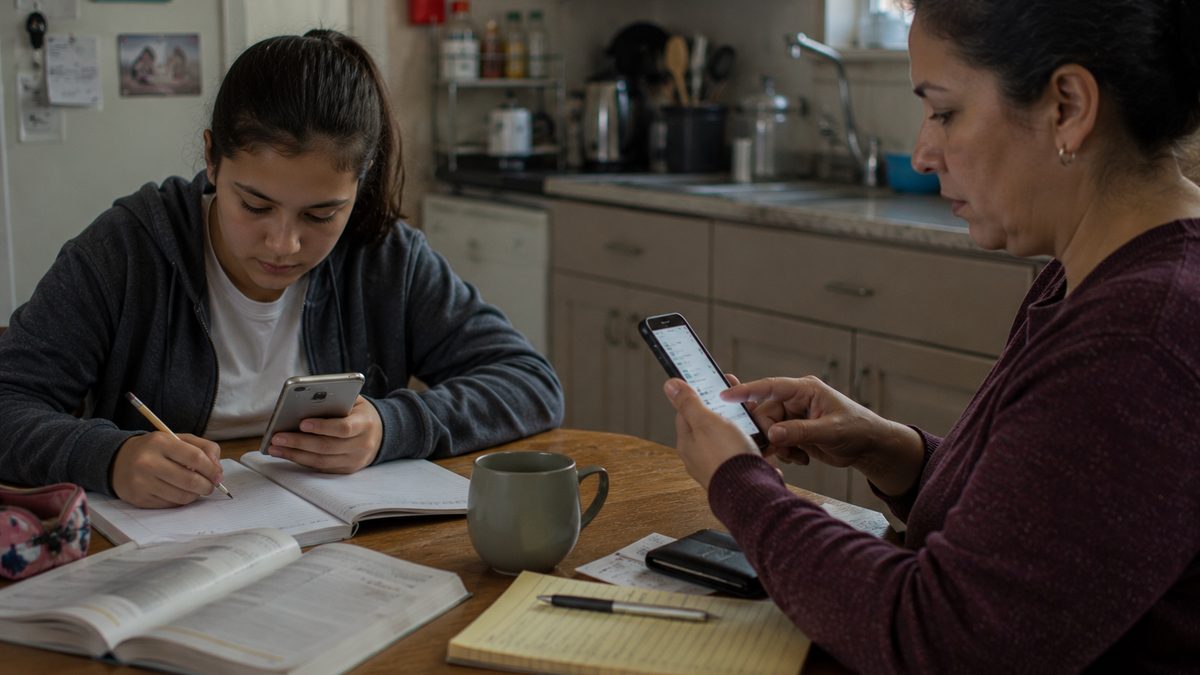
Internet access and digital payments increasingly shape school, work, banking and public services for households around the world. Editorial illustration by TheDailyGlobe.
Key Facts
- ITU's 2025 Facts and Figures says almost three-quarters of the world's population are online, while 2.2 billion people remain offline.
- ITU says mobile broadband coverage is nearly universal, but affordability and quality gaps persist.
- The World Bank's Global Findex 2025 tracks access to accounts, digital payments, savings, borrowing, financial risk management, mobile ownership and digital safety.
- World Bank materials say digital financial services can expand access while also creating consumer and cyber risks.
- Digital access and digital financial inclusion are related, but they are not the same thing.
For many families, a working phone is no longer just a convenience. It may be how a student receives school messages, how a parent gets work updates, how a household sends money, checks a benefit, pays a bill or reaches a government service.
That shift is happening across countries with very different incomes, infrastructure and public systems. Digital access is becoming less like a luxury technology and more like a basic household utility, similar to transportation, electricity or a bank account: something people may need to participate in ordinary life.
But access is not the same as safety, affordability or usefulness. Official data from the International Telecommunication Union and the World Bank show a world that is more connected than before, while also showing that billions remain offline and many households still face gaps in cost, quality and trust.
Why Connection Now Means More Than Browsing
For years, internet access was often discussed as a technology issue. That frame now feels too narrow. A household connection can affect whether a child completes schoolwork, whether a worker receives job assignments, whether a farmer or small seller gets paid, whether a migrant worker can send money home or whether a family can use online public services.
That is why the digital divide is not only about who can stream video or use social media. It is about who can handle the ordinary tasks that governments, schools, banks, employers and companies increasingly move online.
In low- and middle-income countries, that can be especially important. A phone may be the main screen, the main bank branch, the main job tool and the main connection to relatives at the same time. Losing access, or having access that is too expensive or unreliable, can make daily life harder in ways that do not look like a traditional infrastructure failure.
What the Global Numbers Show
The ITU's 2025 Facts and Figures estimates that almost three-quarters of the world's population are online. That is a major change from the early internet era, when digital access was concentrated in wealthier countries and urban areas.
The same estimate also shows the remaining gap: 2.2 billion people are still offline. That number matters because it represents people who may be cut off from services that others now treat as routine.
Coverage alone does not solve the problem. ITU says mobile broadband coverage is nearly universal, but affordability and quality gaps persist. In plain terms, a signal may exist in a country or region, but the service may still be too expensive, too slow, too unreliable or too limited to meet household needs.
That distinction matters for policymakers and families alike. A household can technically live in a covered area and still not have dependable access for school, work, payments or official forms.
Why Payments Change the Stakes
The World Bank's Global Findex 2025 tracks access to accounts, digital payments, savings, borrowing, financial risk management, mobile ownership and digital safety. That broad scope shows how closely digital access is now tied to financial life.
A phone connection can help people receive wages, send remittances, pay merchants, save money, borrow or receive support. Digital financial services can expand access for people who live far from bank branches or who have been left out of traditional financial systems.
But digital payments are not automatically good for every household. The same systems that make money easier to move can expose people to fraud, fees, mistakes, data misuse or cyber risks. A person may gain access to a digital account but still struggle with passwords, scams, unreliable networks, weak consumer protection or a lack of trusted help when something goes wrong.
That is why internet access and financial inclusion should be connected carefully, not blended into one simple success story. Being online can open doors. It can also move old risks into new channels.
The Affordability Problem
A service that exists but costs too much is not real access for many families. Data plans, smartphones, charging, repairs and replacement devices all cost money. For a household with uneven income, a monthly data bill can compete with food, transport, rent, medicine or school costs.
Quality also affects affordability. A cheap connection that fails during schoolwork, cuts out during a payment or cannot load a government form may not be enough. Families may pay for access and still be unable to rely on it.
Rural communities can face an extra layer of difficulty. Even when mobile coverage has expanded, service quality, device cost and local infrastructure can vary. A student in a rural area may technically be connected but still face a much harder time using the internet than a student in a city.
Safety and Trust Are Part of Access
Digital access also depends on whether people trust the systems they are being asked to use. If a household fears scams, hidden fees, identity theft or losing money through a mistaken transaction, digital services may feel risky rather than helpful.
World Bank materials note that digital financial services can expand access while creating consumer and cyber risks. That warning is important because public policy often focuses on getting more people connected or enrolled. Connection is only the first step.
A useful digital system needs protections people can understand. That can include clear rules for payments, help when accounts are compromised, consumer protections for digital financial services, safer identity systems and public education that does not assume everyone is already comfortable online.
What to Watch Next
The next phase of digital access will not be measured only by how many people live near a mobile signal. The more important questions are whether households can afford service, whether the connection is good enough, whether rural gaps close and whether digital payment systems protect the people using them.
Governments, telecom providers, financial regulators and development agencies will also have to decide how digital ID, mobile money, public services and consumer protection fit together. Those choices will shape whether digital access becomes a real household utility or another system that works best for people who already have money, documents and reliable service.
The practical takeaway is simple: digital access is no longer just about technology. It is about whether families can learn, work, pay, save, borrow, receive help and stay safe in systems that increasingly assume everyone is connected. For the 2.2 billion people still offline, and for many more with weak or costly access, that assumption is still far from true.
Reporting note: Reporting draws on International Telecommunication Union connectivity data, World Bank Global Findex 2025 materials, financial inclusion research, and reviewed background materials. This article was produced with AI-assisted research and reviewed by an editor before publication.