Children Are Still Dying on Roads They Use Every Day
A UNICEF road safety report says traffic crashes remain a leading cause of death and injury for children and adolescents worldwide, with the burden falling hardest on low- and middle-income countries.
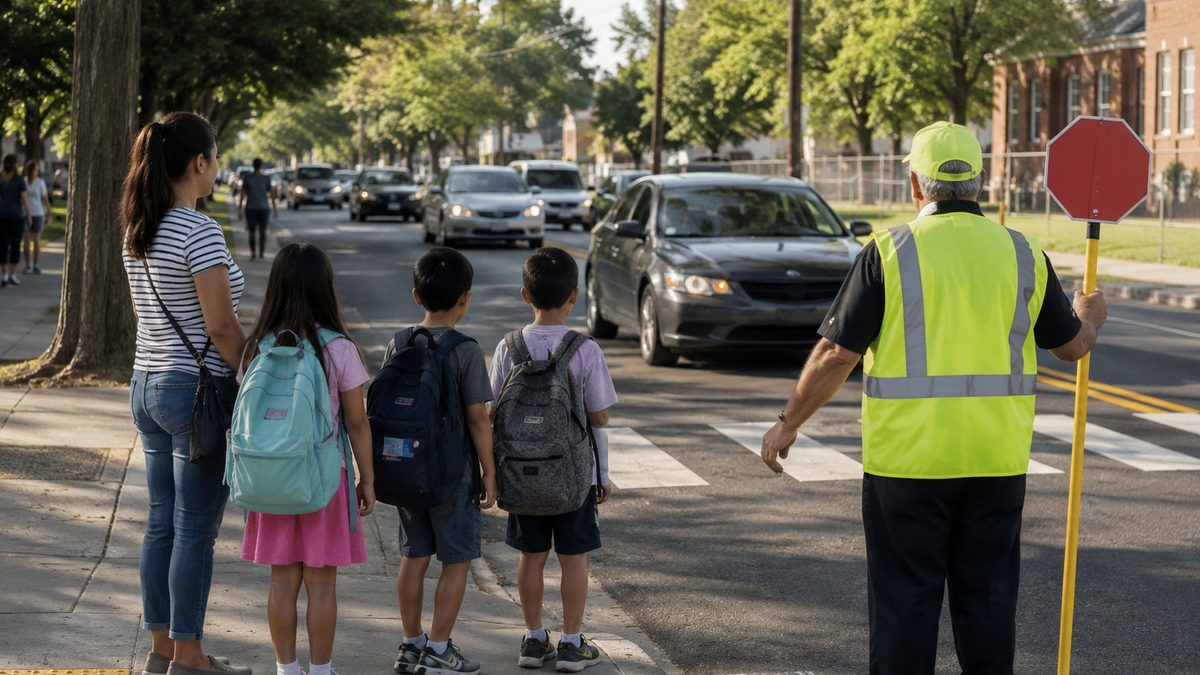
UNICEF says road traffic injuries remain a major cause of death and injury for children and adolescents worldwide. Editorial illustration by TheDailyGlobe.
Key Facts
- UNICEF says road traffic crashes are a leading cause of death and injury among children and adolescents worldwide.
- The report estimates that 181,453 children ages 0 to 19 die each year from road traffic injuries.
- More than 90% of the child and adolescent road injury burden affects low- and middle-income countries, according to UNICEF.
- The report draws on WHO data collected for the Global Status Report on Road Safety 2023.
- UNICEF highlights prevention steps including safer school zones, speed management, better infrastructure and stronger emergency response.
For many families, the danger is not far away or hard to imagine. It is the road outside the school, the crossing without enough protection, the bus stop near fast traffic, or the walk home where a sidewalk disappears.
A UNICEF report on child and adolescent road safety says road traffic crashes remain a leading cause of death and injury for children and teenagers worldwide. The report, titled Protecting Young Lives, estimates that 181,453 children ages 0 to 19 die from road traffic injuries each year.
The finding turns road safety into more than a transportation problem. UNICEF frames it as a public-health and child-protection issue, because the same daily routes that connect children to school, health care, family and work can also expose them to preventable danger.
The Risk Starts With Ordinary Trips
The report's most useful message is also its plainest: children often face danger on roads they use for ordinary life. A child walking to school, riding in a vehicle, crossing near a market or waiting for transport can be exposed to risks built into the road environment.
Children and adolescents are not just smaller adults in traffic. UNICEF notes that their size, judgment, travel patterns and dependence on walking or school transport can increase their risk. A driver may have less time to see a child. A child may have less ability to judge speed or distance. A family may have few safe alternatives if the only route to school runs along a busy road.
That is why the report avoids treating child road deaths as random accidents. Its prevention framework points to roads, speeds, vehicles, behavior and emergency response. In other words, the question is not only whether an individual child or parent made the right choice. It is whether the system around that family was designed with children in mind.
Why Poorer Countries Carry More of the Burden
UNICEF says more than 90% of the child and adolescent road injury burden affects low- and middle-income countries. That does not mean roads are safe everywhere else, or that risks look the same from one country to another. It does mean the worst burden falls where families may have fewer protections around daily travel.
The reasons can include missing sidewalks, unsafe crossings, high traffic speeds near schools, weak vehicle safety, limited enforcement and emergency care that may arrive too late or be too far away. The report also points to the effect road injuries can have beyond the immediate tragedy, including the educational and economic potential of young people and their communities.
For a family, that can show up in painful and practical ways: a child who cannot safely walk to school, a parent who worries every morning at a crossing, a teenager injured on the way to work, or a community where unsafe roads make ordinary movement feel risky.
What Prevention Looks Like
UNICEF highlights the Safe System approach, which treats road safety as a shared responsibility rather than a matter of individual caution alone. That approach looks at road design, vehicle safety, speeds, behavior and post-crash care together.
For children, that can mean safer school zones, lower traffic speeds where children walk, better crossings, protected space for pedestrians and cyclists, and roads designed so a mistake does not automatically become a death sentence. It can also mean emergency systems strong enough to respond quickly when crashes happen.
The report includes country and program examples involving safer school zones and infrastructure improvements. Those examples matter because they point to a central public-service finding: child road deaths are preventable when roads, speeds, crossings, vehicles and emergency response are planned around safety.
What Remains Unclear
The report does not mean every country faces the same road safety problem, or that one solution will work everywhere. Local conditions matter. A crowded urban crossing, a rural road without lighting, a dangerous school pickup area and a highway used by pedestrians may require different fixes.
It also remains unclear which countries will move fastest to fund safer school zones, pedestrian infrastructure and better emergency response. UNICEF's findings point to the scale of the problem, but local governments, health systems and transportation officials will determine how quickly the work reaches the roads children actually use.
Another open question is how well crash data systems can identify the most dangerous routes for children. Without reliable local data, officials may struggle to know which crossings, school roads or traffic corridors need the most urgent changes.
The Next Test Is Local
The global number is stark, but the next test is practical and local: whether roads near schools, homes, clinics and transit stops are made safer before more children are hurt.
Families experience road safety in small daily decisions. Is there a safe place to cross? Is traffic moving too fast? Can a child walk without stepping into the road? If there is a crash, can help arrive in time?
UNICEF's report makes the case that those questions belong at the center of child safety policy. The next signs to watch are whether governments and communities invest in safer school routes, lower speeds where children travel, better infrastructure and emergency response systems that can turn prevention from a report recommendation into a safer trip home.
Reporting note: Reporting draws on UNICEF's Protecting Young Lives report, the full UNICEF road safety report, WHO road traffic injury materials, and reviewed global health context. This article was produced with AI-assisted research and reviewed by an editor before publication.