Asia-Pacific Workers Face Job and Remittance Risks From Distant Crises
ILO analysis warns that global shocks can reach Asia-Pacific households through jobs, migration, energy costs, transport and money sent home.
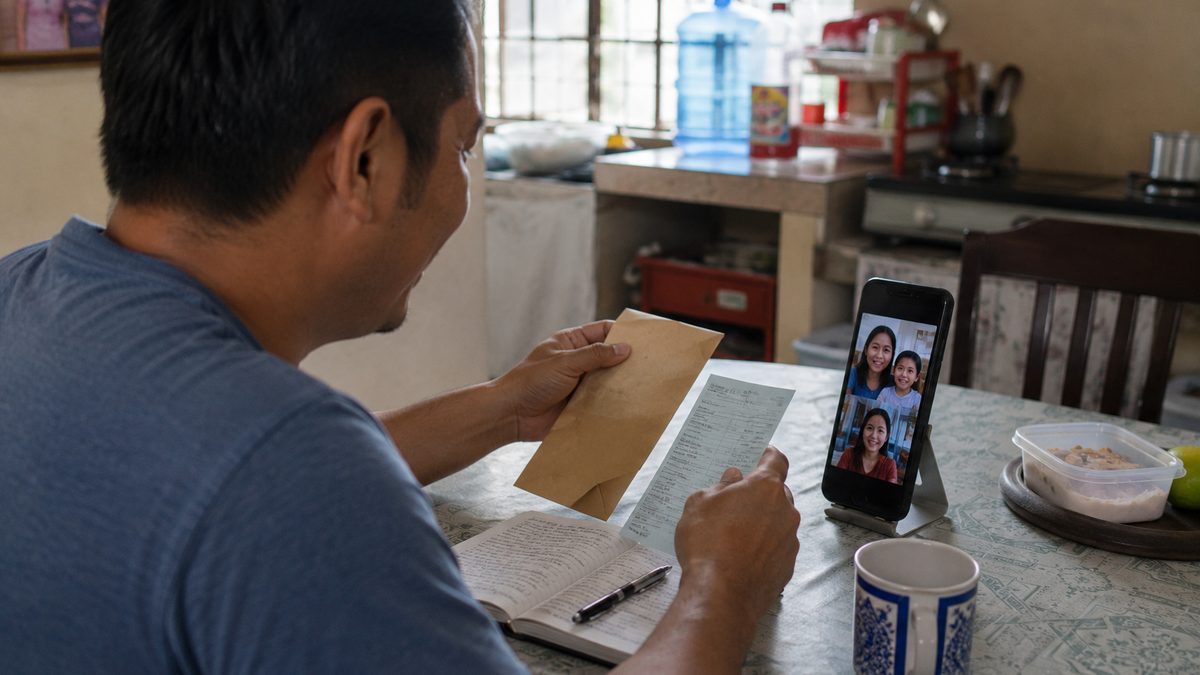
ILO says global shocks can reach Asia-Pacific households through jobs, migration channels and remittances. Editorial illustration by TheDailyGlobe.
Key Facts
- ILO says events in the Middle East can affect workers and enterprises across Asia and the Pacific through energy costs, trade, transport and migration channels.
- ILO's May 2026 update says migrant workers are likely to absorb a disproportionate share of adjustment in crises.
- ILO identifies labour migration as a major transmission channel in Asia and the Pacific.
- ILO says support for low-paid workers, migrant workers and their families and stronger social protection should be carefully targeted.
- The analysis should be read as labor-market risk analysis, not confirmed job losses for every Asia-Pacific country.
For a worker living far from home, a paycheck may support more than one household. It can pay rent in the city where the worker lives, help parents or children in another country, cover school costs, or keep food on the table for relatives who depend on money sent back.
That is why a distant crisis can become a family-budget problem quickly. A rise in fuel costs, a slowdown in transport, a drop in trade or fewer work hours can affect not only the worker who earns the paycheck, but also the family waiting for part of that money at home.
The International Labour Organization is warning that developments in the Middle East can affect workers and enterprises across Asia and the Pacific through energy costs, trade, transport and migration channels. The ILO's analysis is not a prediction that every country or worker will suffer the same impact. It is a warning about how global shocks can travel through jobs and household income.
How a Distant Crisis Reaches a Paycheck
A regional crisis does not have to happen next door to affect work. If energy costs rise, businesses that depend on fuel, shipping, electricity or transport may face higher costs. If trade slows, factories, ports, logistics firms and small suppliers can feel it. If travel routes are disrupted, tourism and transport jobs can become less stable.
The ILO describes those links as channels of risk. Energy, trade, transport and migration are not abstract categories for workers. They are the systems that decide whether someone gets enough hours, whether a small company can keep operating, whether wages stretch, and whether a migrant worker can continue sending money home.
That matters in Asia and the Pacific because the region includes many economies tied closely to migration, informal work, transport networks, tourism, fuel prices and export demand. A shock in one part of the world can show up elsewhere as fewer shifts, higher costs, delayed shipments or tighter household budgets.
Why Migrant Workers Can Be Hit Harder
The ILO's May 2026 update says migrant workers are likely to absorb a disproportionate share of adjustment in crises. In plain terms, that means they can be among the workers most exposed when employers cut hours, slow hiring or reduce costs.
Migrant workers often fill jobs that are essential but vulnerable: construction, care work, hospitality, transport, domestic work, agriculture, manufacturing, logistics and other service roles. Some are in formal jobs with protections. Others work in less secure arrangements where a lost shift or delayed payment can immediately affect the family budget.
The remittance connection makes the risk wider. A worker who loses hours abroad may still have rent, food and transport costs where they live, while relatives at home may be counting on money for groceries, school fees, medicine or debt payments. A smaller paycheck can become a smaller remittance, and a smaller remittance can put pressure on a household that never appeared in the employment data.
This Is Not Only a Border Story
Migration is often discussed as a border or politics issue. The ILO framing points to something more practical: labour migration is also an income system. It connects workers, employers, families and local economies across countries.
When that system is stable, money earned in one place can support households somewhere else. When it is stressed, the strain moves through the same pathway. A job loss in a city, a slowdown in shipping, or a rise in transport costs can affect a village, a school bill, a grocery budget or a small shop supported by remittance spending.
That does not mean all Asia-Pacific economies face the same exposure. Some countries may be more affected through fuel imports. Others may be more exposed through workers abroad, shipping routes, tourism, manufacturing or informal employment. The ILO analysis points to risk channels, not a single regional outcome.
The Case for Targeted Support
The ILO says support for low-paid workers, migrant workers and their families, along with stronger social protection, should be carefully targeted. That language matters because broad economic shocks do not hit every household evenly.
A higher-income worker may have savings or a more secure contract. A low-paid worker may have little room to absorb a missed shift, higher bus fare, higher food costs or a delayed remittance. Families depending on money from abroad can face pressure even if the crisis is thousands of miles away.
Social protection can mean different things in different countries, and the available ILO materials do not establish which governments will expand support. But the basic issue is clear: if workers most exposed to shocks receive the least protection, the cost of a crisis can fall hardest on families already close to the edge.
What Remains Unclear
The biggest unknown is which countries and sectors will see the largest job or remittance pressure. Asia and the Pacific is a large, varied region, and the same global shock can affect economies in different ways.
It is also unclear whether governments will expand targeted support for migrant and low-paid workers. Policy response matters. Better protections, clearer labor rules, support for displaced workers, and safer migration systems can affect how much of the shock reaches households.
The ILO analysis should not be read as a confirmed count of future job losses. It is a warning about exposure. The practical question is whether governments, employers and worker-protection systems act early enough to limit the damage.
What Readers Should Watch Next
The next signals to watch are ILO updates, remittance-flow data, migrant-worker protections, and employment trends in tourism, transport, construction, logistics and other sectors tied to cross-border shocks.
For U.S. readers, the lesson is broader than one region. Global crises often reach families through ordinary routes: the job, the fuel bill, the shipping cost, the remittance transfer, the lost shift and the small business that depends on steady customers.
The ILO warning is useful because it shows how international events can become household income problems. For many workers, a distant crisis is not distant if it changes the paycheck that keeps a family going.
Reporting note: Reporting draws on International Labour Organization labor-market analysis, employment trend updates, labor migration materials, and reviewed Asia-Pacific jobs context. This article was produced with AI-assisted research and reviewed by an editor before publication.