Aid Cuts Decide Which Lifelines Reach Families First
Humanitarian funding decisions can determine whether families in crisis receive food, health care, clean water, shelter support or cash assistance.
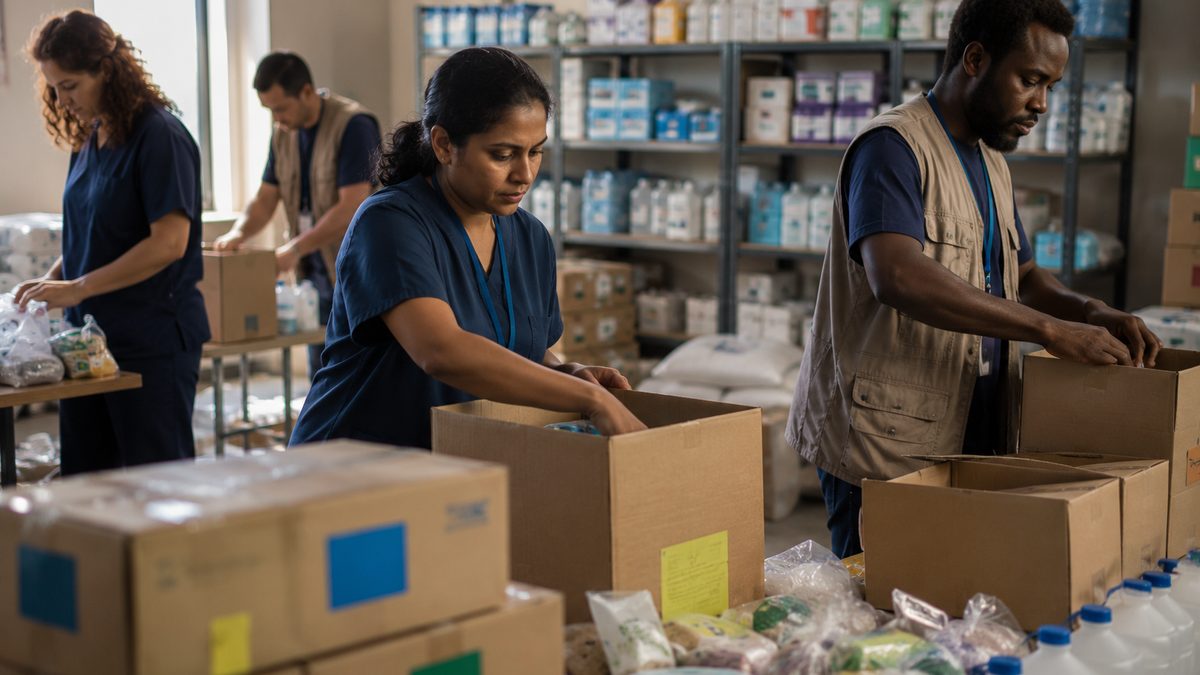
Humanitarian funding decisions can determine whether families receive food, health care, water deliveries, shelter support or cash assistance. Editorial illustration by TheDailyGlobe.
Key Facts
- OCHA's 2026 Global Humanitarian Overview says funding cuts have forced some crisis services to be suspended or stopped.
- OCHA says affected services include health centers, food rations, water deliveries, cash payments and shelter repairs.
- Humanitarian partners are appealing for nearly 33 billion dollars to assist 135 million people in crisis in 2026.
- OCHA's Financial Tracking Service tracks reported humanitarian funding by donor, plan and country.
- Which appeals receive enough funding, and how much reaches local and front-line organizations, remains uncertain.
For a family in a crisis zone, an aid cut may not arrive as a policy headline. It may arrive as one fewer food ration, a clinic that can no longer stay open, a water delivery that stops, a shelter repair that never happens or a cash payment that does not come through.
That is the practical side of humanitarian funding. Money pledged by governments and donors becomes the food, medicine, water systems, shelter materials and local staff that keep emergency services moving. When the money falls short, aid groups have to choose what reaches families first and what waits.
OCHA's 2026 Global Humanitarian Overview says funding cuts have forced services such as health centers, food rations, water deliveries, cash payments and shelter repairs to be suspended or stopped in some crises. The issue is not abstract diplomacy. It is triage.
How Aid Funding Becomes Daily Help
Humanitarian aid is often discussed in large numbers. Appeals run into the billions. Donor pledges are announced by governments. Funding tables track countries, plans and agencies. For readers far from the crisis, those figures can feel distant.
On the ground, the numbers become much more concrete. A health center needs staff, medicine, fuel and supplies. Food aid requires procurement, transport, storage and distribution. Water deliveries require trucks, pumps, treatment systems and people to keep them running. Shelter repairs require materials and workers. Cash assistance requires verified systems to get support to people who can use it locally.
When funding drops or arrives late, aid groups do not simply cut a line on a spreadsheet. They may reduce the number of people served, narrow who qualifies, shorten operating hours, delay repairs, lower rations or stop some programs entirely.
What OCHA Says Changed in 2026
OCHA's 2026 overview describes a humanitarian system under heavy strain. Humanitarian partners are appealing for nearly 33 billion dollars to assist 135 million people in crisis in 2026.
The scale matters because humanitarian organizations are not trying to solve one emergency at a time. They are responding across conflict zones, displacement crises, hunger emergencies, health needs and climate-related disasters. Each appeal competes for limited donor money, staff capacity and access.
OCHA's Financial Tracking Service adds another layer by showing reported global humanitarian funding for 2026 and tracking funding by donor, plan and country. Those figures can change as money is reported, pledged, paid or allocated.
That is why funding numbers should be treated as dated snapshots, not permanent totals. The picture on June 22, 2026, may not be the same later in the year.
Why Cuts Become Triage
Aid agencies often have to prioritize when money, access or supplies fall short. That can mean putting the most urgent life-saving services first, focusing on the most vulnerable groups or choosing areas where aid workers can safely operate.
The result can look uneven. One community may keep a clinic but lose shelter support. Another may still receive food but lose cash assistance. A water project may continue in one location while repairs are delayed somewhere else.
Those choices are not only about need. They can also depend on donor restrictions, logistics, security, local partners, supply chains and whether aid workers can reach affected communities. A crisis may be severe and still be hard to serve if roads are blocked, fighting continues or funding is tied to narrower purposes.
That is why the same global appeal can produce different results in different places. Funding determines what is possible, but access and conditions determine what can actually be delivered.
Why U.S. Readers Should Understand the System
For U.S. readers, humanitarian aid debates often appear as arguments over spending, foreign policy or national priorities. Those arguments are real. Governments decide how much to give, where to give it and what conditions to attach.
But the operational effect is more immediate for families in crisis. A funding gap can decide whether a child receives treatment at a clinic, whether a displaced family gets materials to repair a damaged shelter, whether water reaches a camp or whether emergency cash arrives before rent, food or transport costs become impossible.
Understanding that chain does not require taking a partisan position. It requires seeing the connection between donor decisions and practical services. Aid funding is not just a diplomatic signal. It is the system that determines which lifelines remain open.
What Remains Unclear
Several important questions remain unsettled. It is not yet clear which 2026 appeals will receive enough funding to preserve services. It is also unclear how much funding will reach local organizations and front-line providers that often work closest to affected families.
Donor restrictions can also shape outcomes. Money may be directed toward specific countries, agencies, sectors or types of assistance. That can leave some needs covered while others remain underfunded.
OCHA's role also matters to understand. It is an official humanitarian coordination body, and its reports are built around humanitarian needs and funding appeals. That gives the data strong operational value, but readers should also recognize that OCHA is advocating for humanitarian funding.
What to Watch Next
The clearest way to follow the story is to watch OCHA funding updates, country appeals, donor pledges and reports of service cuts. The key question is not only how much money is announced, but where it goes and which services remain open.
For families in crisis, the difference between a funded appeal and an underfunded one can be the difference between a clinic visit, a water delivery, a food ration, a shelter repair or a cash payment arriving on time.
That is why humanitarian funding should not be read only as a foreign-policy number. It is a map of practical choices. When the money is not enough, aid organizations decide which lifelines reach families first, and which families are left waiting.
Reporting note: Reporting draws on OCHA's 2026 Global Humanitarian Overview, OCHA Humanitarian Action materials, Financial Tracking Service data, and reviewed background materials. This article was produced with AI-assisted research and reviewed by an editor before publication.