Why Rural Hospitals Keep Cutting Services Even When They Stay Open
A hospital can remain open while still losing services that families depend on. Across rural America, that often means longer drives for maternity care, surgery, cancer treatment, and other essential services.
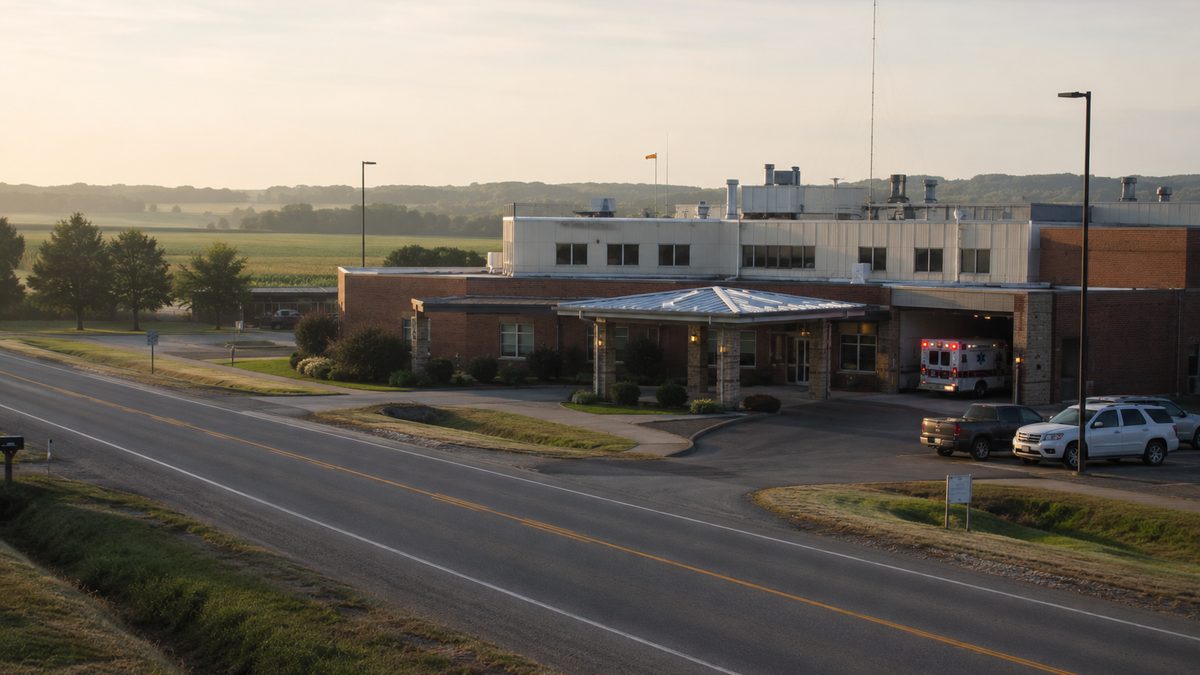
Rural hospitals may remain open while cutting services that patients once relied on close to home. Editorial illustration by TheDailyGlobe.
Key Facts
- Chartis reports that more than 200 rural hospitals have closed or converted to models that no longer provide inpatient care since 2010.
- Chartis identifies 417 rural hospitals as vulnerable to closure.
- Chartis says hundreds of rural hospitals have eliminated services such as obstetrics, general surgery, or chemotherapy.
- The Commonwealth Fund reports that nearly 200 rural hospitals have completely or partially closed since 2005 and that more than 400 remain at risk.
- Service reductions can increase travel time for patients even when a hospital continues operating.
A family's local hospital may still have its lights on, emergency entrance open, and patients walking through the front doors. But when someone needs to deliver a baby, begin chemotherapy, or undergo surgery, they may discover those services are no longer available there. Instead, the nearest option could be an hour or more away.
That reality has become an increasingly important part of healthcare in many rural communities. While hospital closures often receive national attention, healthcare researchers say another trend deserves equal notice: hospitals remaining open while gradually reducing the services they can provide.
Open Does Not Always Mean Full Access
For many residents, seeing a hospital remain open creates the impression that local healthcare access has stayed the same. In practice, the range of available services may look very different than it did a decade ago.
Some hospitals have reduced or eliminated obstetric units because of staffing challenges, lower patient volumes, or financial pressures. Others have scaled back surgical programs, chemotherapy services, or other specialized care that requires additional personnel and equipment.
As a result, patients may still receive emergency treatment or routine care close to home while needing to travel much farther for other medical needs.
Longer Trips Can Affect Everyday Care
For families living in rural communities, longer travel distances can create practical challenges beyond transportation costs. A specialist appointment may require taking time away from work, arranging child care, or finding someone to drive an older relative.
Pregnant patients may need to plan deliveries farther from home if local maternity services are unavailable. Cancer patients receiving repeated treatments may face frequent long-distance travel. Older adults managing multiple medical conditions may also find it more difficult to coordinate appointments when care is spread across several communities.
The impact varies widely from one region to another. Some rural hospitals continue providing a broad range of services, while others have narrowed their offerings based on local circumstances.
Why Hospitals Reduce Services
Healthcare organizations point to several factors that can influence service reductions, including workforce shortages, financial pressures, changing patient populations, and the difficulty of maintaining specialized programs in smaller communities. Those challenges do not affect every hospital equally, but they have become recurring themes in rural healthcare discussions.
Chartis has reported that hundreds of rural hospitals have eliminated certain services even while continuing to operate. The Commonwealth Fund has similarly found that many rural communities have experienced complete or partial hospital closures over the past two decades while hundreds of additional facilities remain financially vulnerable.
What Remains Unclear
Researchers cannot say with certainty which communities will experience future service reductions or whether hospitals currently identified as vulnerable will ultimately close or remain open. Local conditions, workforce availability, healthcare demand, and future funding decisions can all influence those outcomes.
It also remains uncertain how state and federal policy changes, recruitment efforts, or new healthcare delivery models may affect rural hospitals in the years ahead. Some communities may gain new resources while others continue facing difficult decisions about which services they can sustain.
What Families Should Watch
For people living in rural areas, the most important question may no longer be simply whether their local hospital remains open. It is also whether it continues providing the services their family may need close to home.
Healthcare researchers expect rural access to remain an important issue as communities balance workforce shortages, financial realities, and growing healthcare needs. For patients, understanding which services are available locally—and which require travel—can become just as important as knowing where the nearest hospital is located.
Reporting note: Reporting draws on Chartis rural hospital research, Commonwealth Fund analysis, and reviewed background materials. This article was produced with AI-assisted research and reviewed by an editor before publication.