Stores Are Testing RFID Systems That Can Find Products in Real Time
A new RFID-based tracking system aims to help retailers locate products inside stores more precisely, addressing a common problem for shoppers and employees alike: knowing an item exists but not knowing where it is.
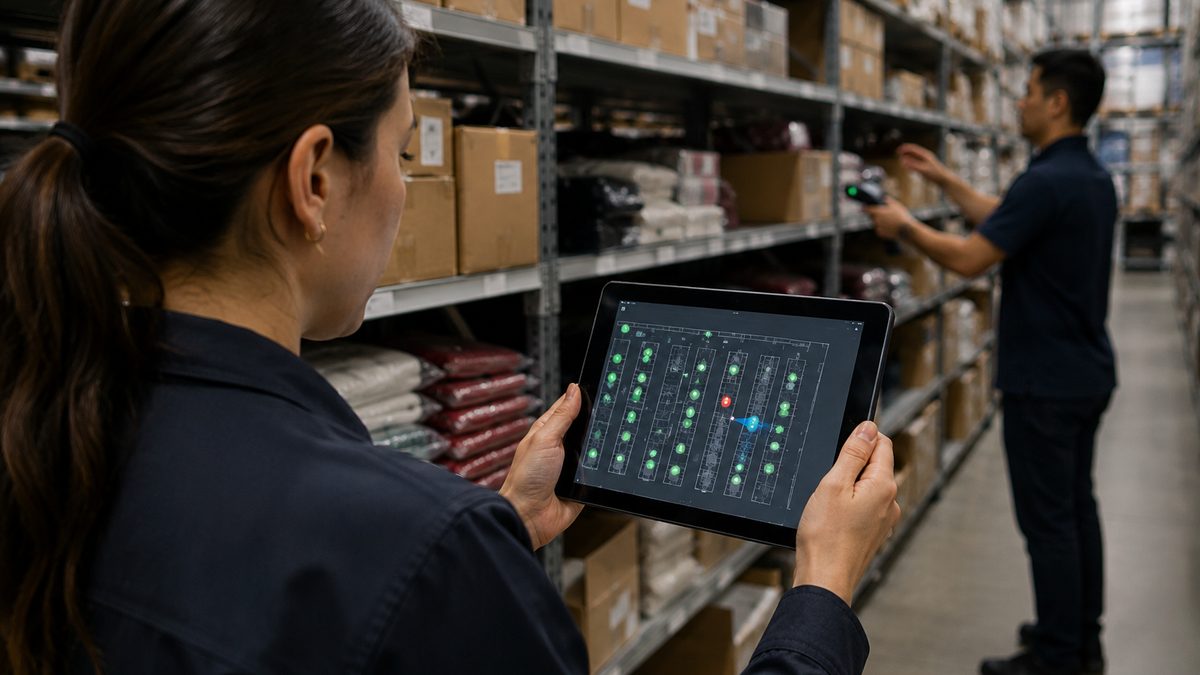
Real-time product-location systems could help stores find inventory faster across stockrooms and sales floors. Editorial illustration by TheDailyGlobe.
Key Facts
- Cartesian uses technology developed from MIT research to locate products inside stores.
- The system relies on wireless signals from RFID tags attached to products.
- MIT reported the technology can track items from stockrooms to sales floors.
- The system is designed to provide real-time product location information.
- Potential future uses have been discussed for logistics, manufacturing, and robotics, though broader adoption remains uncertain.
Most shoppers have experienced some version of the same frustration. A store's website says an item is in stock, an employee confirms it should be somewhere in the building, yet nobody can find it quickly. Sometimes the product is sitting in a stockroom. Sometimes it was moved to another shelf. Sometimes it is simply lost in the daily flow of inventory.
Retail workers deal with the same problem from the other side. Finding a single item can require searching shelves, stockrooms, storage areas, and pickup-order staging locations. As online ordering and same-day pickup become more common, those searches can consume valuable time.
A technology company called Cartesian is applying research developed at MIT to address that challenge. The system uses wireless RFID tags and signal-tracking technology to locate products inside stores in real time, creating a more detailed picture of where inventory is physically located.
Why Inventory Problems Persist
Modern retailers already invest heavily in inventory systems. Most large stores know how many units of a product should be in a building. The harder question is where those units are located at any given moment.
Traditional inventory systems often focus on counts rather than precise locations. A product may be recorded as available without revealing whether it is on a shelf, sitting in a stockroom, waiting for pickup, or temporarily misplaced.
That gap between inventory records and physical location creates problems for both workers and customers. It can slow pickup orders, delay restocking, and leave shoppers waiting while employees search for merchandise.
How the RFID System Works
According to MIT News and related reporting, the technology uses RFID tags, which are small wireless identifiers already used in many supply chains and retail operations. The tags transmit signals that can be detected and analyzed by specialized systems.
Rather than simply confirming that an item exists somewhere in a building, the technology aims to estimate where that item is located. Reports describe the system as creating location data that follows products as they move between stockrooms, storage areas, and the sales floor.
The concept is similar to how digital maps help people navigate a city. Instead of locating cars or smartphones, the system attempts to locate tagged products moving through a retail environment.
What It Could Mean for Shoppers
For consumers, the most noticeable effect could be fewer situations where an item appears available but cannot be found quickly. Stores with more accurate location information may be able to fulfill pickup orders faster and reduce time spent searching for merchandise.
The technology could also help employees locate products needed for online orders, curbside pickup requests, or shelf replenishment. In theory, better visibility into inventory movement could improve day-to-day store operations.
At the same time, readers should view those potential benefits cautiously. The reporting reviewed by TheDailyGlobe discusses possible operational improvements, but it does not establish that the technology consistently delivers those results across all retail settings.
Questions That Still Need Answers
Several important questions remain unresolved. One involves cost. Public reporting describes how the system works but provides limited information about what retailers would need to spend to deploy and maintain it at scale.
Another question is reliability. Stores vary widely in size, layout, inventory density, and building design. Available reporting does not establish how performance changes across different retail environments.
Adoption is also uncertain. The existence of a technology does not guarantee widespread use. Retailers typically evaluate new systems based on cost, operational complexity, training requirements, and measurable results.
It also remains unclear how broadly similar location-tracking approaches will expand beyond retail. Coverage has mentioned potential applications in logistics, manufacturing, and robotics, but those possibilities remain future use cases rather than established deployments.
What Readers Should Watch Next
The next sign of progress will likely come from real-world deployments rather than laboratory demonstrations. Retailers will want evidence that location tracking improves operations enough to justify implementation costs.
Readers should also watch whether similar systems begin appearing in warehouses, distribution centers, and fulfillment operations. Those environments often face the same challenge as stores: knowing an item exists but spending too much time trying to find it.
For now, the technology highlights a surprisingly ordinary problem hiding behind modern retail. Stores have become increasingly sophisticated at counting inventory. The next challenge may be helping employees know exactly where that inventory is the moment someone needs it.
Reporting note: Reporting draws on university technology reporting, retail technology coverage, company materials discussed in public reporting, and reviewed background materials. This article was produced with AI-assisted research and reviewed by an editor before publication.