A Self-Refreshing Sweat Sensor Could Make Wearable Health Tracking More Useful
Researchers are developing a wireless, battery-free sweat sensor that can refresh its sensing surface, but it remains research technology, not an approved medical product.
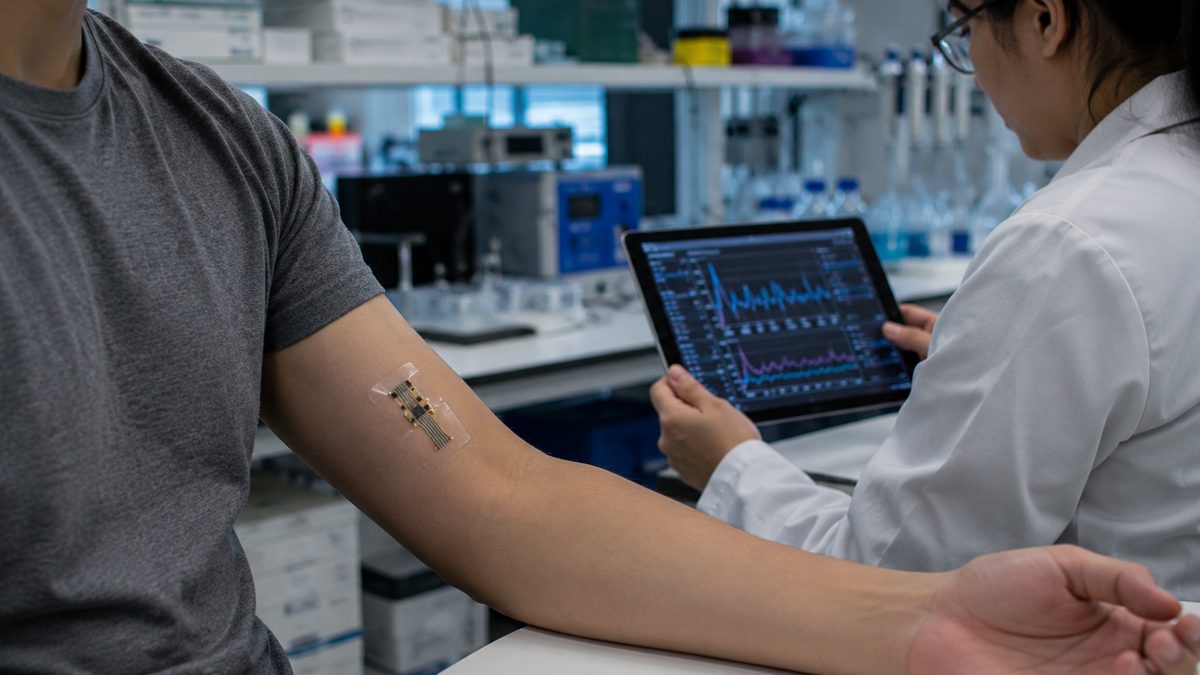
Wearable sweat sensors are being developed to monitor molecular health signals over longer periods. Editorial illustration by TheDailyGlobe.
Key Facts
- UC Irvine researchers developed a wireless, battery-free sweat-monitoring wearable.
- The device can monitor multiple sweat biomarkers.
- The sensor can restore its sensing surface during operation.
- The research was published in Nature Biomedical Engineering.
- The technology remains under development and is not an approved medical product.
Wearable health devices are useful only if people can actually keep wearing them.
That sounds obvious, but it is one of the biggest engineering problems in consumer health technology. A tracker may count steps all day, but molecular health monitoring is harder. A sensor has to stay comfortable, keep working on the body, use power efficiently and produce readings that remain reliable over time.
Researchers at the University of California, Irvine have developed a wireless, battery-free sweat-monitoring wearable designed to address part of that problem. The device can monitor multiple sweat biomarkers and restore its sensing surface during operation. The research was published in Nature Biomedical Engineering, but the technology remains under development and should not be treated as a medical product ready for consumers.
Why Sweat Sensors Are Harder Than Step Counters
Most people are familiar with wearables that track movement, heart rate or sleep patterns. Those signals can be useful, but they are different from measuring molecules in sweat.
A step counter is mostly reading motion. A sweat sensor has to interact with fluid on the skin and detect chemical signals that may change over time. That creates a messier environment. Sweat rates vary. Skin moves. Temperature changes. The sensor surface can become contaminated, less responsive or less accurate as it continues operating.
That is why the self-refreshing part matters. If a sensor loses sensitivity because its surface gets fouled or used up, it may stop being useful during longer monitoring. A wearable that can restore its sensing surface during operation could make longer-term sweat monitoring more practical.
What the UC Irvine Device Tries to Do
The UC Irvine wearable is designed to monitor multiple biomarkers in sweat without relying on a conventional battery. A battery-free design matters because power is one of the main limits for wearable devices. Batteries add bulk, need charging and can make a device less comfortable or less practical for longer use.
The device is also wireless, which points toward a familiar goal in wearable health technology: gather useful information without requiring a person to stay wired to a machine or remain in a controlled lab setting.
The key engineering feature is that the sensor can regenerate its sensing surface during operation. In plain language, the sensing area is not simply used until it degrades. It is designed to refresh itself so it can keep detecting sweat signals over a longer period.
That approach could help address one of the reasons many promising biosensors stay in research settings. They may work well under controlled conditions but struggle when asked to keep functioning on real bodies for longer stretches of time.
What Biomarkers Can and Cannot Tell Us
Sweat can contain molecular signals that researchers study for clues about the body's condition. A wearable sweat sensor may track biomarkers that change with hydration, metabolism, stress, exertion or other physiological conditions.
But biomarkers are not the same as a diagnosis. A reading from sweat does not automatically explain why something changed, whether a person is sick or what treatment someone needs.
That caution matters because consumer health technology can easily run ahead of medical evidence. A device that measures a signal may still need clinical validation, comparison with established tests, clear interpretation standards and safeguards against false reassurance or unnecessary alarm.
The useful promise is not that a sweat patch can replace a doctor. It is that better sensors may eventually give researchers and clinicians more continuous information than occasional tests or short lab sessions.
Why Battery-Free Design Matters
Power is a quiet but important part of wearable design. People do not want medical-style sensors that are bulky, constantly charging or uncomfortable. If a device is meant to track signals over hours or days, battery life becomes part of whether the product can work in ordinary life.
A battery-free approach can reduce some of those limits, though it does not remove every challenge. The device still needs a way to gather, process and transmit information. It also has to work safely and reliably while attached to skin.
Comfort matters, too. A sensor that irritates the skin, falls off, cannot handle movement or gives unreliable readings during normal daily activity will be hard to use no matter how clever the underlying chemistry is.
What Still Has to Be Proven
The technology is still under development. Before a sweat-monitoring wearable like this could become part of real-world medical care, researchers would need to show that it works reliably outside controlled settings.
That means testing durability, accuracy, comfort, safety, data quality and how the readings should be interpreted. It also means comparing results with established medical measures and understanding how sweat signals vary across different people, skin types, activity levels, environments and health conditions.
Regulatory review would also matter for any future medical claims. A device that is useful for research or wellness tracking is not automatically cleared to diagnose disease, guide treatment or replace standard medical testing.
Privacy is another issue. Wearables that collect health-related signals can create sensitive data. If devices like this move closer to consumer or clinical use, data protection, user consent and clear communication will be part of whether people can trust them.
Why This Research Is Still Worth Watching
The UC Irvine work is useful because it focuses on a real limitation in wearable health technology. More sensors are not automatically better. Better sensors have to keep working after sweat, motion, time and real life start interfering.
A self-refreshing sensor surface could help make molecular monitoring less fragile. A wireless, battery-free design could make longer monitoring easier. Together, those features point toward wearables that do more than count steps or estimate sleep.
The practical takeaway is cautious but clear: this is not a consumer medical breakthrough people can buy and rely on today. It is a research step toward wearable devices that may one day track more detailed health signals over longer periods. The next questions are durability, accuracy, comfort, privacy and whether the data can be interpreted in ways that actually help patients and clinicians.
Reporting note: Reporting draws on UC Irvine research materials, Nature Biomedical Engineering publication context, science and medical technology reporting, and reviewed background materials. This article was produced with AI-assisted research and reviewed by an editor before publication.