Robots Are Getting Better at Remembering Where Things Are
MIT researchers developed a robot memory framework that combines 3D maps with language descriptions, a step toward machines that can better track objects over time.
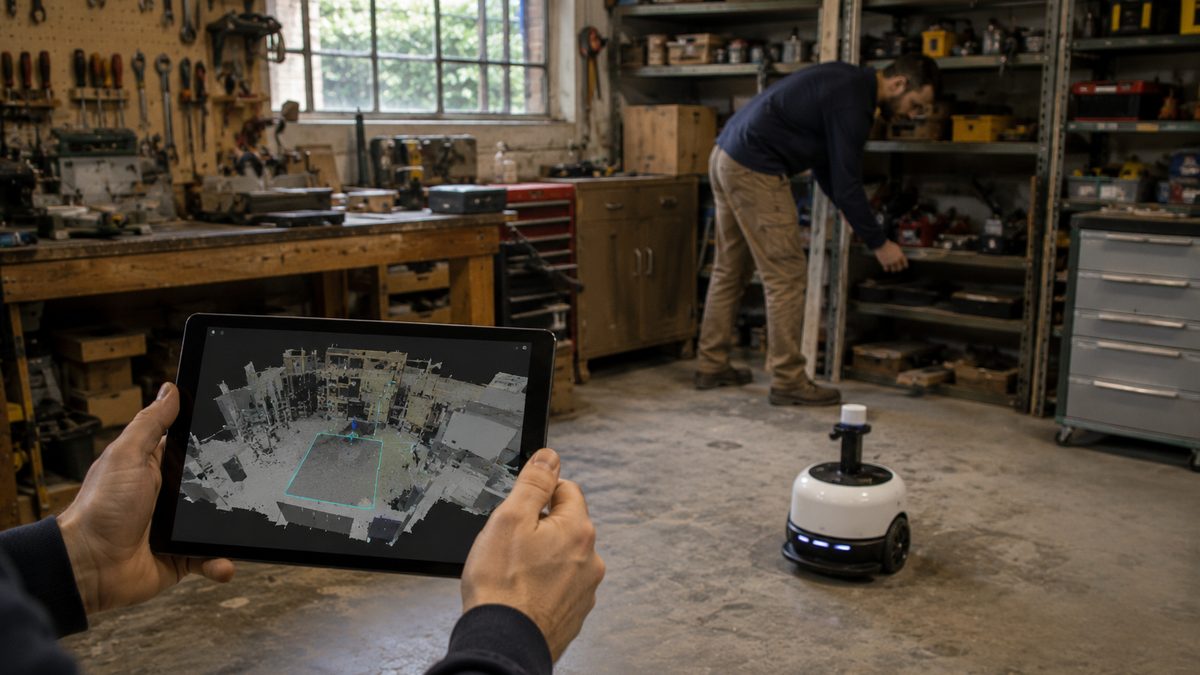
Researchers are working on robot memory systems that help machines connect objects, places and descriptions over time. Editorial illustration by TheDailyGlobe.
Key Facts
- MIT researchers developed DAAAM, a robot memory framework for tracking objects seen over time.
- The framework combines spatial maps with language descriptions.
- The goal is to help robots answer questions about where objects were observed.
- Long-term spatial memory remains a challenge for useful home, workplace and assistive robots.
- The research does not mean consumer robots can already reliably find lost items in everyday environments.
Anyone who has misplaced keys, tools, parts or supplies knows the small frustration of remembering that something was nearby, but not exactly where. For people, that kind of memory is ordinary. For robots, it is still hard.
MIT researchers developed a robot memory framework called DAAAM that is designed to help machines answer questions about objects they have seen over time. The system combines maps with language descriptions, giving a robot a better way to connect what it saw, where it saw it and how a person might ask about it later.
That does not mean a home robot can now reliably find every lost screwdriver or set of keys. The work is still research. But it points to one of the big missing pieces in useful robots: memory that lasts longer than a single task.
Why Robots Forget What People Remember
People do not usually remember a room as a perfect digital scan. They remember a mix of place, object and meaning: the wrench was on the bench, the medication was near the sink, the box was beside the door, the charger was in the room where someone was working.
Robots have a different problem. A machine may be able to map a room, detect an object or follow a command, but those abilities do not automatically add up to practical memory. If the robot sees an object today, moves through the same area tomorrow and gets a question next week, it needs a way to connect those moments.
That is why long-term spatial memory matters. A robot that cannot remember where objects were seen is limited. It may move around well, but it will struggle to help with the ordinary tasks people actually want: finding a tool, checking whether supplies were left in a room, helping an older adult locate an item, or assisting workers in a busy shop.
How Maps and Language Work Together
DAAAM is built around a practical idea: a robot's memory needs both space and description. A 3D map can help a robot understand the layout of an environment. Language can help connect that layout to the way people talk.
That combination matters because people do not usually ask robots questions in coordinates. They ask human questions: Where did you last see the drill? Was the red container near the shelves? Did you notice the box by the door? A system that only stores geometry may have trouble with that kind of request.
By combining mapped space with language descriptions, a robot can begin to build a memory that is easier for people to use. The goal is not just to record where objects were, but to make that information searchable in a way that matches normal human questions.
Why This Could Matter at Home and Work
A better robot memory system could eventually matter in places where objects move often. In a workshop, a robot might help locate tools or parts. In a warehouse, it might remember where items were last observed. In a home, it could help with routine tasks, especially for people who need assistance managing daily objects.
The most useful version of this technology would not feel like a robot doing a magic trick. It would feel like a machine keeping track of the ordinary environment around it, then answering a practical question without needing the user to search room by room.
That is a different promise from the usual gadget hype. The challenge is not making a robot look impressive in a demo. The challenge is making it dependable in cluttered, changing, human spaces where lighting changes, objects move and people describe things in imprecise ways.
What Still Has to Improve
Several hurdles remain before robot memory becomes something most people can rely on. Homes and workplaces are messy. Objects get stacked, hidden, moved, renamed or confused with similar items. A robot also has to know when its memory may be outdated.
There are also practical questions about privacy and usefulness. A robot that remembers objects in a home or workplace is also gathering information about that space. Developers will need to show how such systems store, process and protect that information before they become part of everyday life.
The next step to watch is whether systems like DAAAM can move from controlled research settings toward reliable performance in real environments. For now, the important development is simpler: researchers are teaching robots not only to see a room, but to remember it in a way people may eventually be able to ask about.
Reporting note: Reporting draws on MIT research materials, robotics research coverage, technical background on spatial AI systems, and reviewed technology context. This article was produced with AI-assisted research and reviewed by an editor before publication.