Nanoengineered Wood Could Help Strengthen the Aging Power Grid
Yale-led researchers are studying oil-impregnated densified wood as transformer insulation, a hidden but important part of power-grid reliability.
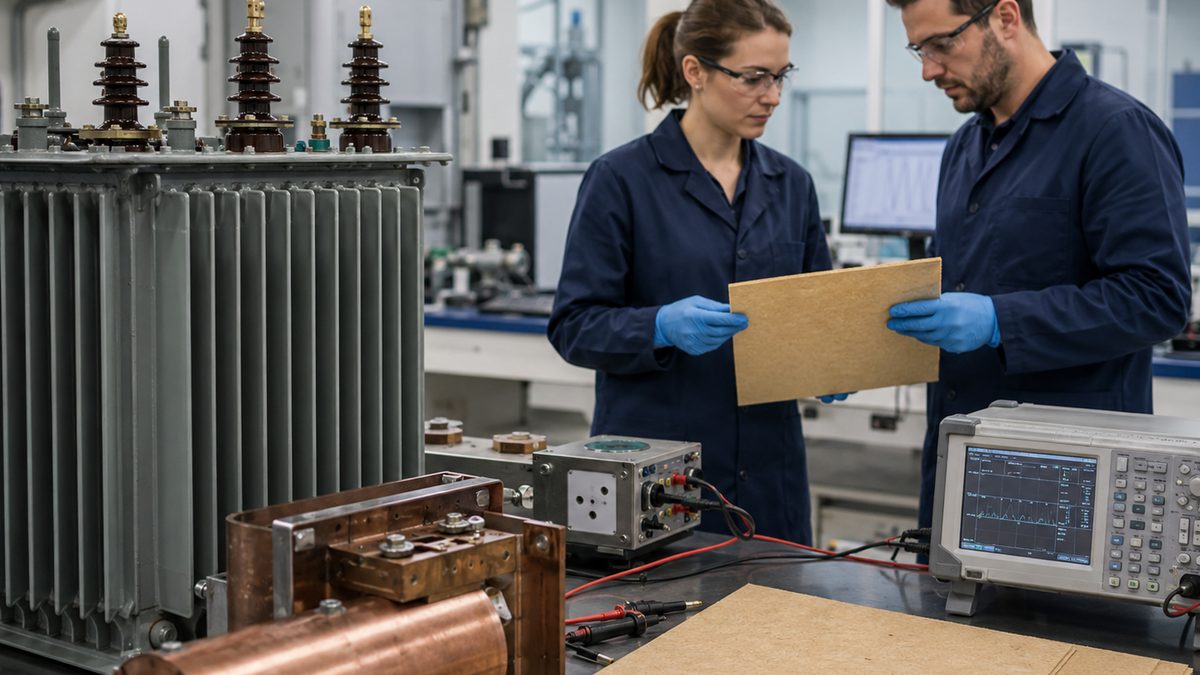
Researchers are studying wood-based insulation materials for use in power-grid transformer components. Editorial illustration by TheDailyGlobe.
Key Facts
- Transformers are essential power-grid components, and insulation breakdown can contribute to failures and outages.
- Yale-led researchers developed oil-impregnated densified wood for transformer insulation.
- The material is intended to improve electrical, mechanical and thermal performance compared with older insulation approaches.
- The work is research-stage and should not be read as evidence that utilities are already replacing transformer insulation with the material.
- More testing and utility-scale validation would be needed before broad adoption.
Most people do not think about transformer insulation until the power goes out. Transformers sit deep inside the electrical system, helping move power across the grid and into homes, businesses, schools and hospitals. When a hidden part inside that equipment breaks down, the consequences can move far beyond one piece of hardware.
Yale-led researchers are studying a surprising material for that hidden problem: wood. The research focuses on oil-impregnated densified wood for transformer insulation, aiming to improve electrical, mechanical and thermal performance in a part of the grid most readers rarely see.
Why Transformer Insulation Matters
A transformer is not just a metal box on a pole or behind a fence. It is part of the machinery that allows electricity to move through the grid at useful voltages. Inside that equipment, insulation helps keep electrical parts separated, protected and stable under stress.
When insulation fails, equipment can fail with it. That does not mean every outage is caused by transformer insulation, and it would be wrong to suggest one material could prevent all grid problems. But insulation is one of the quiet pieces of reliability. It has to handle electricity, heat, pressure and aging over long periods.
That is why materials research matters for the power grid. Some grid problems are visible, such as downed lines after storms. Others are buried inside equipment that has to work year after year without much public attention.
The Limits of Older Materials
Traditional transformer insulation has often relied on oil-impregnated paper. That approach has been useful, but it has limits. Paper-based insulation can face stress from heat, electricity, moisture and mechanical strain over time.
The Yale-led work described in the handoff looks at oil-impregnated densified wood as a different kind of insulation material. Densified wood is wood that has been processed to make it stronger and more compact. When paired with oil impregnation, the goal is to create a material that can perform better under the combined demands inside a transformer.
The point is not that ordinary lumber is being slipped into power equipment. This is engineered material research. Wood's internal structure gives researchers a starting framework, but the material has to be processed, tested and compared against the demands of real electrical systems.
Why Wood Is More Than a Gimmick
The appeal of wood starts with structure. Wood naturally has aligned channels and fibers. In engineered form, that structure can be altered and strengthened, giving researchers a way to build materials that are both mechanically useful and potentially suited to specialized insulation roles.
In transformer insulation, three kinds of performance matter in the facts provided: electrical, mechanical and thermal. Electrical performance matters because insulation has to keep current where it belongs. Mechanical performance matters because transformer parts can face stress, vibration and pressure. Thermal performance matters because transformers generate heat, and materials inside them have to tolerate that environment.
A material that improves one area but fails in another would not be enough. That is why the research is focused on the combined performance of the engineered wood, not just the novelty of using wood in a grid component.
A Small Part of a Bigger Grid Problem
The power grid is often discussed in terms of big projects: transmission lines, renewable energy, battery storage, storm hardening and demand growth. Transformer insulation is a smaller and less visible piece of that picture, but it belongs in the same conversation.
Aging infrastructure is not only about how old a line or substation looks from the outside. It also involves materials inside equipment that have to keep working under stress. If better insulation materials can extend equipment life or improve reliability, they could become part of a larger effort to strengthen grid components.
That possibility should be stated carefully. The research does not show that utilities are already replacing transformer insulation with densified wood. It also does not prove that the material will prevent outages at scale. It shows that researchers are testing a new approach to a real infrastructure problem.
What Has to Happen Next
Before utility-scale adoption, the material would need to move through more testing. Researchers and industry users would need to understand how it performs over time, how it handles heat and electrical stress, how it behaves inside transformer oil, how it ages and how it compares with existing materials under real operating conditions.
Cost, manufacturing and standards would also matter. Utilities do not change critical grid components casually. A new insulation material would have to prove that it works reliably, can be produced consistently and fits the safety and performance requirements of equipment that may remain in service for many years.
The practical lesson is that grid innovation is not always dramatic. Sometimes it is a thin sheet of material inside equipment the public never sees. If nanoengineered wood can improve transformer insulation, it would show how a familiar natural structure can be reworked for one of the most technical systems in modern life.
Reporting note: Reporting draws on research materials on Yale-led transformer insulation work, engineered wood materials, power-grid component testing, and reviewed background context. This article was produced with AI-assisted research and reviewed by an editor before publication.