Coffee Grounds Could Become Biodegradable Insulation
Researchers are studying whether spent coffee grounds can be turned into biodegradable insulation, offering a new use for a common waste stream.
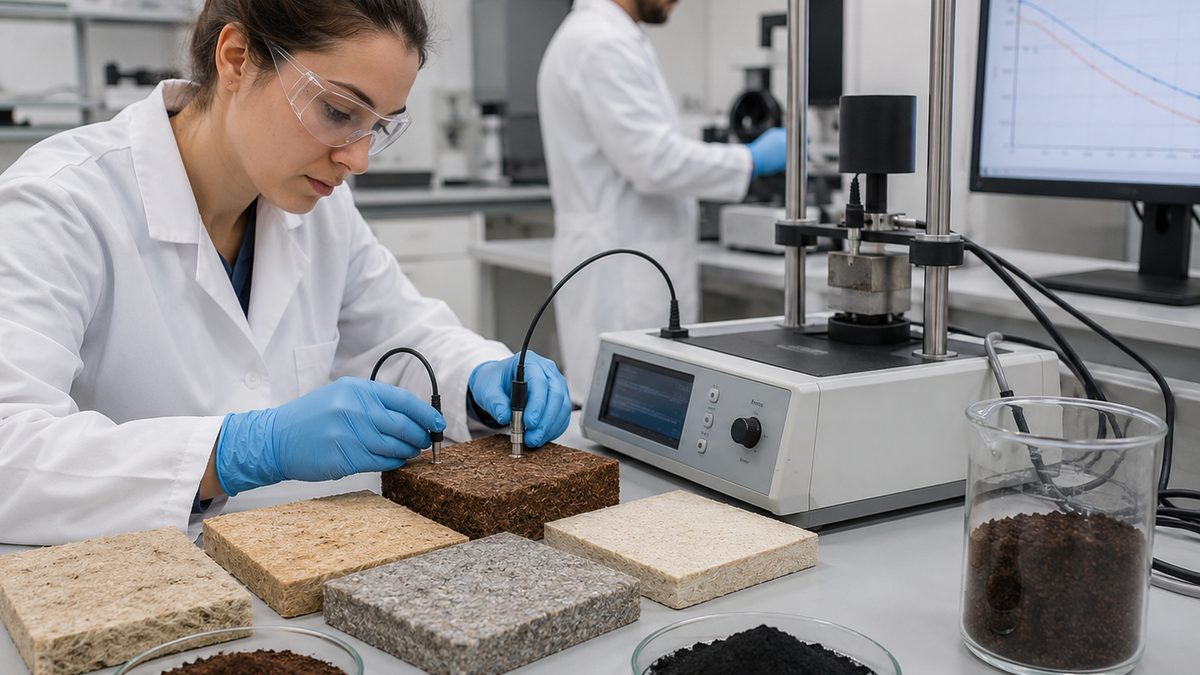
Researchers are testing whether spent coffee grounds can be turned into biodegradable insulation materials. Editorial illustration by TheDailyGlobe.
Key Facts
- Researchers developed a biodegradable composite using biochar from spent coffee grounds and ethyl cellulose.
- The material is being studied as a form of thermal insulation.
- The reported thermal conductivity was comparable to commercial expanded polystyrene in lab testing.
- The research does not mean the material is already available in hardware stores or approved for building use.
- More testing would be needed before the material could be used widely in buildings, packaging, or other products.
Coffee grounds usually have a short second life. After the coffee is brewed, they may be tossed in the trash, added to compost, or handled as part of a larger waste stream. For most people, that is the end of the story.
Researchers are testing a more useful path: turning spent coffee grounds into a biodegradable thermal insulation material. The idea is straightforward enough to picture but technically harder to prove. Coffee waste can be converted into biochar, then combined with ethyl cellulose to create a composite material that may help trap heat.
Why Coffee Waste Is an Easy Hook
The appeal starts with the waste stream. Coffee is familiar, and the grounds left behind are easy to understand. They are not rare, exotic, or hard to imagine. They show up in kitchens, coffee shops, offices, restaurants, cafeterias, and food-service operations every day.
That makes spent coffee grounds an attractive target for upcycling research. Instead of treating the grounds only as waste or compost material, researchers can ask whether they have properties that make them useful in another form.
In this case, the useful form is biochar. Biochar is a carbon-rich material made by heating organic matter under controlled conditions. When made from spent coffee grounds, it can become part of a lightweight insulation composite rather than a discarded byproduct.
How the Insulation Idea Works
Insulation works by slowing the movement of heat. In buildings, packaging, appliances, and other products, materials that slow heat transfer can help keep warm things warm or cool things cool. Common foam materials are widely used because they are lightweight and effective.
The coffee-ground approach begins with biochar made from spent grounds. The biochar can help create a structure that resists heat transfer. Ethyl cellulose is added as part of the composite, helping bind the material and shape it into a usable form.
The important comparison from the research is thermal conductivity. The handoff describes the composite's thermal conductivity as comparable to commercial expanded polystyrene in lab testing. That does not mean the coffee-based material is ready to replace foam in every use. It means the early lab result is strong enough to make the material worth studying further.
Why Biodegradable Materials Matter
Expanded polystyrene and other foam insulation products are common because they perform well and can be made at scale. They also raise waste questions, especially when used in short-lived packaging or products that are difficult to recycle.
A biodegradable material made partly from spent coffee grounds would point in a different direction. It would take a familiar waste product and use it in a material meant to solve a practical problem. That combination is why the idea is easy to share: people understand both the coffee grounds and the insulation need.
Still, biodegradable does not automatically mean better in every setting. A material has to perform under real conditions. It has to handle moisture, pressure, heat, aging, manufacturing, shipping, safety requirements, and whatever rules apply to the place it may be used.
What Lab Testing Does Not Yet Answer
The research should be read as a materials-development story, not a shopping update. The material is not described here as something consumers can buy for home insulation projects. It should not be treated as a direct replacement for all foam insulation or all packaging materials.
Before a coffee-ground insulation material could be used widely, researchers and manufacturers would need to answer practical questions. Can it be made consistently at scale? Does it hold up over time? How does it respond to humidity, pests, compression, fire-safety requirements, and building codes? What would it cost compared with existing materials?
Those questions matter because building materials and packaging materials face different demands. A sample that performs well in a lab may still need years of development before it becomes a commercial product.
What to Watch Next
The next step is whether the material moves beyond promising lab performance into broader testing. That could include durability tests, safety testing, manufacturing trials, and comparisons with existing insulation materials under real-world conditions.
The broader technology story is simple: everyday waste streams are becoming raw material for new kinds of products. Coffee grounds may never replace every foam panel or package insert. But if researchers can turn a common throwaway material into useful insulation, it shows how ordinary waste can become part of the next generation of materials.
Reporting note: Reporting draws on research materials on spent coffee-ground biochar, biodegradable composite insulation, materials testing, and reviewed background context. This article was produced with AI-assisted research and reviewed by an editor before publication.