Why Soccer Matches Keep Running Even After Time Expires
The clock reaches 90 minutes, but the referee still allows play to continue. For many new fans, stoppage time is one of soccer's most confusing traditions.
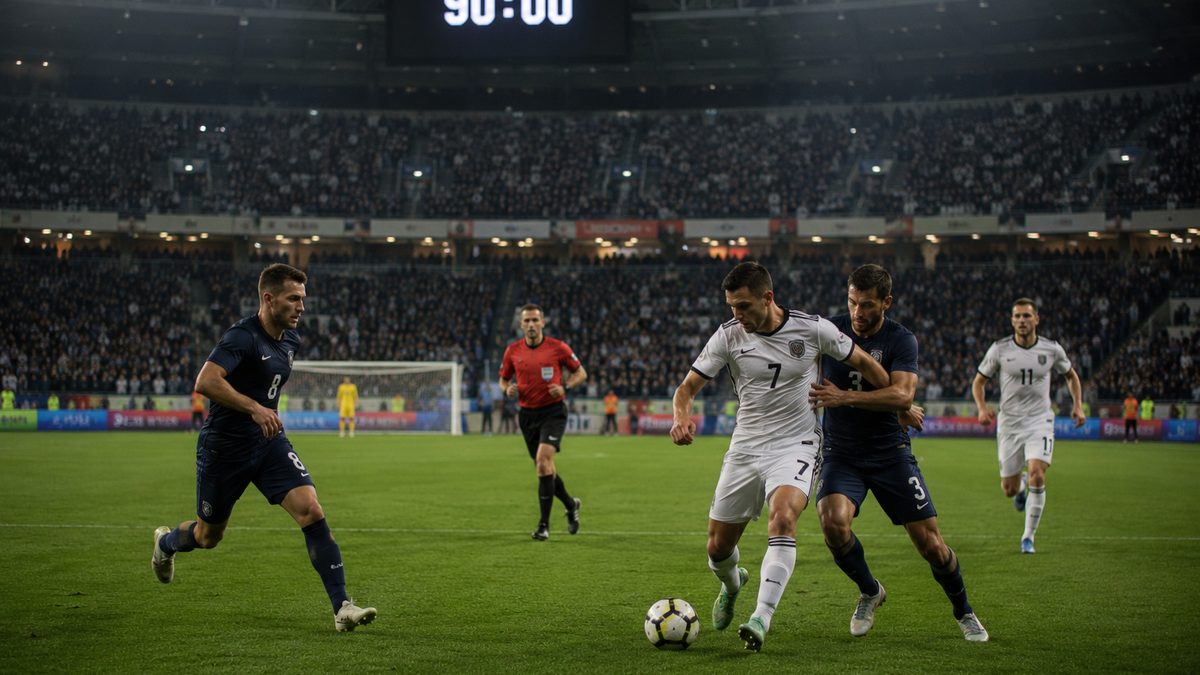
Stoppage time allows referees to account for delays that occur during a soccer match. Editorial illustration by TheDailyGlobe.
Key Facts
- A standard soccer match consists of two 45-minute halves.
- The game clock continues running during most interruptions.
- Referees add stoppage time to account for delays during each half.
- Injuries, substitutions and video reviews are common reasons for added time.
- The referee determines how much stoppage time is added.
One of the first questions many new soccer fans ask sounds simple: if a match is supposed to last 90 minutes, why does it keep going after the clock reaches 90?
The answer comes down to a rule called stoppage time, sometimes referred to as added time. Unlike many American sports, soccer's clock does not stop every time play pauses. Instead, the referee keeps track of delays and adds extra time at the end of each half.
Why Soccer Uses a Different Clock
Most American sports stop the game clock whenever play stops. Football pauses for incomplete passes and players going out of bounds. Basketball stops for fouls, timeouts and other interruptions.
Soccer developed differently. The clock generally keeps running whether players are celebrating a goal, receiving treatment for an injury or preparing for a substitution. This approach helps maintain the flow of the game and reduces the number of clock stoppages fans see during a match.
The tradeoff is that some playing time is lost during interruptions. Without a way to recover those minutes, teams could potentially benefit from slowing down the game whenever they held a lead.
What Counts Toward Stoppage Time
Referees are instructed to account for several types of delays. Injuries are among the most common. If a player requires treatment on the field, valuable playing time disappears even though the match clock continues moving.
Substitutions also consume time. Modern soccer allows multiple player changes during a match, and each substitution can take several seconds or longer depending on the situation.
Goals can contribute as well. Celebrations, player positioning and the restart process all use time that is not part of active play.
More recently, Video Assistant Referee reviews have become another major factor. VAR checks can sometimes last several minutes while officials examine a potential penalty, red card or offside decision.
Referees may also account for deliberate time-wasting, equipment problems or other unusual delays that prevent normal play from continuing.
Why Added Time Has Increased
Fans watching recent international tournaments may have noticed unusually long stoppage-time periods. Ten, twelve or even fifteen minutes of added time has become more common in some competitions.
This change reflects a greater effort by officials to account for the actual time lost during a match. FIFA tournament guidance in recent years has encouraged more accurate tracking of delays, particularly those involving goals, substitutions and medical treatment.
The goal is not to make games longer for the sake of entertainment. The objective is to ensure teams receive approximately the amount of playing time the rules intend.
Why the Referee's Number Is Not Exact
At the end of each half, the fourth official displays the minimum amount of added time. That word matters.
If a board shows five minutes of stoppage time, the referee is indicating that at least five additional minutes will be played. New delays can still occur during those five minutes.
For example, if a player suffers an injury during stoppage time or a lengthy VAR review takes place, the referee can allow play to continue beyond the originally announced amount.
That is why matches sometimes appear to exceed even the added time shown on the board.
What New Fans Should Watch For
Understanding stoppage time changes how many people watch soccer. A team trailing by one goal at the 90-minute mark may still have several minutes to create chances. Likewise, a team protecting a lead must continue defending until the referee blows the final whistle.
The most important thing to remember is that the 90-minute clock is not a countdown to an automatic ending. The match ends when the referee determines that the required added time has been played and no further delays need to be accounted for.
That system may seem unusual to fans accustomed to sports with exact countdown clocks. But once viewers understand why stoppage time exists, one of soccer's most confusing rules becomes surprisingly logical: if time was lost during the match, the game tries to give some of it back.
Reporting note: Reporting draws on FIFA Laws of the Game, IFAB Laws of the Game, FIFA tournament guidance, and reviewed background materials. This article was produced with AI-assisted research and reviewed by an editor before publication.