Why NBA Players Sit Out Back-to-Back Games More Than They Used To
Fans often call it load management. Teams call it injury prevention. The debate over player rest has become one of the NBA's biggest modern issues.
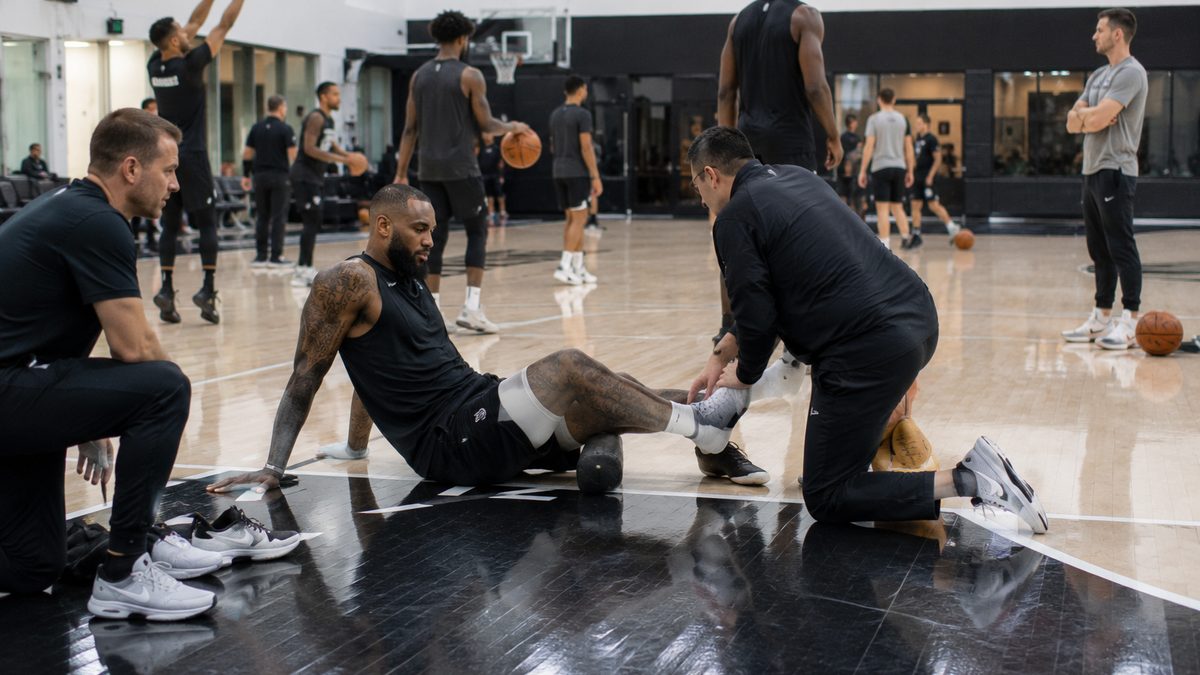
NBA teams increasingly use workload management programs to balance player availability and long-term health. Editorial illustration by TheDailyGlobe.
Key Facts
- NBA teams increasingly monitor player workloads to reduce injury risk over long seasons.
- Back-to-back games remain a common focus of load-management decisions.
- Many teams use sports science, medical data and recovery tracking to guide player availability.
- The NBA has adopted a Player Participation Policy aimed at increasing star-player availability.
- The league continues balancing player health concerns with fan expectations and competitive fairness.
A fan buys tickets months in advance hoping to see a favorite superstar. The game arrives, the arena is full, and then the injury report appears. The player is healthy enough to play basketball, but he is sitting out anyway. For many fans, that situation has become one of the most frustrating parts of modern professional basketball.
The practice is commonly called load management, a term that barely existed in everyday sports conversations two decades ago. Today it has become a central part of how many NBA teams manage their most important players.
Why the NBA Changed Its Thinking
For much of NBA history, players were expected to play whenever possible. Missing games was generally viewed as something reserved for injuries or illnesses. Teams certainly monitored player health, but today's detailed workload tracking systems did not exist.
Over time, teams began investing heavily in sports science departments, performance specialists and medical staff. As more information became available about fatigue, recovery and injury risk, organizations started looking for ways to protect players over an 82-game season.
The result was a shift in thinking. Instead of asking whether a player could physically play on a given night, some teams began asking whether playing that night increased the chances of future injury or reduced effectiveness later in the season.
The Challenge of Back-to-Back Games
Back-to-back games remain one of the most discussed parts of the issue. Even though travel conditions, training facilities and recovery methods have improved over the years, NBA players still face demanding schedules that can require games on consecutive nights.
For younger players, teams may feel comfortable maintaining normal workloads. For older veterans with long injury histories, however, teams often take a more cautious approach. A player in his mid-30s who has already logged thousands of professional minutes may be managed differently than a player in his early 20s.
That difference helps explain why many high-profile stars have become associated with load management. These players often carry enormous responsibilities for their teams and represent significant long-term investments.
What Teams Hope to Prevent
Load management is often misunderstood as simple rest. In practice, teams typically view it as a broader injury-prevention strategy.
Medical staffs track a wide range of information, including recent playing time, travel demands, recovery patterns and previous injuries. The goal is not necessarily to reduce games played at all costs. Instead, teams try to identify situations where additional recovery might lower the risk of more serious problems later.
The challenge is that no system can guarantee a healthy season. Players who follow carefully designed workload plans can still get injured. Likewise, some players who rarely miss games remain remarkably durable throughout their careers.
Why the League Stepped In
As load management became more common, complaints grew from fans, broadcasters and even some team owners. Ticket buyers wanted a better chance of seeing star players. Television partners wanted marquee matchups to feature the league's biggest names.
In response, the NBA introduced and later expanded its Player Participation Policy. The policy is designed to encourage greater availability among star players and discourage teams from routinely resting healthy stars during nationally important games and other high-profile situations.
The policy does not eliminate injury management decisions. Teams can still hold players out for legitimate medical reasons. Instead, the league has attempted to create rules that balance player health with the expectation that fans should have a reasonable opportunity to see top players compete.
What Remains Unsettled
One question continues to divide fans, analysts and even medical experts: how much does load management actually help? While teams increasingly rely on performance and health data, there is still debate about how much specific rest decisions reduce injury risk over the course of a season.
Another unresolved issue is whether future scheduling changes could reduce the need for some workload-management decisions. The league has already made adjustments over time to reduce scheduling pressure, but teams continue searching for the right balance.
What Fans Should Watch Going Forward
The debate is unlikely to disappear anytime soon. Teams remain motivated to keep their best players healthy for playoff races and championship runs, while the league remains motivated to keep stars on the floor as often as possible.
For fans, the most important thing to understand is that load management did not emerge because players suddenly became less willing to compete. It grew out of a broader change in how teams think about health, recovery and long-term performance. Whether people agree with those decisions or not, they have become a permanent part of the modern NBA conversation.
Reporting note: Reporting draws on NBA Player Participation Policy materials, NBA medical research information, league announcements, and reviewed background reporting on injury management practices. This article was produced with AI-assisted research and reviewed by an editor before publication.