Why Baseball Teams Use Five Starting Pitchers Instead of One Ace
A century ago, star pitchers often threw complete games every few days. Modern baseball asks pitchers to throw harder than ever, changing how teams build their rotations.
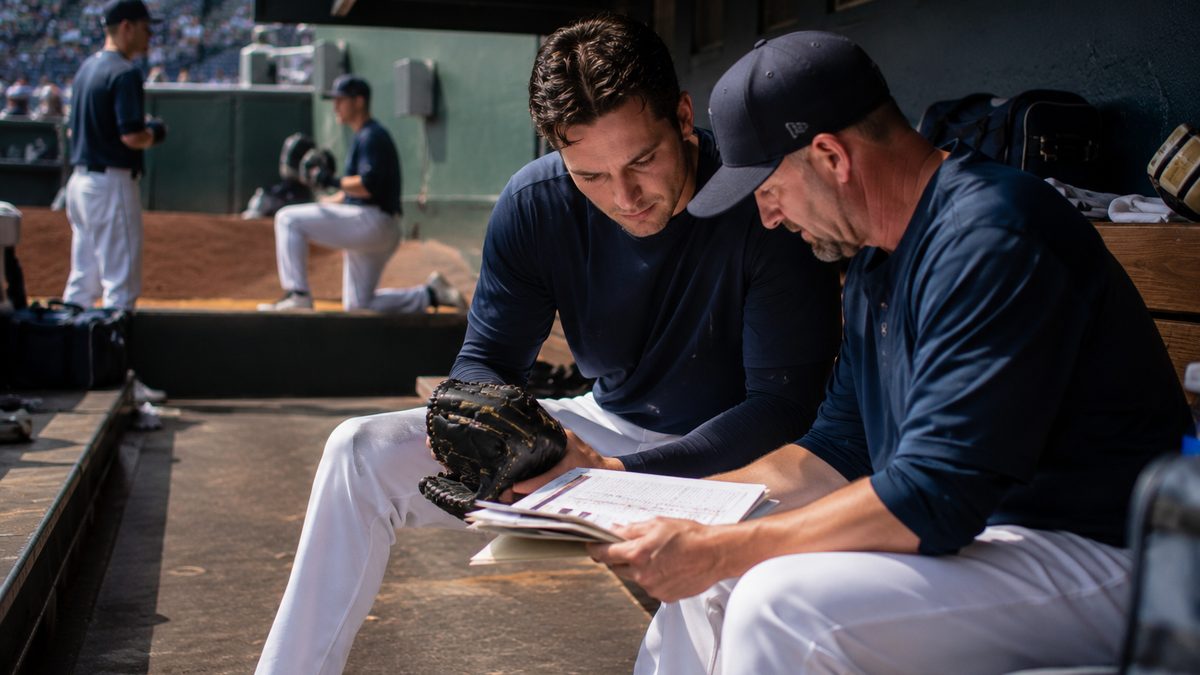
Modern baseball teams carefully manage starting pitchers to balance performance, recovery and injury prevention. Editorial illustration by TheDailyGlobe.
Key Facts
- Modern MLB teams typically use five starting pitchers in a rotation.
- Pitchers today generally throw harder than pitchers from earlier eras.
- Teams closely monitor pitch counts and recovery periods.
- Injury prevention has become a major factor in pitching decisions.
- Complete games have become far less common than they were in the early decades of professional baseball.
If a baseball fan from the 1920s watched a modern major league game, one of the first things that would seem strange is how often teams change pitchers. A century ago, elite pitchers routinely threw complete games and sometimes started every few days. Today, most teams rely on a five-man rotation, and many starters leave the game after five or six innings.
The change was not caused by a single rule or a sudden shift in strategy. It happened gradually as baseball learned more about arm injuries, recovery, training and the physical demands of throwing at elite speeds.
When One Pitcher Carried the Team
For much of baseball history, teams depended heavily on a small number of star pitchers. Hall of Fame records and historical statistics show that complete games were once a normal part of the sport. Pitchers were expected to finish what they started unless they became ineffective or injured.
Fans often point to legendary pitchers who threw hundreds of complete games during their careers. In some seasons, top pitchers started well over 30 games and regularly worked deep into contests. Relief pitching existed, but it played a much smaller role than it does today.
Those pitchers were remarkable athletes, but the game itself was also different. Pitchers did not consistently throw every pitch at the maximum velocity seen in modern baseball.
The Velocity Revolution
One of the biggest reasons modern teams use larger rotations is simple: pitchers throw harder than ever before. Fastballs that once stood out as exceptional are now common among major league pitchers.
Throwing a baseball at high velocity places tremendous stress on the arm, shoulder and elbow. Teams and medical staffs have spent decades studying how repeated stress affects pitchers over a long season.
As velocity increased, organizations began recognizing that recovery time mattered more than previously understood. A pitcher who throws with maximum effort every outing often needs additional days to recover compared with pitchers from earlier eras.
Why Pitch Counts Became Common
Many fans dislike seeing a dominant pitcher removed from a game simply because he has reached a certain number of pitches. Yet pitch counts became widespread because teams believe workload management helps reduce injury risk and maintain effectiveness over a long season.
Pitch counts are not identical across baseball. Some teams are more aggressive than others, and some pitchers can handle larger workloads. Still, most organizations track pitches closely and use that information when deciding whether a starter should remain in the game.
The goal is not necessarily to protect a pitcher from a single outing. Instead, teams are trying to manage hundreds or even thousands of pitches thrown over an entire season.
How the Five-Man Rotation Took Over
The five-man rotation became common because it offered a balance between competitiveness and recovery. By giving starters four full days between appearances, teams could keep pitchers fresher while still allowing them to make a substantial number of starts during a season.
A four-man rotation remained common for many years, but teams gradually shifted toward five pitchers as concerns about workload increased. The approach also gave clubs more flexibility when managing injuries, travel schedules and developing young pitchers.
Today, the five-man rotation is so standard that many fans assume baseball has always worked this way. Historically, however, it represents a relatively modern evolution in how teams manage pitching staffs.
What Has Changed Beyond the Rotation
The rotation itself is only part of the story. Modern bullpens are larger and more specialized than those of previous generations. Teams now employ relievers with specific roles, including setup pitchers, middle relievers and closers.
That specialization allows managers to spread innings across more pitchers rather than relying heavily on one ace to finish games. The result is a fundamentally different style of baseball from what fans would have seen decades ago.
What Baseball Is Still Learning
Despite advances in sports medicine and data analysis, questions remain about the best way to protect pitchers. Arm injuries still occur throughout professional baseball, and teams continue experimenting with training methods, recovery programs and workload management strategies.
What seems unlikely to change is the broader trend toward careful pitcher management. Modern teams have invested heavily in their starting pitchers and generally view health and long-term availability as priorities worth protecting.
For fans, the five-man rotation is a reminder that baseball constantly evolves. The sport still celebrates dominant aces, but the days when one pitcher routinely carried a team every few days belong largely to baseball history. Understanding that shift helps explain why the modern game looks so different from the one earlier generations watched.
Reporting note: Reporting draws on MLB Operations materials, Baseball Hall of Fame historical resources, MLB statistical history, and reviewed background materials. This article was produced with AI-assisted research and reviewed by an editor before publication.