Mirra Andreeva Wins First Grand Slam Title at French Open
Andreeva beat qualifier Maja Chwalinska in straight sets at Roland-Garros, giving women’s tennis a new major champion and a clear story to follow into Wimbledon.
Save Article
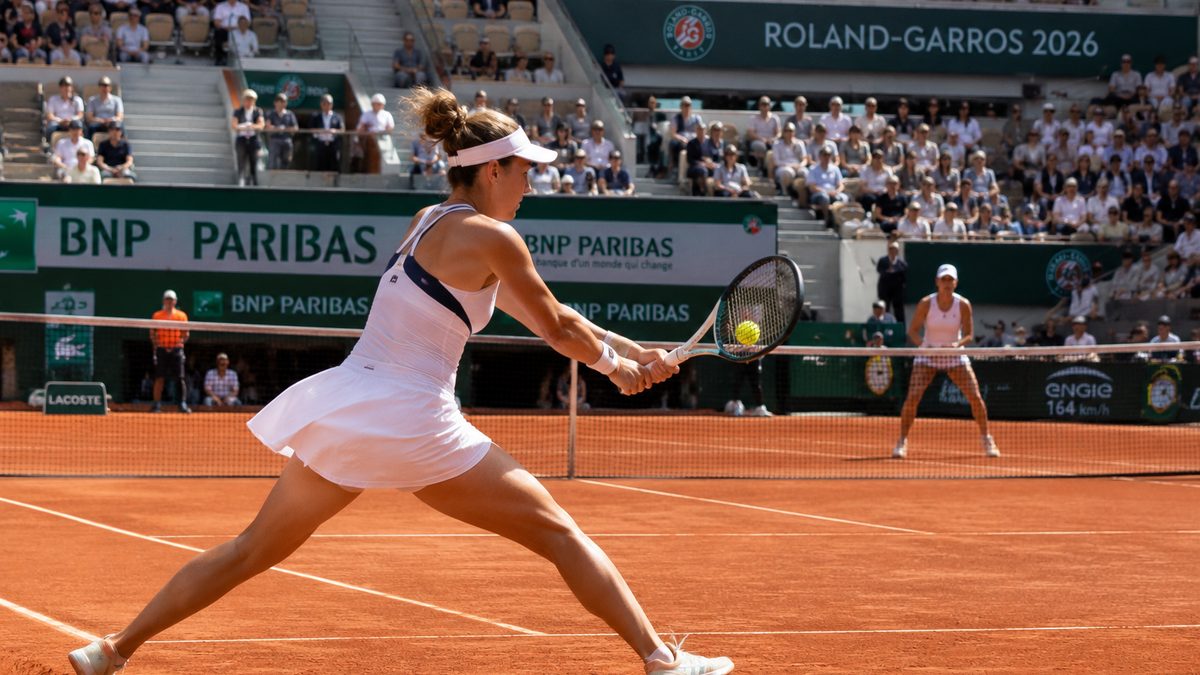
A first Grand Slam title can turn a promising player into the center of the tennis conversation. Editorial illustration by TheDailyGlobe.
Key Facts
- Mirra Andreeva defeated Maja Chwalinska 6-3, 6-2 in the French Open women’s final.
- It was Andreeva’s first Grand Slam title.
- Roland-Garros described Andreeva as the youngest women’s singles champion in Paris since Monica Seles in 1992.
- Chwalinska reached the final as a qualifier.
A teenager walked onto Court Philippe-Chatrier with a first major title on the line and left Paris as a Grand Slam champion.
Mirra Andreeva defeated Maja Chwalinska 6-3, 6-2 in the French Open women’s final, closing a straight-set win at Roland-Garros and adding a new name to the list of major champions in women’s tennis. It was Andreeva’s first Grand Slam title, the kind of result that changes how fans talk about a player even before anyone knows what comes next.
The match also gave the tournament a clean, easy-to-understand story for casual fans: a young champion breaking through, a qualifier reaching the final, and a championship match that put two very different paths onto the same clay court.
A Breakthrough Without Needing Hype
The easiest mistake after a first major title is to race too far ahead. A Grand Slam win does not guarantee a dynasty, and one tournament cannot answer every question about a player’s future. But it does mark a real change. Andreeva is no longer just a promising young player with potential. She is now a Grand Slam champion with a French Open title attached to her name.
That matters because tennis often turns on these moments. A player can be talked about for years as the next possible star, but the conversation feels different after a major trophy. The promise becomes something more concrete. The next time Andreeva enters a major, she will do it as someone who has already finished the job once.
Roland-Garros put the milestone in historical context by describing Andreeva as the youngest women’s singles champion in Paris since Monica Seles in 1992. That comparison does not need to be stretched into a career forecast. It is meaningful enough on its own: in a tournament with a long history, Andreeva’s win landed as a rare age-based milestone.
Chwalinska’s Run Gave the Final Another Layer
Chwalinska’s place in the final made the match more than a simple coronation story. She reached the championship match as a qualifier, which means her run began before the main draw and carried through the kind of path that is difficult for even committed tennis fans to ignore.
That is part of why the final worked as a wider sports story. Andreeva brought the breakthrough-champion angle. Chwalinska brought the underdog-finalist angle. Together, they gave Roland-Garros a final that did not require deep tennis knowledge to understand. One player was trying to win her first major title. The other was trying to finish a qualifier-to-final run with one more upset.
The final score shows Andreeva controlled the match clearly enough to win in straight sets. It does not erase what Chwalinska did to get there. Reaching a Grand Slam final from qualifying is the kind of run that can change how a player is viewed, even if the last match ends with the other player holding the trophy.
Why This Result Travels Beyond Paris
For tennis fans, the next question is obvious: what does Andreeva do with this now? Wimbledon comes quickly after Roland-Garros, and a first major title usually brings attention that can feel very different from the chase that came before it. The tennis changes surface. The expectations change, too.
What remains unknown is how quickly that shift shows up in her next major test. A French Open title proves Andreeva can win a Grand Slam on clay. It does not prove how the rest of the season will go, and it would be too much to turn one championship into a guarantee about future majors.
Chwalinska has her own follow-up question. A surprise run to a major final can become a launching point, or it can stand as a special tournament that is hard to repeat. The result in Paris confirms the run happened. It does not yet answer what she turns it into.
What to Watch Next
The French Open now leaves women’s tennis with a new major champion and two players worth watching for different reasons. Andreeva will carry the attention that comes with winning a Grand Slam before turning 20. Chwalinska will carry the proof that she can survive the long road from qualifying all the way to a major final.
That is enough without making the story bigger than the evidence supports. Paris gave Andreeva her first major title. Wimbledon and the rest of the season will show whether it was the start of a larger run or simply the moment she first broke through on the sport’s biggest stage.
Reporting note: Reporting draws on Roland-Garros tournament reporting and results, official player profile materials, established tennis coverage, and reviewed background materials. This article was produced with AI-assisted research and reviewed by an editor before publication.