Why Your Brain Thinks Time Moves Faster as You Get Older
Scientists do not point to one simple clock in the brain, but research on memory, attention, routine and aging helps explain why years can feel shorter with age.
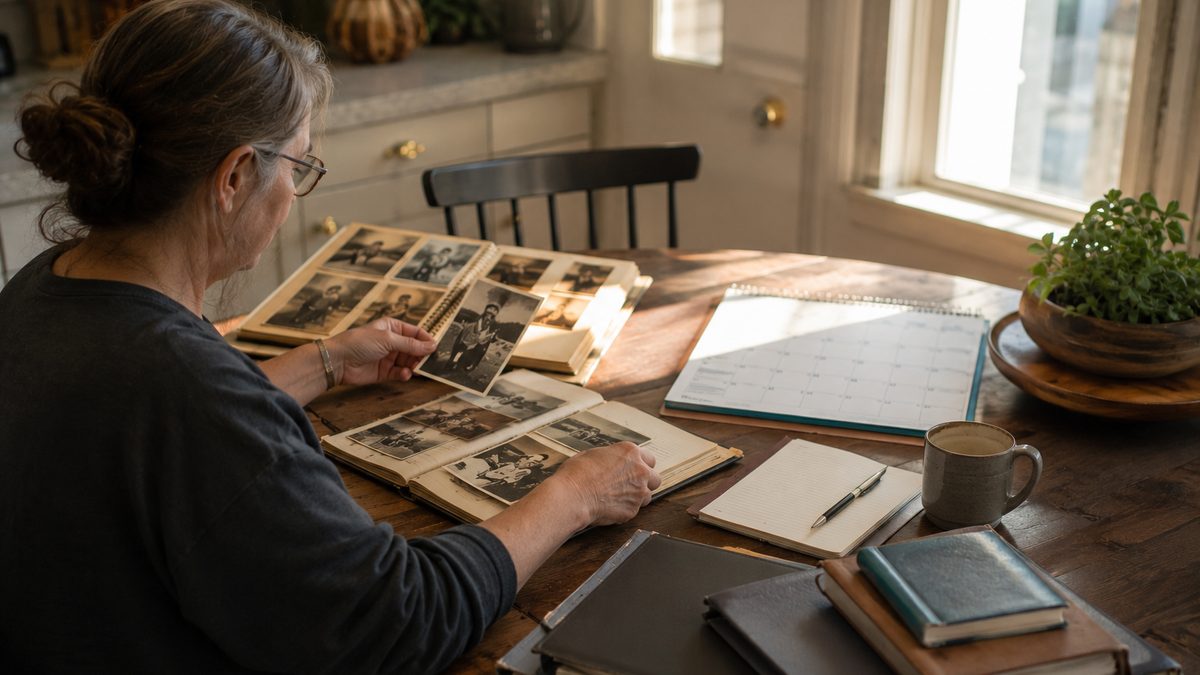
Research on memory, attention, routine, and aging helps explain why time can feel faster later in life. Editorial illustration by TheDailyGlobe.
Key Facts
- Researchers distinguish clock time from subjective time, or how long time feels to a person.
- Novel experiences tend to create richer memories, which can make a period feel longer when people look back on it.
- Routine can make days feel smooth and efficient in the moment, but less distinct in memory later.
- Attention and emotion can change how quickly or slowly time feels as people experience it.
- Scientists continue to debate how much aging, memory, attention and life experience each contribute to the feeling that time speeds up.
Childhood summers can feel enormous in memory. A week at a grandparent's house, a first bike ride, a new school year or a long afternoon outside may seem to stretch across a huge piece of life.
Then adulthood arrives, and whole seasons can seem to vanish. Birthdays come faster. Holidays return before the storage boxes feel fully put away. A year can feel less like a long road and more like a page that turned while no one was looking.
Scientists do not explain that feeling with one simple answer. Time perception is shaped by attention, emotion, memory, novelty, routine and changes that come with aging. The clock on the wall keeps moving at the same pace, but the brain does not always experience time the same way.
Memory Helps Stretch the Past
One leading idea is that the brain judges past time partly by the memories it can retrieve. A period filled with firsts, surprises and changes often leaves more markers behind. When a person looks back, those markers can make the period feel longer.
That helps explain why childhood can feel so large. Children are constantly encountering new classrooms, new people, new skills, new rules and new places. Their brains have more reason to pay attention because so much is unfamiliar.
Adulthood often brings fewer firsts and more repetition. The commute is familiar. The grocery store is familiar. The workweek has a pattern. The same chores return. A month may be busy, but if the days are similar, the brain may store fewer distinct memories from that stretch of time.
When someone later asks where the year went, part of the answer may be that the year contained fewer memory landmarks. It was not empty. It was just less distinct.
Routine Makes Life Efficient, Then Blurry
Routine is not bad. It helps people get through work, parenting, school runs, bills, appointments and ordinary responsibilities without having to make every decision from scratch.
But routine can also make time feel compressed in memory. A week of repeated tasks may pass quickly because the brain does not need to closely track every detail. Familiarity reduces the amount of new information the brain has to process.
That is one reason vacations, new jobs, moves, classes, trips, hobbies and unexpected conversations can feel longer in memory. They interrupt the usual pattern. They give the mind more to notice and more to file away.
The same idea can apply on a smaller scale. Taking a different walking route, visiting a new park, calling an old friend or learning a new skill may not change the clock. But it can change how much of the day stands out when the person looks back.
Attention Changes the Feeling of Now
Time perception is not only about memory. It is also about attention while time is passing.
When people are bored, anxious or waiting for something unpleasant, minutes can feel slow. When they are deeply absorbed in a task, conversation, game, project or enjoyable activity, time may seem to move quickly. That familiar phrase, time flies when you are having fun, points to a real feature of attention: when the brain is occupied with the activity itself, it may spend less attention tracking time.
The opposite can happen when a person is watching the clock. Waiting in a medical office, sitting in traffic or expecting an important call can make a short period feel longer because attention keeps returning to time itself.
This means there are two different experiences to keep separate. A joyful afternoon may feel fast while it is happening, but feel full and memorable afterward. A dull afternoon may feel slow in the moment, but leave almost no memory trace later.
What Aging May Change
Aging may affect time perception in several ways, but researchers do not treat it as a single switch that flips at a certain birthday.
As people age, life often becomes more structured. Work, family, finances and caregiving can make weeks more predictable. Predictability can be comforting, but it may also reduce novelty. If fewer events feel new, fewer memories may stand apart.
Research on time perception also examines how the brain organizes events. Some studies suggest older adults may register fewer distinct changes in a given period, which could make time feel more compressed when remembered later. Other research emphasizes attention, emotion, life stage, proportion and the way people compare one year to the total length of life they have already lived.
Those theories are not mutually exclusive. The feeling that time speeds up may come from several mechanisms working together: fewer firsts, stronger routines, changes in attention, different memory encoding and the simple fact that each year becomes a smaller share of a person's life.
What People Can Actually Do
No one can make a year longer on the calendar. But people can make days feel more distinct.
The most practical step is adding novelty in manageable ways. That does not require a major life change. It can mean learning something new, changing a routine, visiting a different place, cooking a new meal, spending time with different people, or paying closer attention during ordinary moments.
Memory also matters. Taking photos, keeping a short journal, marking small milestones or making a habit of noticing one specific detail from each day can give the brain more anchors. The point is not to turn life into homework. It is to create more moments that are noticed instead of skimmed over.
There is still plenty scientists are sorting out. Time perception is personal, and the same year can feel fast, slow, full or empty depending on health, stress, grief, joy, routine and attention. But the broad lesson is useful: if life feels like it is rushing by, the answer may not be to do more. It may be to make more of what you do noticeable enough to remember.
Reporting note: Reporting draws on Scientific American coverage, American Psychological Association materials, Frontiers in Psychology research, Nature Human Behaviour-related research context, and reviewed background materials. This article was produced with AI-assisted research and reviewed by an editor before publication.