Why Lightning Can Strike Before the Storm Arrives
Many people assume lightning is only dangerous when rain is falling overhead. Weather experts say the risk often begins earlier and can continue after the rain ends.
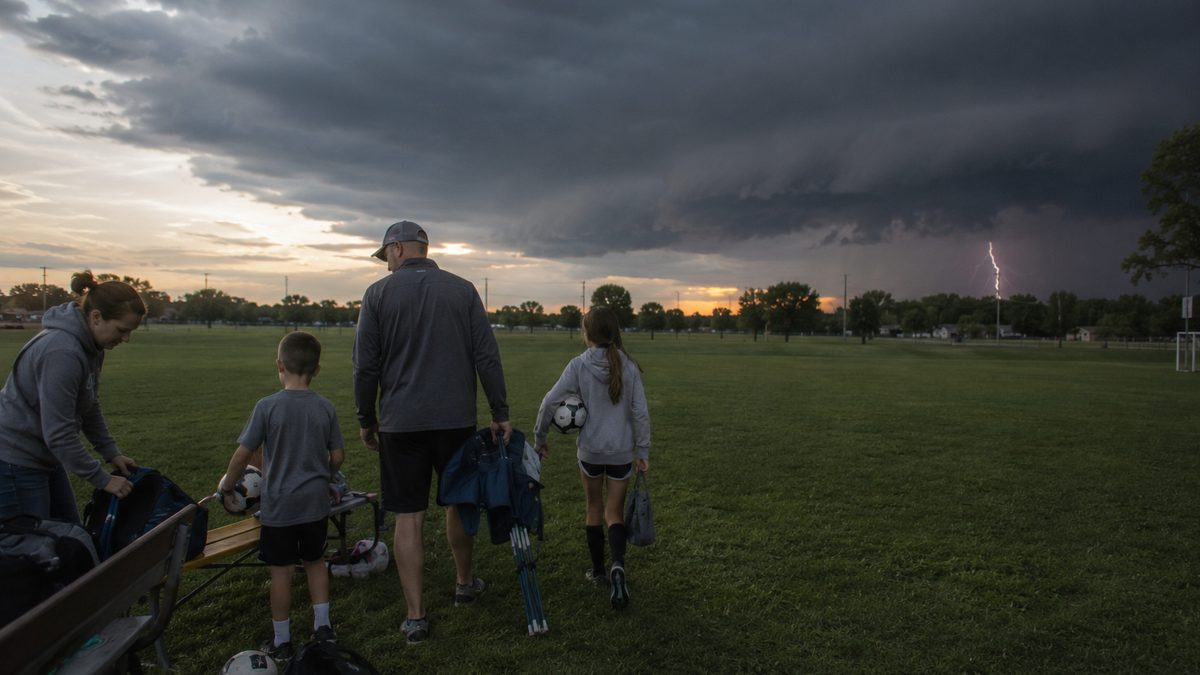
Lightning can travel miles from the center of a thunderstorm, creating risks even before rain arrives. Editorial illustration by TheDailyGlobe.
Key Facts
- Lightning can strike several miles away from the heaviest part of a thunderstorm.
- Hearing thunder means lightning is close enough to be dangerous.
- Rain is not required for a lightning strike to occur nearby.
- Open fields, water and isolated tall objects increase lightning risk.
- The safest place during a thunderstorm is inside a substantial building or enclosed vehicle.
A summer afternoon can seem perfectly safe. The sky overhead is still bright, the rain has not started, and the storm appears to be somewhere off in the distance. Then a lightning strike hits nearby.
That scenario surprises many people because they assume lightning only becomes dangerous once rain begins falling. Weather experts say that assumption is one of the most common misunderstandings about thunderstorms.
How Lightning Forms Inside a Storm
Lightning begins inside a thunderstorm cloud. As ice particles, water droplets and hail move around within the storm, electrical charges build up. Over time, positive and negative charges separate into different areas of the cloud.
When the electrical difference becomes strong enough, nature looks for a way to balance those charges. The result is a powerful electrical discharge that we see as lightning.
Some lightning travels from one part of a cloud to another. Other strikes travel between clouds. The strikes that concern people most are cloud-to-ground lightning bolts, which connect the storm's electrical charge to the ground below.
Why Lightning Can Arrive Before the Rain
Thunderstorms are not neat circles with all activity confined to one location. Lightning can extend outward from the main storm cloud and strike areas that have not yet received rain.
NOAA and the National Weather Service warn that lightning sometimes reaches well beyond the area where people see the darkest clouds or heaviest precipitation. A person may be standing under relatively clear skies while a dangerous electrical connection forms between the storm and the ground nearby.
This is one reason weather officials often repeat a simple message: if you can hear thunder, you are close enough to be struck by lightning.
What Thunder Can Tell You
Thunder is created by the extreme heat of a lightning bolt. The air surrounding the strike rapidly expands, creating the sound wave people hear as thunder.
Because light travels much faster than sound, people usually see the lightning flash before hearing the thunder. The time between the flash and the sound can provide a rough estimate of distance.
Even without counting seconds, the safety message remains straightforward. If thunder is audible, lightning is within range. The National Weather Service advises moving to shelter immediately rather than waiting for rain to begin.
The same rule applies after a storm appears to pass. Lightning can continue occurring even as skies begin clearing. That is why weather agencies recommend waiting until thunder has not been heard for a significant period before returning to outdoor activities.
Why Certain Outdoor Locations Are More Dangerous
Lightning tends to follow paths that help electrical energy reach the ground. While any outdoor location can be dangerous during a thunderstorm, some environments create greater risk.
Open fields leave people exposed with little protection. Water is particularly hazardous because it conducts electricity efficiently and often places people in exposed positions. Boats, docks and swimming areas become especially risky when thunderstorms approach.
Tall isolated objects can also attract lightning. Standing under a lone tree during a storm remains one of the most dangerous mistakes people make. If lightning strikes the tree, the electrical current can travel through nearby ground and objects.
What Indoor Safety Really Means
Many people assume any roof overhead provides protection. Weather experts make an important distinction between true shelter and simple cover.
A substantial building with wiring and plumbing provides the best protection because those systems help direct electrical energy safely into the ground. Fully enclosed metal vehicles also offer protection when occupants avoid touching conductive surfaces.
Open shelters, picnic pavilions, dugouts, tents and covered porches are not considered safe lightning shelters. They may keep people dry, but they do not provide the protection needed from a lightning strike.
Common Lightning Myths
Several myths continue to circulate about lightning safety. One is that lightning never strikes the same place twice. In reality, frequently struck structures such as towers and tall buildings may be hit many times during a year.
Another myth is that people are safe if rain has not started yet. Weather guidance consistently warns that lightning can arrive before rainfall reaches a location.
Perhaps the most dangerous myth is that nearby trees offer protection. While a group of trees inside a forest is generally safer than standing alone in an open field, sheltering directly under a single tall tree increases risk rather than reducing it.
The Practical Rule to Remember
Most lightning injuries occur because people wait too long to seek shelter or return outdoors too quickly. The good news is that the basic safety guidance is simple.
If you hear thunder, move inside a substantial building or enclosed vehicle. Stay there until the storm has clearly passed and thunder is no longer being heard. Understanding that lightning can strike before rain arrives—and after it leaves—helps explain why weather officials place so much emphasis on acting early rather than waiting for visible signs of danger.
Reporting note: Reporting draws on National Oceanic and Atmospheric Administration guidance, National Weather Service safety materials, and reviewed background materials. This article was produced with AI-assisted research and reviewed by an editor before publication.