What Happens to the Human Body During One Year in Space?
Astronauts can spend months aboard the International Space Station, but living without gravity changes the human body in ways researchers are still working to understand.
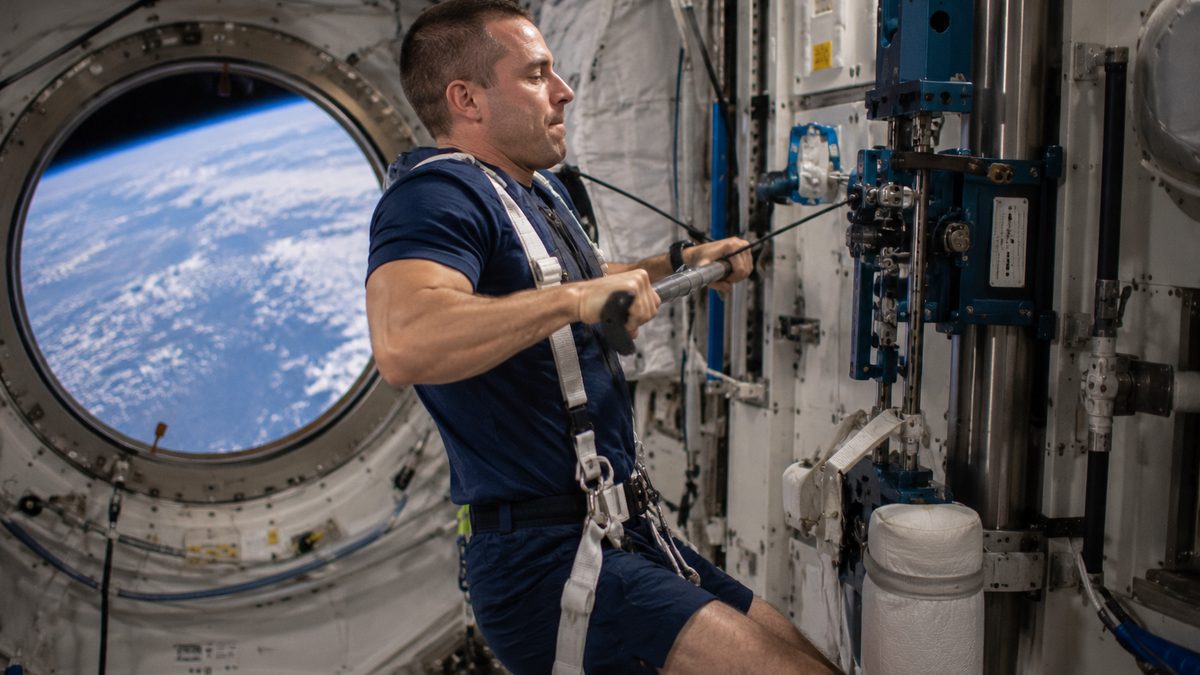
Long-duration space missions require extensive exercise and health monitoring to help astronauts adapt to life without gravity. Editorial illustration by TheDailyGlobe.
Key Facts
- Long-term spaceflight can cause muscle loss and reduced bone density.
- Fluid shifts in microgravity can contribute to vision changes.
- Researchers have observed changes in immune-system activity during space missions.
- Astronauts follow strict exercise routines to reduce physical decline.
- Understanding these effects is important for future missions to Mars and beyond.
Most people know that astronauts float in space. What is less obvious is what that floating does to the human body over time. A few days in orbit is one thing. A year is something entirely different.
Researchers studying astronauts aboard the International Space Station have found that living in microgravity affects nearly every major system in the body. Some changes reverse after returning to Earth. Others can take months to recover from, and a few remain areas of active research.
Why Gravity Matters More Than We Realize
Life on Earth evolved under constant gravity. Every time a person stands, walks, climbs stairs or lifts an object, muscles and bones work against that force.
In orbit, that daily resistance largely disappears. Objects float. Moving around requires less effort. While that may sound appealing, the body quickly begins adapting to the new environment.
Those adaptations help astronauts function in space, but they can create challenges when they eventually return home.
Muscles Begin Losing Strength
One of the most immediate concerns is muscle loss. Without gravity pulling on the body, muscles that normally support standing and walking no longer work as hard.
Leg muscles, back muscles and other weight-bearing muscle groups are especially affected. To combat this, astronauts spend significant portions of their day exercising with specialized equipment designed for microgravity environments.
Even with those exercise programs, researchers continue studying how to preserve muscle strength during increasingly long missions.
Bones Lose Density in Space
Bones respond to physical stress. On Earth, walking, running and carrying weight help maintain bone strength. In space, that stress decreases dramatically.
As a result, astronauts can experience bone-density loss during extended missions. Researchers often compare the process to an accelerated version of bone loss that can occur with aging, though the mechanisms are not identical.
Exercise and nutrition help reduce the problem, but protecting skeletal health remains one of the major challenges of long-duration spaceflight.
Why Some Astronauts Notice Vision Changes
Space also changes how fluids move through the body. On Earth, gravity helps pull fluids downward. In orbit, fluids shift toward the head.
Researchers believe these shifts contribute to vision-related changes observed in some astronauts. Some crew members have reported altered eyesight during or after long missions.
Scientists continue investigating exactly how microgravity affects pressure around the eyes and brain. While researchers have learned much over the past decade, important questions remain under study.
The Immune System Faces a Different Environment
The immune system also appears to respond differently in space. Research supported by NASA, NIH and international partners has found changes in immune activity during missions.
Scientists are studying how factors such as microgravity, radiation exposure, stress, sleep disruption and confinement may influence the body's ability to respond to illness.
The findings do not mean astronauts routinely become seriously ill in orbit. Instead, researchers are trying to understand how the immune system behaves in an environment humans did not evolve to inhabit.
The Mental Side of Long Missions
Physical health is only part of the challenge. Long-duration missions require astronauts to live and work in confined spaces for months at a time, far from family and familiar surroundings.
Space agencies devote significant attention to mental well-being, team dynamics, sleep quality and stress management. Astronauts are carefully selected and trained, but even highly skilled crews must adapt to isolation and unusual working conditions.
These lessons may become even more important as missions grow longer and travel farther from Earth.
Returning Home Is Its Own Challenge
Coming back to Earth does not instantly restore the body to normal. After months without gravity, astronauts often need time to readjust.
Balance can feel different. Walking may require renewed coordination. Muscles and bones must adapt again to supporting body weight. Recovery programs help astronauts regain strength and monitor any lingering effects.
The encouraging news is that many changes improve substantially after return, though recovery timelines vary from person to person.
Why Mars Missions Make This Research Important
A trip to Mars would likely require astronauts to spend much longer away from Earth than current missions aboard the International Space Station. That makes understanding the body's response to extended spaceflight more than a scientific curiosity.
Researchers are using today's findings to help design safer future missions, improve exercise and medical systems, and better understand how humans can remain healthy during long journeys. The central question is no longer whether people can survive a year in space. It is how to keep them healthy enough to travel even farther.
Reporting note: Reporting draws on NASA Human Research Program materials, NASA Twins Study findings, NIH-supported space biology research, European Space Agency human spaceflight materials, and reviewed background materials. This article was produced with AI-assisted research and reviewed by an editor before publication.