The Yellowstone Supervolcano: What Scientists Actually Worry About
Yellowstone is one of the world's most studied volcanic systems, but many popular claims about an imminent super-eruption do not match what scientists are actually observing.
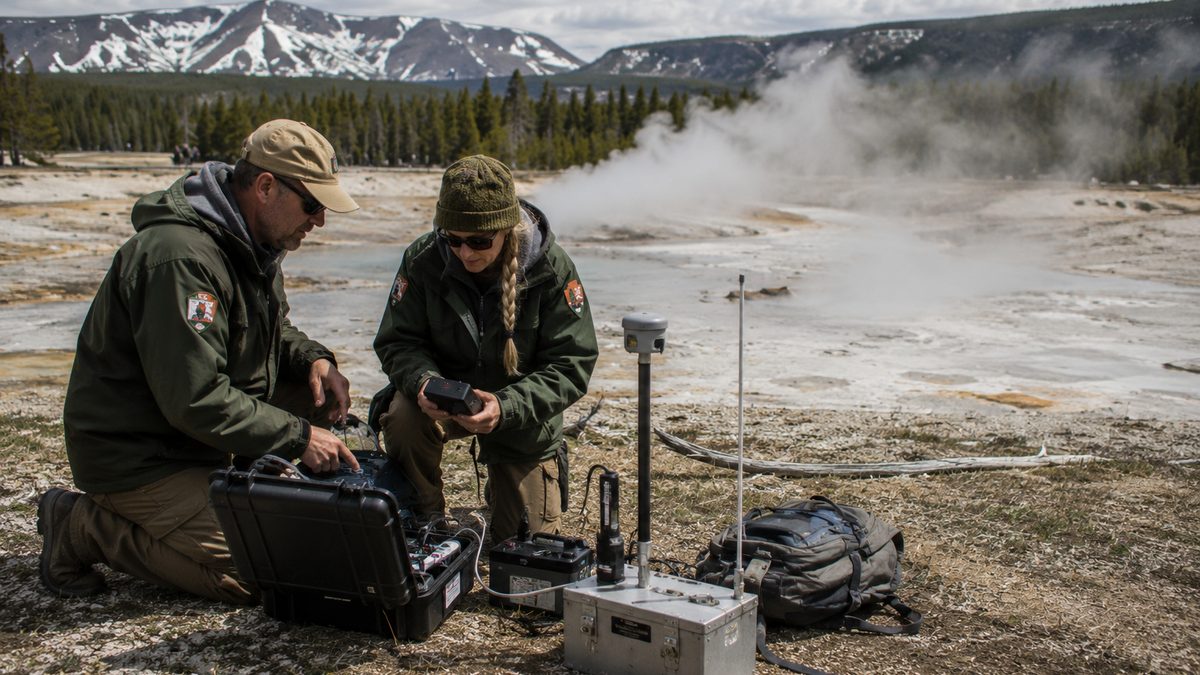
Yellowstone is monitored continuously by scientists who track earthquakes, ground movement, gases and geothermal activity. Editorial illustration by TheDailyGlobe.
Key Facts
- Yellowstone sits above a large volcanic system often referred to as a supervolcano.
- The last major Yellowstone super-eruption occurred hundreds of thousands of years ago.
- Scientists continuously monitor earthquakes, ground movement, gas emissions and geothermal activity.
- The U.S. Geological Survey reports no evidence that Yellowstone is headed toward an imminent super-eruption.
- Small earthquakes, ground movement and hydrothermal changes are normal parts of Yellowstone's active geology.
Few places in America inspire more volcanic speculation than Yellowstone National Park. Videos, documentaries and social media posts regularly warn that a massive eruption could be just around the corner, sometimes suggesting civilization-changing consequences.
Scientists who study Yellowstone for a living take the volcano seriously. But the things they worry about most are often very different from the dramatic claims that circulate online.
What Makes Yellowstone a Supervolcano
The term 'supervolcano' is used for volcanic systems capable of producing extremely large eruptions. Yellowstone qualifies because its geologic history includes eruptions far larger than those typically associated with well-known volcanoes such as Mount St. Helens.
Yellowstone's landscape was shaped by several enormous eruptions over millions of years. Those events helped create the large volcanic caldera that exists beneath much of the park today.
That history is one reason Yellowstone attracts so much attention. Scientists recognize it as one of Earth's most significant volcanic systems, but they also emphasize that past eruptions do not automatically indicate that another massive eruption is imminent.
The Question People Ask Most
One of the most common questions is whether Yellowstone is 'overdue' for an eruption. Scientists generally reject that idea.
Volcanoes do not operate on predictable schedules in the way many people imagine. Although researchers can study the timing of previous eruptions, those intervals do not function like a countdown clock.
According to information from the Yellowstone Volcano Observatory and other scientific organizations, there is no established timetable showing when the next major eruption should occur. Past events provide clues about geological history, but they do not allow scientists to declare that Yellowstone is late for its next eruption.
How Scientists Watch Yellowstone
Yellowstone is one of the most heavily monitored volcanic systems in the world. Scientists track thousands of small earthquakes, measure changes in ground elevation, analyze gas emissions and observe hydrothermal features such as geysers and hot springs.
Modern monitoring networks can detect subtle changes that would have gone unnoticed decades ago. Instruments continuously collect data that help researchers understand how magma, heat, water and geological stresses interact beneath the park.
Earthquake swarms often receive attention in news headlines, but many occur without leading to eruptions. Likewise, ground movement can happen as underground fluids shift through the system. These observations matter because they help scientists build a more complete picture of what Yellowstone is doing over time.
What Scientists Actually Know
Researchers know that Yellowstone remains volcanically active. They know there is magma beneath the park. They know earthquakes occur regularly. They know the ground sometimes rises and falls over periods of years.
What they do not see is evidence indicating that a super-eruption is imminent. The USGS has repeatedly stated that current monitoring data do not show signs that Yellowstone is preparing for a large eruption.
That distinction is important. An active volcanic system is not the same thing as a volcano on the verge of erupting. Scientists spend much of their effort determining where that line exists and whether observations are moving closer to it.
What Remains Uncertain
Volcanoes remain difficult to predict with perfect precision. Scientists can identify warning signs that would likely appear before a major eruption, but they cannot guarantee exactly when future volcanic activity will occur.
Researchers continue studying how Yellowstone's underground magma system works, how hydrothermal activity changes over time and how different geological signals interact. Those questions remain active areas of research.
Available evidence does not support predictions of an imminent catastrophe. At the same time, scientists continue monitoring because Yellowstone is a living geological system that continues to evolve.
Separating Real Risks From Internet Myths
Many online discussions focus almost exclusively on a civilization-ending super-eruption. Scientists, however, often pay closer attention to more realistic hazards. These can include local hydrothermal explosions, earthquake activity, changes in geothermal areas and smaller volcanic events.
Those risks are still important, but they are very different from claims that Yellowstone is about to erupt tomorrow. The monitoring systems in place exist specifically to detect meaningful changes and provide warning if conditions begin shifting.
For now, the most accurate way to think about Yellowstone is not as a ticking time bomb, but as one of the world's most closely watched geological systems. Scientists know a great deal about it, continue learning more every year, and currently see no evidence that a super-eruption is around the corner.
Reporting note: Reporting draws on materials from the U.S. Geological Survey Yellowstone Volcano Observatory, National Park Service resources, Geological Society of America publications, Smithsonian Global Volcanism Program records, and reviewed background materials. This article was produced with AI-assisted research and reviewed by an editor before publication.