Pink Salmon’s Great Lakes Spread Offers Lessons for a Warming North Atlantic
NOAA-led research on pink salmon in the Great Lakes may help North Atlantic and Arctic communities understand a fast-spreading fish.
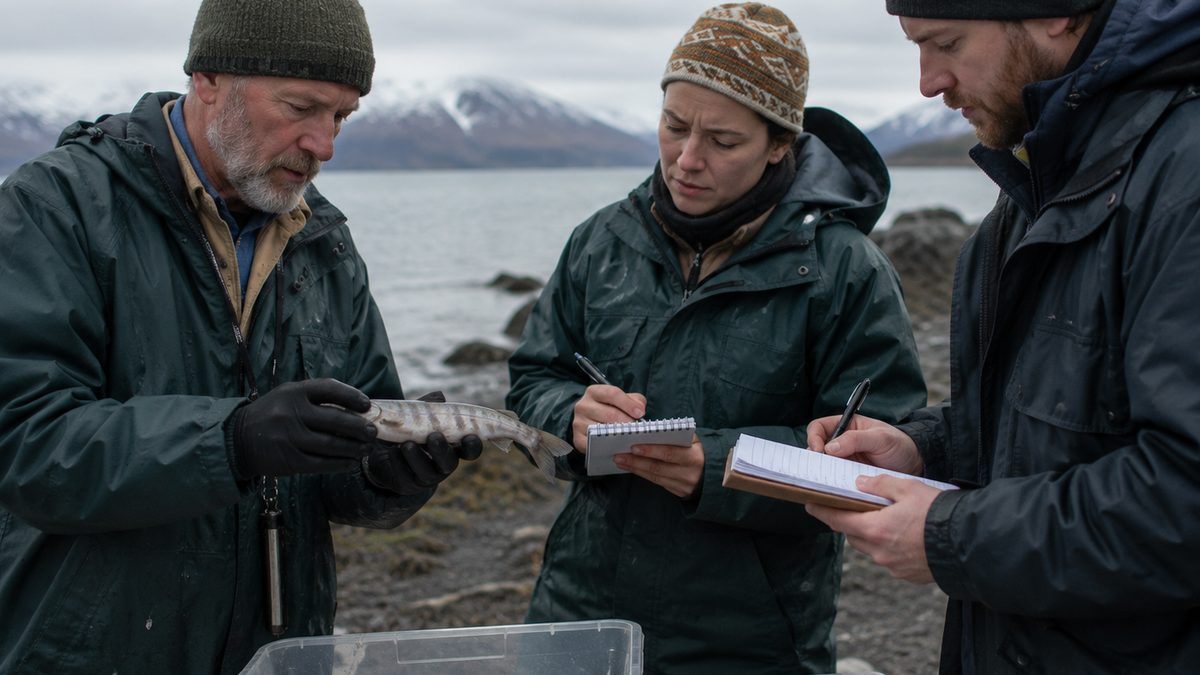
Research on pink salmon in the Great Lakes may help coastal communities understand how fast-spreading fish affect local ecosystems. Editorial illustration by TheDailyGlobe.
Key Facts
- NOAA-led research has examined the pink salmon invasion in the Great Lakes.
- NOAA described the Great Lakes case as offering lessons for North Atlantic and Arctic communities.
- US Harbors also reported on the NOAA-linked research and its relevance for communities watching pink salmon spread.
- The research may help managers understand how a fast-spreading fish moves through new ecosystems.
- The available materials do not settle every question about long-term effects in the North Atlantic, Arctic or Great Lakes.
A fish moving into new waters can become a local concern before it becomes a national headline. People who fish, work on the water, manage hatcheries or depend on coastal food systems may notice the change first: a species showing up where it was not expected, spreading faster than managers would like, and raising questions no single season can answer.
That is the kind of question behind recent NOAA-led research on pink salmon in the Great Lakes. NOAA materials describe the Great Lakes case as one that may offer lessons for North Atlantic and Arctic communities watching the same species spread in northern waters.
The story is not simply that a fish arrived somewhere new. It is about what scientists can learn from one region’s experience and how that knowledge may help other communities prepare, monitor and respond without turning uncertainty into panic.
How Pink Salmon Spread Becomes a Science Question
Pink salmon are not new to science, but their movement into new waters creates practical questions. When a species spreads beyond familiar ranges, scientists want to understand how quickly it is moving, where it is reproducing, what conditions help it survive and what it may mean for native fish and local food webs.
That is why the Great Lakes case matters. The region gives researchers a real-world example of pink salmon establishing and spreading in a large freshwater system. Scientists and managers can look at what happened over time instead of relying only on theory.
A case like this does not provide a perfect forecast for other regions. The Great Lakes are not the North Atlantic, and they are not the Arctic. Each place has its own water conditions, species mix, food web, climate pressures and human uses. But one region’s experience can still help researchers ask better questions in another.
Why the Great Lakes Case Matters
The Great Lakes are large, connected and ecologically important. They support commercial and recreational fishing, local economies, tourism, tribal and community interests, and a long history of fishery management. A species that spreads there gives scientists a chance to study both biological behavior and management response.
For North Atlantic and Arctic communities, that matters because pink salmon have drawn attention as a fast-spreading fish in northern waters. A community seeing a new species arrive needs more than a label. It needs to know whether the fish is reproducing, whether it is competing with local species, whether it may affect fisheries and whether managers have useful monitoring tools.
The Great Lakes research can help with those questions by showing what scientists watched, what patterns they found and what kinds of information proved useful. It can also show what remained hard to answer, which is just as important for regions trying to avoid overconfidence.
What Scientists Can Learn From Spread Patterns
Invasive-species research often starts with movement. Where did the species appear first? How did it spread? Did it establish a breeding population? Did the pattern look steady, sudden or uneven? Those questions help scientists move from observation to understanding.
For pink salmon, the useful lesson is not only that the fish can spread. It is that managers need good observations early enough to see whether a new arrival is temporary or becoming established. A few sightings can raise concern, but repeated evidence over time is what helps scientists understand whether a population is taking hold.
That kind of information can guide monitoring. If researchers know which habitats, seasons or water conditions are linked to spread, managers may be better able to watch the right places at the right times. The available materials do not show that every region will see the same pattern, but they do show why careful tracking matters.
Why Northern Communities Are Watching
North Atlantic and Arctic communities have reason to pay attention because fish are tied to food, income, culture and local identity. A change in species mix can affect fishing expectations, management decisions and the way people understand local waters.
A warming climate can also change the backdrop for these questions. As northern waters change, species may move, survive or reproduce in places where past conditions were less favorable. That does not mean every change is caused by one factor, and it does not mean every new arrival will have the same impact. It does mean managers need current information rather than old assumptions.
For coastal communities, the practical issue is not the word “invasion” by itself. It is what the spread means on the water. Are local fish affected? Are fisheries disrupted? Are ecosystems changing in ways managers can measure? Are communities getting information early enough to respond wisely?
What Research Cannot Answer Yet
The Great Lakes case can offer lessons, but it cannot answer every question for every coastline. The available reporting does not settle how pink salmon will affect each North Atlantic or Arctic ecosystem over time. It also does not establish that impacts will be the same across regions.
That matters because fishery stories can easily become either too alarmed or too dismissive. A fast-spreading species deserves attention, but attention is not the same as certainty. Scientists still need data on reproduction, competition, habitat, food webs and local conditions before drawing stronger conclusions.
Managers may use the research to improve monitoring, compare regional patterns and prepare for questions from communities that depend on fisheries. The next thing to watch is how NOAA-linked findings are applied in northern waters and whether additional studies sharpen the picture.
The clearest takeaway is that the Great Lakes experience is useful because it is concrete. It gives scientists and communities a case to study, not a script to copy. As pink salmon spread in northern waters, that kind of careful, place-based evidence may be more valuable than alarm and more honest than easy reassurance.
Reporting note: Reporting draws on NOAA research materials, US Harbors reporting, fisheries science summaries, and reviewed background materials. This article was produced with AI-assisted research and reviewed by an editor before publication.