The People Who Can Remember Nearly Every Day of Their Lives
A rare condition known as hyperthymesia allows some people to recall extraordinary details from their past, offering researchers a unique window into how human memory works.
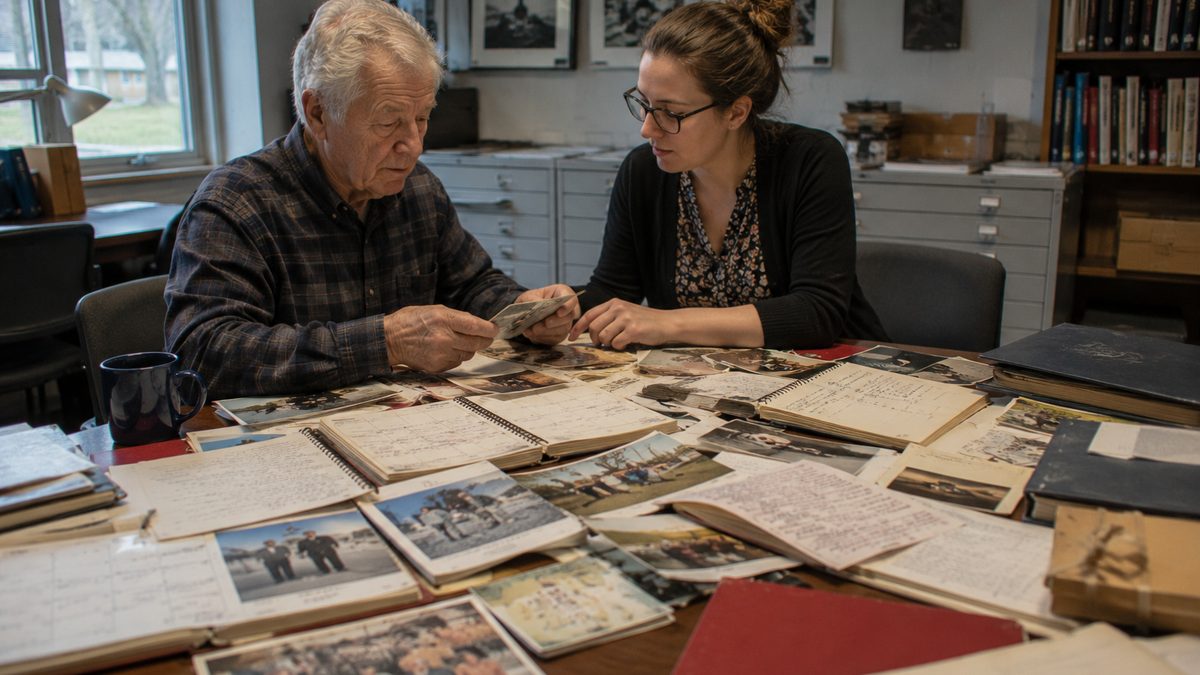
Researchers study people with unusually detailed autobiographical memory to better understand how the brain stores and retrieves life experiences. Editorial illustration by TheDailyGlobe.
Key Facts
- Hyperthymesia is an extremely rare ability involving unusually detailed autobiographical memory.
- People with the condition often recall specific dates and personal experiences with remarkable accuracy.
- Researchers began formally studying the condition in the 2000s.
- The ability appears related to personal life memories rather than perfect recall of all information.
- Scientists still do not fully understand why hyperthymesia occurs.
Most people struggle to remember what they ate for lunch last Tuesday. A small number of people, however, can often tell you what happened on a specific day years or even decades ago, along with details about the weather, news events, conversations, or personal experiences from that date.
The condition is known as hyperthymesia, sometimes called Highly Superior Autobiographical Memory. It remains one of the most unusual and least understood phenomena in memory science.
How Researchers First Identified It
Public interest in hyperthymesia grew after researchers at the University of California, Irvine began studying individuals who reported being able to remember nearly every day of their lives. When tested, some participants demonstrated an ability to recall dates and personal events far beyond what researchers typically observe.
Scientists would ask about random dates from years earlier and compare answers with personal records, calendars, diaries and documented public events. In many cases, participants accurately described what they had been doing and connected those memories to broader events occurring at the time.
The findings attracted attention because they challenged assumptions about the limits of autobiographical memory.
What Hyperthymesia Is and Is Not
One common misconception is that people with hyperthymesia possess perfect memories. Researchers say that is not the case.
The condition primarily affects autobiographical memory, meaning memories tied to a person's own life experiences. Someone with hyperthymesia might recall where they were on a particular date years ago, what happened that day and how they felt about it.
That does not necessarily mean they can instantly memorize textbooks, remember every phone number they have seen or perform extraordinary feats of academic recall. Their unusual ability appears most closely connected to personal life events.
Like everyone else, people with hyperthymesia can still make mistakes, misinterpret events or forget certain kinds of information.
What Scientists Have Observed in the Brain
Researchers have explored whether people with hyperthymesia share certain neurological characteristics. Brain imaging studies have identified differences in some regions associated with memory processing and the retrieval of personal experiences.
Scientists have also noted that some individuals with the condition spend substantial time thinking about past events, revisiting memories and mentally reviewing earlier experiences.
What remains unclear is whether observed brain differences cause the unusual memory ability or develop partly because of how these individuals use and revisit their memories over time.
Current research has not produced a single explanation that fully accounts for the phenomenon.
Why Perfect Recall Is Not Always a Gift
At first glance, many people assume having near-perfect recall of personal experiences would be entirely positive. Researchers have found the reality can be more complicated.
Most people gradually forget details of embarrassing moments, arguments, disappointments and painful experiences. For individuals with hyperthymesia, some of those memories may remain unusually vivid.
Several people studied by researchers have described becoming overwhelmed by memories that return easily and frequently. A difficult experience from years earlier may feel more immediate than it does for most people.
The condition can therefore create emotional challenges alongside its remarkable advantages.
What Hyperthymesia Reveals About Memory
Memory researchers are interested in hyperthymesia not simply because it is rare, but because it may help answer broader questions about how memory works.
Human memory is often described as reconstructive rather than photographic. People do not store perfect recordings of their lives. Instead, memories are shaped by attention, emotion, repetition and retrieval.
Studying individuals who remember unusual amounts of autobiographical information may help scientists better understand why some memories persist while others fade.
The research could eventually improve understanding of memory disorders, age-related cognitive decline and conditions that affect memory formation.
What Scientists Still Do Not Know
Despite years of study, many questions remain unanswered. Researchers do not know exactly how rare hyperthymesia is, whether genetic factors play a role, or why only a small number of documented individuals appear to possess the ability.
Scientists also continue investigating how memory systems interact with attention, emotion and habit. It remains unclear whether hyperthymesia represents a fundamentally different memory process or an unusually powerful variation of mechanisms found in everyone.
For now, hyperthymesia remains one of the most fascinating subjects in brain science. It reminds researchers that even something as familiar as memory still contains mysteries. The people who can recall nearly every day of their lives are helping scientists explore one of the most personal and complex abilities the human brain possesses.
Reporting note: Reporting draws on research from the University of California, Irvine, National Institutes of Health materials, American Psychological Association resources, neuroscience literature, and reviewed background materials. This article was produced with AI-assisted research and reviewed by an editor before publication.