NOAA's Summer Forecast Points to a Larger Gulf Dead Zone
NOAA is forecasting an above-average Gulf of Mexico dead zone this summer, a seasonal low-oxygen area shaped by river flow, nutrient runoff and algae growth.
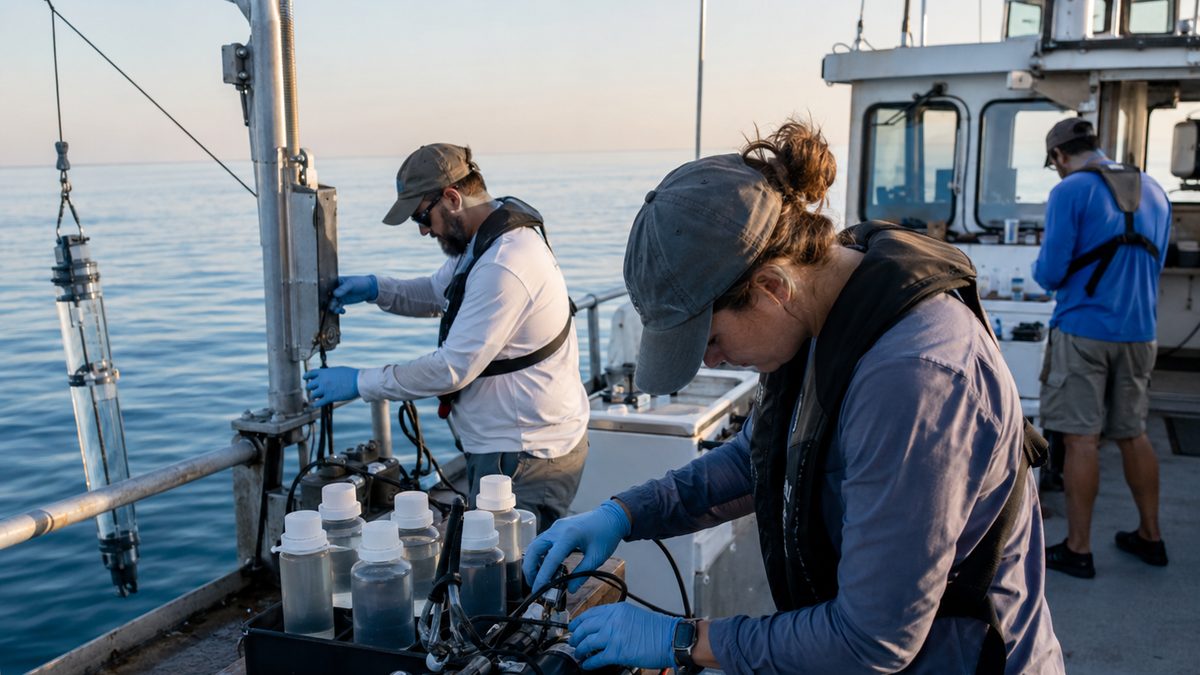
NOAA's summer forecast points to an above-average Gulf dead zone tied to low oxygen in coastal waters. Editorial illustration by TheDailyGlobe.
Key Facts
- NOAA NCCOS forecast an above-average summer dead zone in the Gulf of Mexico in a June 16, 2026, update.
- A dead zone is an area of low oxygen, also called hypoxia, where many marine animals may struggle to survive or move away.
- Nutrients carried by rivers can feed algae growth, which can later contribute to oxygen loss as algae decomposes.
- NOAA materials connect ocean chemistry and biogeochemistry to how carbon, nutrients and biological processes shape marine conditions.
- The exact size and effects of the seasonal dead zone can vary with weather, river flow, nutrient levels and ocean conditions.
A dead zone sounds like something sudden and catastrophic. In the Gulf of Mexico, it is usually a seasonal science problem with a familiar chain of causes: river water, nutrients, algae, decomposition and oxygen loss.
NOAA is forecasting an above-average Gulf dead zone this summer, according to a June 16, 2026, forecast from NOAA's National Centers for Coastal Ocean Science. The forecast matters because low-oxygen water can change where fish, shrimp and other marine life can survive, which is why fishers, coastal communities and scientists pay close attention each year.
What a Dead Zone Is
A dead zone is not a place where the ocean is permanently dead. It is an area where oxygen levels in the water drop low enough to stress or displace marine life. Scientists often use the term hypoxia for this low-oxygen condition.
Fish and shrimp can move if they have enough time and space. Animals that cannot move quickly, or cannot move at all, face greater risk. The result can be a temporary reshaping of habitat. Some areas become harder for marine life to use, while nearby areas may become more crowded as animals avoid low oxygen.
That is why the Gulf forecast matters beyond a dramatic phrase. The issue is not that the whole Gulf becomes lifeless. It is that a seasonal low-oxygen area can affect where marine animals are found and how coastal ecosystems function.
How River Water Feeds the Process
The Gulf dead zone is closely tied to what rivers carry into coastal waters. Nutrients from fertilizer runoff and other sources can move through the Mississippi River watershed and reach the Gulf. Those nutrients can feed algae growth.
Algae are part of normal aquatic systems, but excess nutrients can fuel larger blooms. When algae die and decompose, that decomposition uses oxygen in the water. If the water becomes layered in a way that limits mixing, oxygen near the bottom can drop.
That chain is why inland activity can matter offshore. A field, lawn, ditch or stream far from the Gulf can still be part of the larger nutrient pathway if runoff eventually reaches rivers that drain toward the coast.
What NOAA Is Forecasting
NOAA's June forecast points to an above-average summer dead zone. The forecast is not a final measurement of the dead zone's exact size. It is a seasonal projection based on the conditions and data NOAA uses to estimate likely low-oxygen conditions.
NOAA's ocean carbon and biogeochemistry work helps explain the larger science behind these forecasts. Ocean conditions are shaped by the movement of carbon, nutrients, organisms and chemical processes. In the Gulf, the dead zone is one visible result of those interacting systems.
The practical takeaway is that scientists are expecting a larger-than-average low-oxygen zone this summer, not that every coastal area will experience the same conditions. The Gulf is large, and local effects can vary.
Why Fishers and Coastal Communities Watch
People who work on the water pay attention because oxygen levels can influence where fish and shrimp are likely to be. If marine life avoids low-oxygen water, fishing patterns can change. Boats may need to travel differently, and catches can be affected by where animals concentrate or disappear from usual areas.
Coastal communities also watch because the dead zone is a sign of how land, rivers and ocean systems are connected. It reflects not only what happens offshore, but also what flows downstream from farms, cities and developed areas across a large watershed.
That does not make the forecast a reason for panic. It makes it a reason to track conditions carefully. For communities tied to fisheries, recreation, tourism and coastal ecosystems, a larger dead zone is a meaningful seasonal signal.
What Remains Uncertain
A forecast can point to the likely size of a dead zone, but the final outcome depends on conditions that can change. Weather, storms, river flow, nutrient loads, water temperature, winds and mixing all matter. A storm can stir water and change oxygen conditions. Calm, layered water can help low oxygen persist.
It also remains uncertain how the dead zone's effects will be felt in specific fishing areas or coastal communities this season. A larger low-oxygen zone can raise concern, but local impacts depend on timing, location and how marine life responds.
That is why follow-up monitoring matters. The summer forecast gives scientists, fishers and coastal officials an early warning of what to expect. Measurements taken during the season help show what actually formed.
Why This Matters Beyond One Summer
The Gulf dead zone is a reminder that ocean health is often shaped before water reaches the ocean. Nutrients moving through rivers can help feed a process that changes oxygen levels many miles downstream.
For readers, the science is useful because it connects everyday land and water systems to a visible coastal result. Fertilizer runoff, river flow, algae growth and oxygen loss are not separate stories. They are linked steps in a seasonal pattern that scientists can forecast, monitor and explain.
The next thing to watch is NOAA's follow-up assessment of the dead zone's measured size and conditions. The forecast points to an above-average summer. The season's monitoring will show how large the low-oxygen area actually becomes and what that means for the Gulf communities that depend on healthy coastal waters.
Reporting note: Reporting draws on NOAA NCCOS forecast materials, NOAA ocean carbon and biogeochemistry resources, NOAA Gulf hypoxia background materials, and reviewed context. This article was produced with AI-assisted research and reviewed by an editor before publication.