NASA Air-Quality Data Is Helping Track Pollution Around World Cup Crowds
NASA air-quality data is supporting CDC planning during World Cup 2026, helping public-health teams watch conditions around large crowds and host cities.
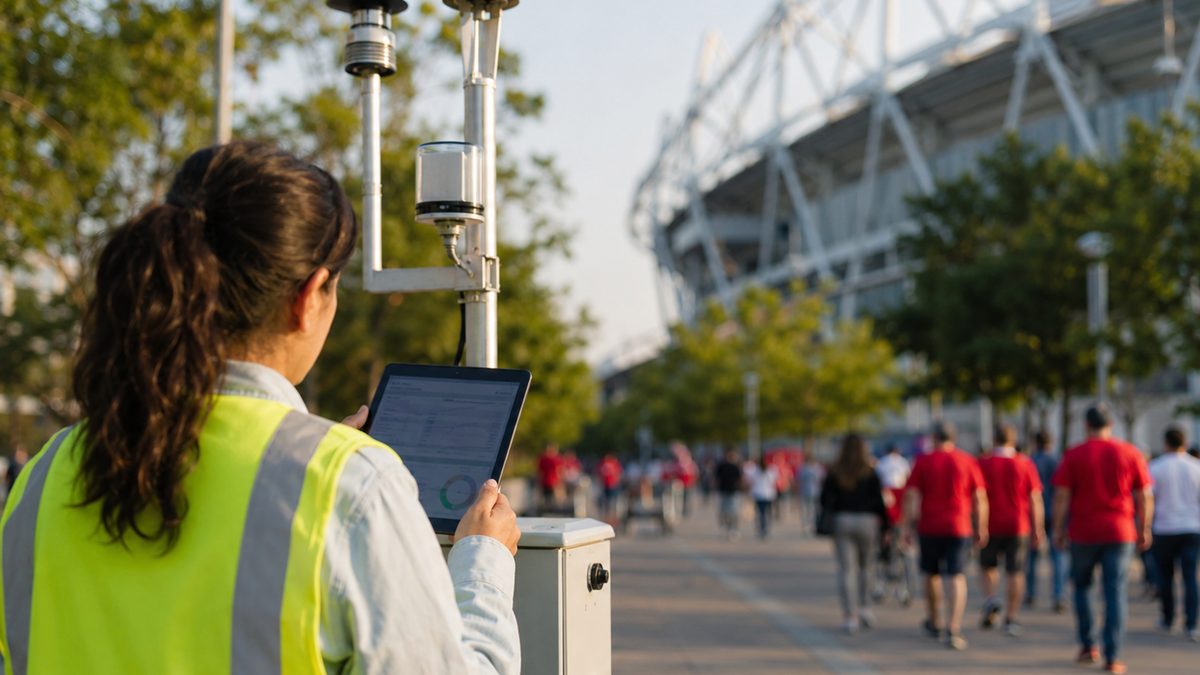
NASA air-quality data can help public-health teams monitor conditions around large events and crowded host cities. Editorial illustration by TheDailyGlobe.
Key Facts
- NASA Science reported on July 1, 2026, that NASA data is helping CDC track air quality during World Cup 2026.
- NASA Earthdata provides near-real-time air-quality data resources related to the atmosphere.
- CDC has public materials describing what it is doing for World Cup 2026.
- NASA satellite and modeled air-quality data can support public-health planning around large events and host cities.
- The data can help show pollution patterns, but it does not replace local public-health decisions or on-the-ground conditions.
A major soccer match does not only bring noise, traffic and a packed stadium. It brings thousands of people moving through transit stations, roads, fan zones, hotels, restaurants and outdoor spaces at the same time. For public-health teams, that kind of crowd changes the picture around heat, illness, emergency planning and air quality.
During World Cup 2026, NASA air-quality data is helping the CDC track pollution conditions around host cities and large crowds. The work shows how satellite and modeled environmental data can support planning for a global sporting event without turning every bad-air day into a crisis.
Why Crowds Change the Air-Quality Picture
Air quality is not only a background environmental issue. It can become more important when a city is hosting a major event. More people may be driving, using buses, riding trains, standing outside for long stretches or gathering near roads, stadiums and temporary event sites.
That does not mean a tournament automatically creates dangerous air. It means public-health planners have more moving pieces to watch. Pollution can vary by city, weather, traffic, fire smoke, industrial activity and local geography. A crowd-heavy event adds timing and location to the question: where are people, when are they outdoors and what are conditions like nearby?
For fans, workers and residents, the practical issue is simple. Air quality can affect how comfortable and safe it is to spend time outside, especially for people who are more sensitive to pollution. Public officials need reliable information as they make plans for a large event moving through many places at once.
What NASA Data Adds
NASA's role is not to run the World Cup or make local health orders. Its value is in the data. NASA Earthdata provides near-real-time air-quality resources that can help users understand atmospheric conditions, including pollution-related information.
Satellite and modeled data can give public-health teams a broader view than one ground monitor alone. Satellites can help observe large areas. Models can help fill in patterns and estimate conditions across space and time. Together, those tools can support planning when officials need to understand what is happening across multiple host cities.
That broader view matters because air pollution does not stop neatly at city boundaries. Smoke, ozone and particulate pollution can move, change and concentrate depending on weather and local conditions. A major event gives planners a reason to connect environmental data with where people are likely to gather.
What CDC Is Watching
CDC has public materials describing what it is doing for World Cup 2026. In this context, air quality is one part of public-health planning around a large international event.
The CDC's interest is practical: large gatherings can create public-health needs that are different from a normal day. People may be traveling across regions and countries, spending more time outdoors, using unfamiliar transportation and gathering in dense crowds. Public-health teams need information that helps them prepare, communicate and respond if conditions change.
NASA air-quality data can support that work by helping planners watch pollution conditions near event areas and across host cities. It can help inform awareness, preparation and coordination. It does not by itself determine what any person should do at a specific moment.
What the Data Can and Cannot Show
Environmental data is useful, but it has limits. Satellite and modeled air-quality information can help identify patterns, trends and areas of concern. It can support planning across large areas and help public-health teams see conditions that may not be obvious from the ground.
But data products are not the same thing as a personal health diagnosis, and they do not capture every person's exposure. A fan sitting in traffic, a worker near a cooking area, a child with asthma, an older adult walking several blocks and a resident watching from home may all have different experiences on the same day.
Local conditions also matter. Shade, wind, heat, nearby roads, stadium design, transit patterns and emergency plans can all affect how air-quality information is used. The data helps public-health teams ask better questions. It does not remove the need for local judgment.
Why This Matters Beyond Soccer
World Cup 2026 is a useful test case because it brings large crowds, many host locations and public attention at the same time. But the lesson is not limited to soccer. The same basic challenge appears during concerts, festivals, marathons, state fairs, emergency shelters, wildfire-smoke events and other large gatherings.
Public-health planning increasingly depends on combining different kinds of information: weather, air quality, transportation, crowd movement and local health capacity. NASA's air-quality resources show how space-based and modeled science can become part of ordinary planning on the ground.
The next thing to watch is how public-health officials use this information during the tournament and whether the same approach becomes more common for future large events. The broader takeaway is calm but important: when millions of people gather, clean air becomes part of event planning, not just an environmental headline.
Reporting note: Reporting draws on NASA Science materials, NASA Earthdata air-quality resources, CDC World Cup public-health planning materials, and reviewed background context. This article was produced with AI-assisted research and reviewed by an editor before publication.