Could Mammoths Really Come Back? What De-Extinction Science Can and Cannot Do
Scientists are working to recreate traits of the woolly mammoth using modern genetics, but important scientific, ecological and ethical questions remain unanswered.
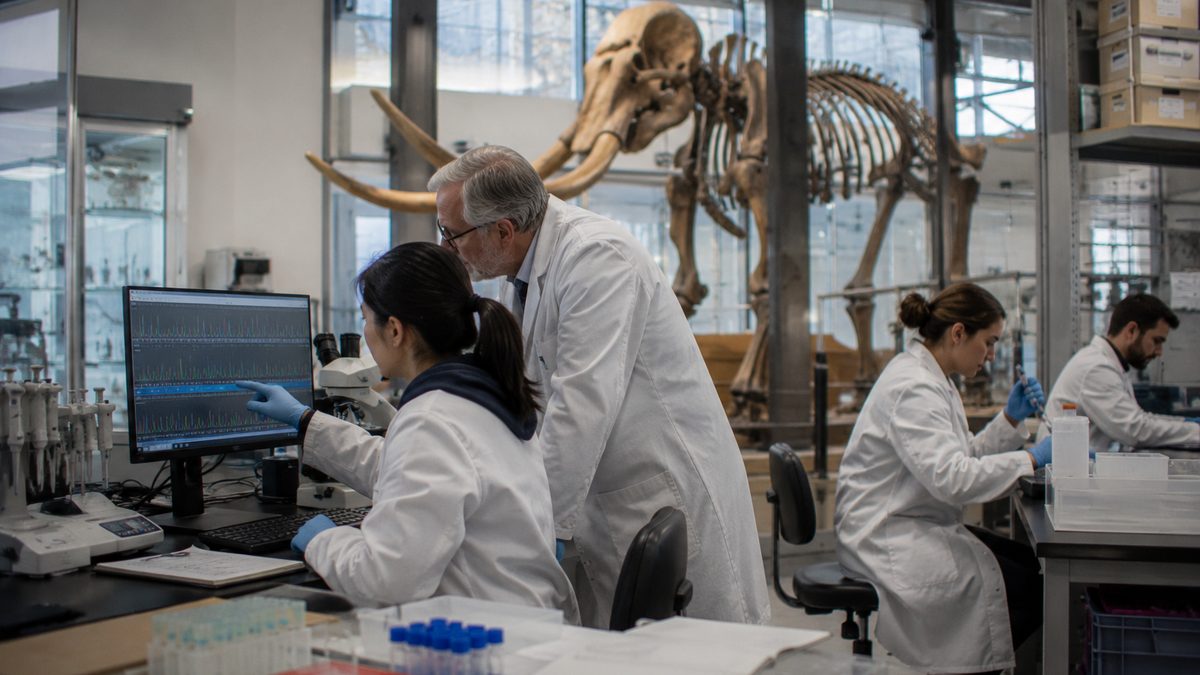
Scientists are exploring whether genetic engineering could recreate some traits associated with extinct woolly mammoths. Editorial illustration by TheDailyGlobe.
Key Facts
- Woolly mammoths disappeared thousands of years ago, with small isolated populations surviving longer than most mainland herds.
- Researchers are studying how mammoth DNA differs from that of modern Asian elephants.
- Current efforts focus on creating animals with mammoth-like traits rather than cloning a complete mammoth.
- Scientists continue debating the ecological and ethical implications of de-extinction projects.
- No living woolly mammoth currently exists, and major technical hurdles remain unresolved.
The idea sounds like something from a movie: bring back the woolly mammoth and watch herds roam cold northern landscapes once again. It is a concept that captures public imagination because it combines extinct animals, advanced genetics and the possibility of reversing a loss that happened thousands of years ago.
Scientists working in the growing field of de-extinction research say the reality is far more complicated than simply cloning a mammoth. The technology being explored today raises fascinating possibilities, but it also comes with major scientific and ethical challenges.
Why Mammoths Disappeared
Woolly mammoths once lived across large parts of the Northern Hemisphere during the Ice Age. They were adapted to cold environments, with thick hair, layers of fat and other traits that helped them survive harsh climates.
Researchers generally believe a combination of changing climate conditions and human hunting contributed to their decline. As ice sheets retreated and ecosystems changed, mammoth populations became increasingly fragmented. Over time, the species disappeared, leaving behind fossils, preserved remains and fragments of genetic material.
Those remains now provide much of the information scientists use when studying mammoth biology.
What De-Extinction Means
Many people imagine de-extinction as a process similar to cloning. In reality, researchers often describe a more complex goal.
DNA recovered from mammoths is incomplete and degraded. Scientists cannot simply take ancient genetic material and produce a living animal the way a photocopier reproduces a document.
Instead, some researchers are exploring whether specific mammoth traits could be introduced into the genome of a closely related living species. For mammoths, that relative is the Asian elephant.
The idea is to identify genes associated with cold-weather adaptations and determine whether similar traits could be engineered into future animals. Even if successful, such an animal would not necessarily be identical to a mammoth that lived thousands of years ago.
The Scientific Hurdles Remain Enormous
Genetic engineering technology has advanced rapidly, but the challenge remains extraordinarily complex. Mammoths differed from elephants in many ways, and researchers are still learning which genetic changes influenced specific physical traits.
Creating a viable animal would require far more than producing a few mammoth characteristics. Scientists would need to understand how numerous genes interact during development and how those changes affect health, reproduction and long-term survival.
Questions also remain about gestation, animal welfare and whether surrogate species could safely carry genetically modified embryos. These issues are active areas of scientific discussion rather than solved engineering problems.
Where Would a Mammoth-Like Animal Live?
Even if researchers succeeded in creating an animal with mammoth-like traits, another question immediately follows: where would it go?
The ecosystems mammoths once inhabited have changed dramatically since the Ice Age. Forests, grasslands, wildlife populations and climate conditions differ from those of thousands of years ago.
Some researchers have proposed that large grazing animals could influence Arctic landscapes in ways that affect vegetation and soil conditions. Others caution that predicting ecological outcomes is difficult and that introducing new animals into modern ecosystems carries risks.
The debate is not only about whether scientists can create such animals, but also whether releasing them would produce the effects advocates expect.
The Ethical Questions
De-extinction projects also raise ethical concerns. Some scientists and conservation experts argue that resources might be better spent protecting species that are currently endangered rather than attempting to recreate extinct ones.
Others question the welfare implications for animals created through experimental technologies. If a mammoth-like animal were produced, researchers would still need to determine how it would live, reproduce and interact with its environment.
Supporters of the research argue that advances in genetics could also benefit conservation efforts by helping scientists better understand biodiversity and protect threatened species.
What Remains Unclear
The biggest uncertainty is how close current science really is to producing a healthy animal with meaningful mammoth characteristics. Companies and researchers continue reporting progress, but many milestones remain ahead.
It is also unclear what regulatory frameworks might govern future de-extinction projects, how the public would respond and whether ecological goals proposed by researchers could be achieved in practice.
For now, mammoths remain extinct. What exists today is a rapidly evolving scientific effort to understand whether some of their traits can be recreated. The science is real, but so are the unanswered questions. The future of de-extinction will likely depend as much on ecology, ethics and public acceptance as it does on genetics.
Reporting note: Reporting draws on materials from Colossal Biosciences, research discussed in Nature and Science, Smithsonian Magazine reporting, and reviewed background materials. This article was produced with AI-assisted research and reviewed by an editor before publication.