Your Body Has More Than One Clock, and Light Is Only Part of the System
Circadian rhythms are not just about bedtime. The brain, body, light, meals and daily routine all help time sleep, metabolism and daily function.
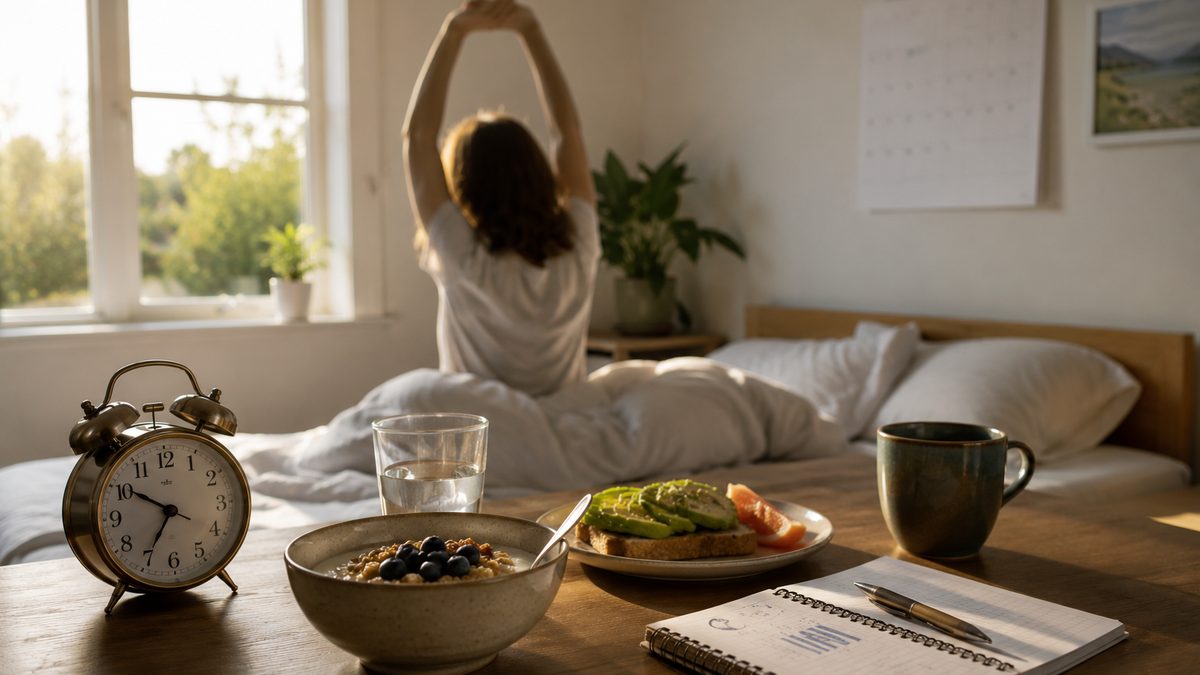
Circadian rhythms help time sleep, metabolism and daily function across the body. Editorial illustration by TheDailyGlobe.
Key Facts
- Circadian rhythms run on roughly 24-hour cycles and help time sleep, wakefulness and body function.
- NIH materials describe light and food as cues that can influence circadian rhythms.
- The brain has a master clock, but internal clocks also operate across cells, tissues and organs.
- Sleep pressure and circadian timing are related but not the same thing.
- Jet lag, shift work and irregular routines can disrupt the body's timing system.
Most people think of a body clock as the thing that tells them when to feel sleepy or awake. That is true, but it is only the simplest version of the story.
The human body runs on circadian rhythms, roughly 24-hour cycles that help time sleep, wakefulness and other daily functions. Light is one of the most powerful cues, but it is not the only one. Food, routine, travel and work schedules can all tug on the system.
That is why circadian disruption can feel bigger than a bad night of sleep. When timing cues conflict, the brain and body may not be lined up with the day in the same way. The result can affect alertness, meals, energy and the ordinary rhythm of daily life.
The Brain's Master Clock
The body's timing system has a central coordinator in the brain. This master clock responds strongly to light, helping the body track the outside day. Morning light, evening darkness and changes in light exposure all help signal when the body should be alert or preparing for sleep.
That light connection is why screens, travel across time zones and night work can become more than minor inconveniences. The brain is not just deciding when a person feels sleepy. It is helping organize a daily schedule for many biological processes.
But the master clock is not working alone. The National Heart, Lung, and Blood Institute notes that internal clocks operate across cells, tissues and organs. In plain English, the body keeps time in more than one place.
Clocks Throughout the Body
Peripheral clocks are timing systems outside the brain's master clock. They help coordinate activity in parts of the body involved in metabolism, hormones and daily function. That means the timing of the day can matter to more than whether someone feels sleepy.
Food is one reason this becomes practical. NIH materials describe food as one of the cues that can affect circadian rhythms. Meals send timing signals to the body, especially to systems involved in digestion and metabolism.
That does not mean every person needs a rigid schedule or that one meal time works for everyone. It means the body's clocks respond to patterns. When sleep, light and eating times move around constantly, the body may receive mixed signals about what time it is.
Sleep Pressure Is Different From Body Timing
One reason sleep can be confusing is that two different forces are often involved. Sleep pressure builds the longer a person is awake. Circadian timing helps decide when the body is naturally more alert or more ready for sleep.
That is why someone can be exhausted but still unable to sleep easily, or wake after enough hours in bed and still feel out of sync. The body may need sleep, but the internal timing system may not be matching the schedule the person is trying to follow.
This difference helps explain why circadian disruption can feel so frustrating. It is not always a matter of willpower or bedtime discipline. Sometimes the timing signals themselves are misaligned.
Why Jet Lag and Shift Work Hit Hard
Jet lag is one of the clearest examples. A person travels quickly to a new time zone, but the body does not instantly reset. The clock on the wall says one thing. The body's internal timing may still be closer to the place the person just left.
Shift work can create a different version of the same problem. A worker may need to be alert at night and sleep during the day, while light exposure, family routine, meals and social life still push the body toward a more typical day-night schedule.
CDC/NIOSH materials on circadian rhythms and long work hours describe the importance of the body's internal clock for sleep and wakefulness. The practical point is that work schedules can challenge biology, not just convenience.
Why Disruption Feels Bigger Than Being Tired
When circadian timing is disrupted, the effect can feel broader than ordinary sleepiness because the system touches many parts of daily function. Alertness, hunger, digestion, mood, body temperature and hormones can all be connected to timing.
That is also why the science should be handled carefully. Circadian biology can explain why light, meals, travel and routine matter, but it should not be turned into one-size-fits-all medical advice. Sleep problems, shift-work strain and health concerns can involve many factors.
The useful takeaway is that the body is not running on a single bedtime switch. It is using a network of clocks and cues to keep daily life coordinated. Light matters. So do meals, schedules and consistency. The next time sleep feels off after travel, late nights or a changing work schedule, the issue may be less about one bad night and more about a timing system trying to catch up.
Reporting note: Reporting draws on National Institutes of Health materials, National Heart, Lung, and Blood Institute sleep resources, CDC/NIOSH circadian clock materials, and reviewed health science context. This article was produced with AI-assisted research and reviewed by an editor before publication.