Why Washington Is Paying Attention to Skilled Trades Again
Federal apprenticeship funding is putting skilled trades back in the spotlight, but workers still need to know which programs lead to real paid training and jobs.
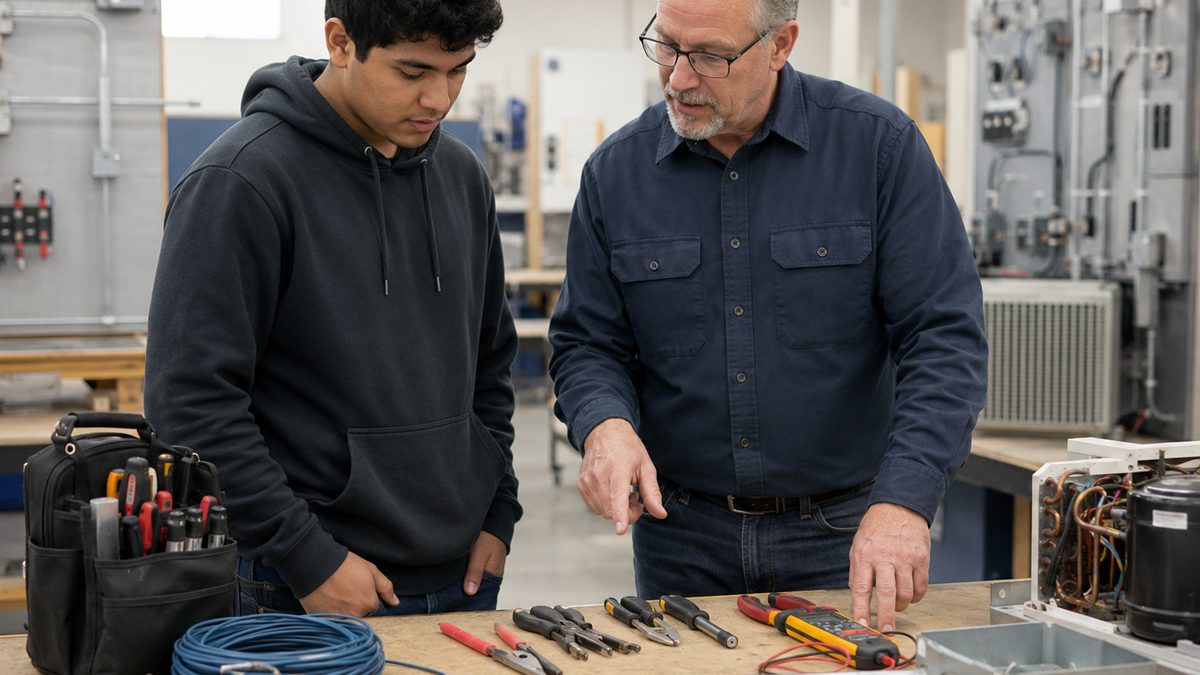
Apprenticeships can offer paid paths into skilled work, but access and program quality still vary widely. Editorial illustration by TheDailyGlobe.
Key Facts
- The Department of Labor describes registered apprenticeship as paid work combined with related instruction.
- DOL announced up to $145 million in funding to support apprenticeship expansion.
- Apprenticeship.gov lists federal funding and program information for apprenticeship opportunities.
- Apprenticeships are used across construction, manufacturing, health care, technology, public service and other sectors.
- The Bureau of Labor Statistics provides occupational outlook and wage data for skilled trades.
For a young worker looking at college costs, or a parent trying to help a teenager choose a realistic path, the skilled trades can look different than they did a generation ago. The question is no longer just whether someone wants to work with tools instead of at a desk. It is whether paid training can lead to a stable job without years of debt.
That question is now getting more attention in Washington. The Department of Labor has announced up to $145 million in funding to support apprenticeship expansion, and federal workforce agencies continue to point workers and employers toward registered apprenticeship programs. The renewed focus reflects a practical problem: the economy needs skilled workers, and many families need career paths that do not depend only on a four-year degree.
What a Registered Apprenticeship Is
A registered apprenticeship is not just a class, a boot camp or a short training certificate. The Department of Labor describes it as paid work combined with related instruction. That distinction matters because workers are not only learning about a job; they are supposed to be earning while building skills tied to an occupation.
Program details vary by industry and location. Some apprenticeships are connected to construction and the traditional trades. Others operate in manufacturing, health care, technology, public service and other fields. The common idea is that training should be linked to work, not separated from it.
For readers, the word registered is important. Not every program that markets itself as career training is a registered apprenticeship. A worker comparing options should know whether a program is formally registered, whether it includes paid work, what instruction is included, who the employer partners are and what job the training is supposed to lead to.
Why Trades Are Back in the Policy Conversation
Skilled trades have become part of a larger discussion about wages, debt, workforce shortages and whether the country has enough workers to build, repair, install and maintain the systems people rely on. Housing, infrastructure, manufacturing, utilities, repairs and health services all depend on trained workers showing up with practical skills.
That is why apprenticeship funding has political appeal. It can sound like a rare answer that connects workers, employers and public needs: workers get paid training, employers build a pipeline, and communities get more people prepared for jobs that cannot always be filled quickly.
But the careful version of that promise matters. Apprenticeships can reduce some pressure on workers who do not want to start a career with college debt, but outcomes depend on program quality, local job demand, completion, wages and employer participation. Trades are not easy work. They are not automatically better than college. They are one path among several, and the best choice depends on the worker, the occupation and the local market.
The Federal Role Has Limits
The federal government can fund expansion, set standards, publish program information and help states, employers and training providers build more opportunities. Apprenticeship.gov gives workers and employers a place to find federal apprenticeship information, funding opportunities and related resources.
Still, federal attention does not guarantee that a worker in every town will find a strong program nearby. Availability varies by region and occupation. A rural worker, an adult changing careers or someone without family connections in a trade may face a very different set of options than a worker near a large employer or established training network.
That is the accountability test for apprenticeship policy. Announcing money is one step. The harder question is whether that money creates high-quality slots that workers can actually reach, complete and use to move into stable jobs.
What Workers Should Check Before Trusting a Program
The safest starting point is to understand what a program is promising. Is it a registered apprenticeship? Does it include paid work? What instruction is included? Which employer, union, state agency or training provider is involved? What occupation does it prepare someone for? What wages are typical in that field?
The Bureau of Labor Statistics Occupational Outlook Handbook can help readers compare job duties, wage data and employment outlook across occupations. That does not tell a person whether one local program is good, but it gives a baseline for asking better questions before signing up.
Readers should also be careful with programs that use apprenticeship-style language without the structure of a registered apprenticeship. A training course may still be useful, but it is not the same thing as a paid apprenticeship tied to an employer pathway. The difference can matter for cost, time, job placement and expectations.
What to Watch Next
The next signals to watch are new apprenticeship grants, local program openings, employer partnerships, wage data and completion outcomes. Those details will show whether federal attention is creating real opportunity or mostly producing more announcements.
What remains unclear is how many new apprenticeship slots current funding will create, whether those programs will reach rural workers and adult career changers, and how many participants will finish and move into stable jobs. The skilled trades may be back in the national conversation, but the real test is local: whether workers can find paid training that leads somewhere.
Reporting note: Reporting draws on Department of Labor materials, Apprenticeship.gov program information, federal funding announcements, Bureau of Labor Statistics labor-market data, and reviewed background materials. This article was produced with AI-assisted research and reviewed by an editor before publication.