What Happens After You Cast Your Vote
Election night numbers are usually unofficial. Final results come after local and state officials finish counting, checking, auditing and certifying the vote.
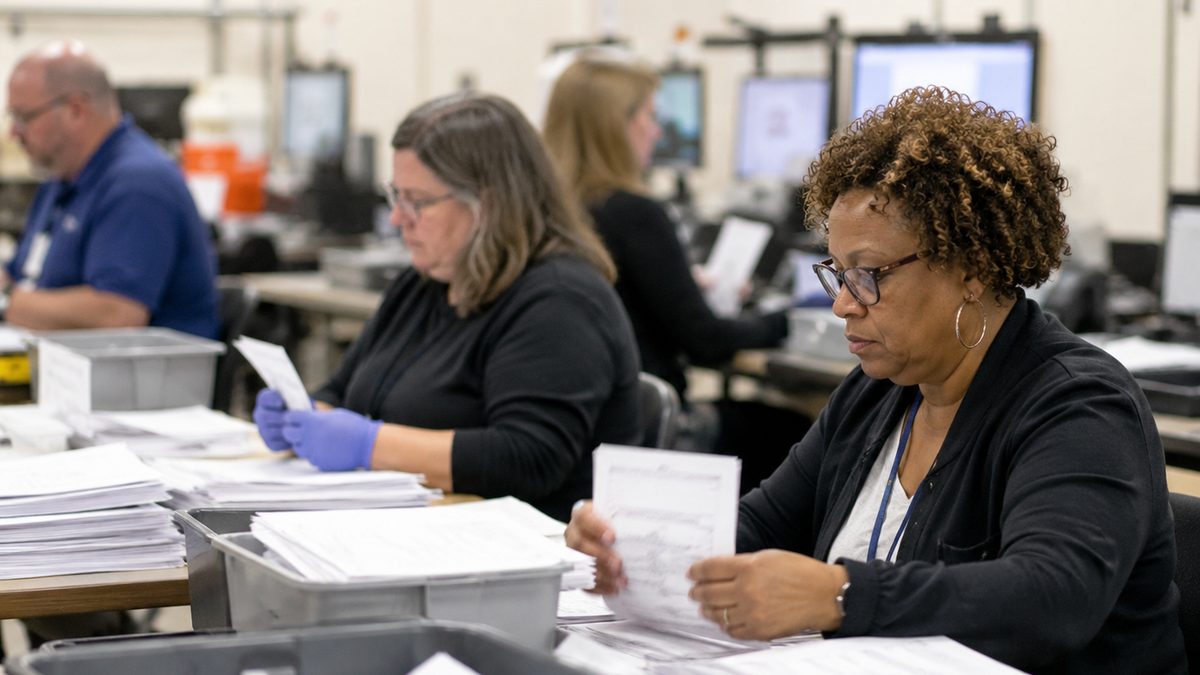
Election results become official only after local and state officials complete counting, checks, and certification. Editorial illustration by TheDailyGlobe.
Key Facts
- The U.S. Election Assistance Commission says reporting, canvassing and certifying election results requires substantial work after voting ends.
- The National Conference of State Legislatures explains that unofficial results may be released before official results are complete.
- Local officials process provisional ballots and canvass election results before certification.
- Post-election audits and recounts are part of election administration in many states.
- Certification rules and deadlines vary by state.
A voter may go to bed on election night seeing one set of numbers and wake up days later seeing another. That can feel confusing, especially in a close race. But changing vote totals after election night are not automatically a warning sign. In many cases, they are part of the normal process of finishing the count.
Election night results are usually unofficial. Official results come later, after local and state election officials process remaining ballots, review records, handle provisional ballots where allowed, complete canvassing, conduct required checks or audits, and certify the outcome under state law. The details vary, but the basic point is the same: voting does not end the election administration process.
Election Night Results Are Not the Final Word
The numbers voters see on election night are often early public reports. They may include ballots counted quickly, precinct results reported by local offices, or batches of votes processed before the night ends. They help the public understand where a race stands, but they are not the same as the certified result.
That distinction matters because not every valid ballot is necessarily reflected in the first public count. Some ballots take longer to process. Some voters cast provisional ballots that require review. Some jurisdictions need time to verify records, reconcile totals or complete required post-election checks.
The National Conference of State Legislatures explains that unofficial results can be released before official results are complete. That means a candidate's lead can shrink, grow or disappear as additional eligible ballots are processed. A change in the count can be normal, especially when a race is close or when large groups of ballots are reported at different times.
What Canvassing Actually Means
Canvassing is the official review of election results before certification. It is not a campaign activity in this context. It is the administrative work of checking vote totals, reconciling records and making sure the reported results match the ballots and election materials officials are responsible for reviewing.
The U.S. Election Assistance Commission says reporting, canvassing and certifying results requires substantial work after voting ends. That work is one reason official results can take time. Speed is not the only goal. Election offices also have to follow state rules, document the count and complete required steps before results are final.
Local election workers are often the people doing much of this work. They may be checking precinct records, reviewing ballot counts, processing eligible provisional ballots, preparing materials for county or state boards, and answering questions from campaigns, observers or the public. The process can look slow from the outside because much of it is procedural rather than dramatic.
Why Provisional Ballots, Audits and Recounts Matter
Provisional ballots exist for voters whose eligibility or registration status needs additional review under the rules that apply in that state. Whether and how those ballots are counted depends on state law and election procedures. They are one reason totals may not be complete on election night.
Post-election audits are another safeguard used in many states. The exact form varies, but audits are meant to check some part of the election process or results after voting ends. A state election page can be useful as an example of how these checks are explained locally, but readers should not assume every state follows the same audit process.
Recounts are separate from routine counting and canvassing. They may happen automatically in close races in some states, or they may be requested under state rules. A recount does not mean something improper happened. It means the margin or circumstances triggered an additional review under the law that applies to that election.
How Confusion Gets Exploited
Election administration is detailed, local and rule-bound. That makes it easy to misread from the outside. A normal update can look suspicious to someone who expected election night numbers to be final. A delayed count can be framed as a mystery when officials are still processing ballots under state deadlines.
That is where public communication matters. Election officials have a responsibility to explain what remains uncounted, what steps are still underway and when certification is expected. Voters should not have to guess whether a result is unofficial, whether a canvass is still underway or whether a recount has been triggered.
Political actors also have a responsibility not to treat normal post-election work as evidence of wrongdoing without verified official support. Public trust depends on a basic shared understanding: results can change after election night because the official process is still happening.
What Voters Should Watch After Election Day
The most useful updates usually come from official election offices. Voters can watch for local and state announcements about remaining ballots, canvass meetings, audit steps, recount notices and certification deadlines. Those are the milestones that turn unofficial reports into official results.
What remains unclear in any given election is which deadlines apply in each state, how quickly close races will be resolved, and whether recounts, litigation or ballot challenges will affect a particular contest. Those details are election-specific. But the larger process is not unusual: after voters cast ballots, officials still have work to do before the result is final.
Reporting note: Reporting draws on U.S. Election Assistance Commission materials, National Conference of State Legislatures election resources, state election guidance, and reviewed background materials. This article was produced with AI-assisted research and reviewed by an editor before publication.