Small Claims Court Can Help With Everyday Disputes, but Winning Is Not the End
Small claims court can help consumers pursue smaller money disputes without a lawyer, but rules, limits, fees and collection steps vary by state.
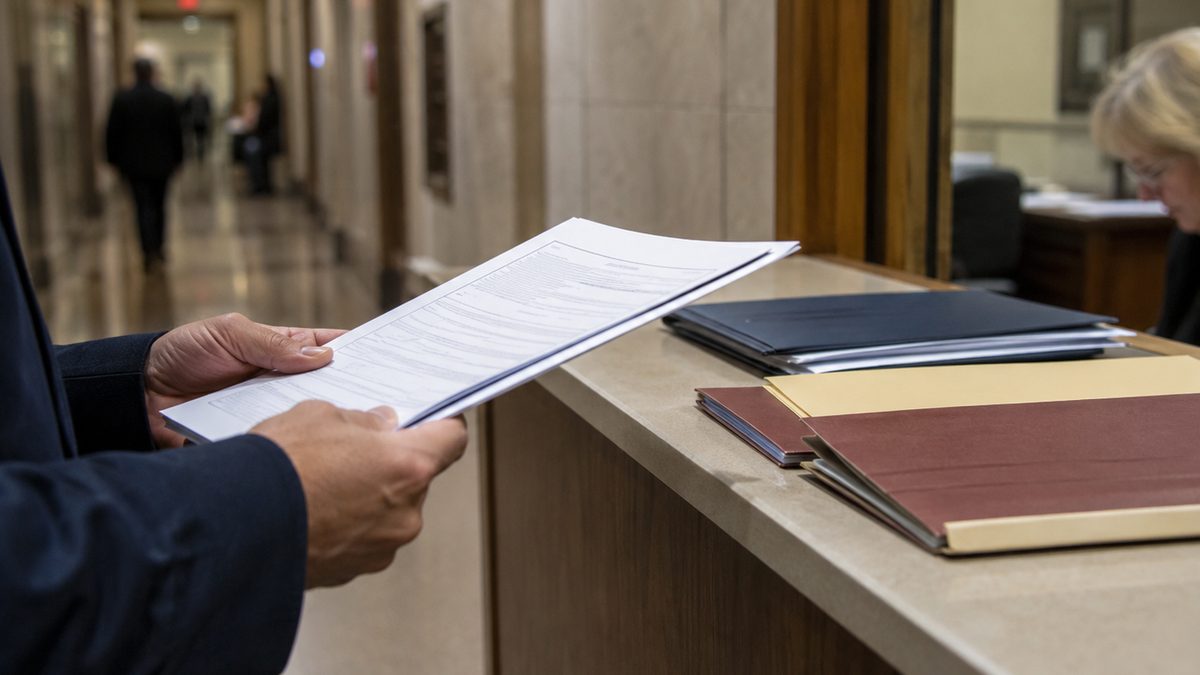
Small claims court can give ordinary people a way to pursue smaller disputes, but the rules vary widely. Editorial illustration by TheDailyGlobe.
Key Facts
- The National Center for State Courts describes small claims court as a way to resolve money disputes more quickly and often without a lawyer.
- Small claims dollar limits vary by state.
- Many small claims users represent themselves.
- Small claims cases may involve consumer disputes, landlord-tenant claims, property damage, unpaid debts and contract disagreements.
- Collecting a judgment may require additional steps after winning.
A landlord keeps a security deposit. A mechanic charges for a repair that does not fix the problem. A contractor takes money but does not finish the job. A broken appliance turns into a refund fight that drags on for weeks.
For disputes like those, many people assume they have only two choices: give up or hire a lawyer. Small claims court exists for the space in between. It is designed for smaller money disputes, often with simpler procedures and many people representing themselves. But it is not magic, and it is not the same in every state.
What Small Claims Court Is For
Small claims court is meant to handle disputes where the amount of money is limited by state law. The basic idea is simple: give ordinary people and small businesses a place to bring certain claims without the full cost and complexity of a larger lawsuit.
The kinds of cases can include consumer disputes, landlord-tenant disagreements, property damage, unpaid debts, small contract disputes and similar money claims. That does not mean every frustrating situation belongs there. Courts have rules about who can sue, where a case can be filed, how much money can be claimed and what kinds of remedies the court can order.
That state-by-state variation matters. A claim that fits within the dollar limit in one state may be too large in another. Filing fees, service rules, hearing procedures, appeal rules and collection steps can also differ. Readers should check local court self-help pages before assuming the process works the same everywhere.
Why Evidence Matters More Than Anger
Small claims court can be less formal than other civil courts, but it is still court. A person who feels wronged usually needs more than a strong story. Receipts, contracts, photos, messages, repair records, payment records, move-in or move-out documentation, estimates and written timelines can matter.
That is especially important in common consumer disputes. A tenant may need proof of the deposit, the lease terms, the condition of the unit and any communication with the landlord. A customer disputing a repair may need invoices, photos, written estimates or records showing what work was promised. A small business trying to collect an unpaid invoice may need proof of the agreement and the amount owed.
The point is not that evidence guarantees a win. It does not. The point is that small claims court is built around presenting a clear dispute in a way a judge can evaluate. A person who walks in only with frustration may be at a disadvantage against someone who brings documents and a simple timeline.
The Hard Part Can Come After Winning
One of the most important things for readers to understand is that winning a small claims case is not always the same as getting paid. A judgment can say one side owes money. Collecting that money may require additional steps, depending on state law and the other party's ability or willingness to pay.
That gap can surprise people. A consumer may win a judgment against a contractor, landlord or business and still have to figure out what local law allows next. Collection rules can involve separate procedures, forms or limits. They can also take time.
That does not make small claims court useless. It means the decision to file should include the full process, not just the hearing. How much money is at stake? What is the filing cost? How strong is the evidence? Is the other party likely to appear? If the person wins, what collection options exist locally? Those are practical questions, not legal advice.
Access to Court Is a Public Trust Issue
Small claims court is also a politics story because courts are public institutions. A legal system that only works for people who can afford lawyers leaves many smaller disputes unresolved. For families living paycheck to paycheck, a security deposit, a bad repair or an unpaid invoice may be too small for a lawyer but too large to ignore.
That is where access matters. If filing rules are confusing, fees are too high, language access is limited or online tools are hard to use, a court that is supposed to be open to ordinary people can still feel out of reach. Many people represent themselves, which makes clear instructions and self-help resources especially important.
The available information does not establish how many consumers use small claims court each year, how often consumers collect after winning, or whether businesses use the process more effectively than ordinary people. Those are important questions because the value of a public tool depends on whether people can actually use it.
What to Check Before Filing
The first step is usually local information. State and local court websites can explain dollar limits, filing fees, required forms, service rules, hearing procedures and collection options. Legal aid and consumer-help resources may also point people toward basic guidance, especially for those who cannot afford private legal help.
Small claims court is useful in the right case, limited in power and different from state to state. It can give people a path when a dispute is too small for a traditional lawsuit but too costly to let go. The next thing to watch is whether courts keep making that path easier to understand, easier to access and more realistic for the people it was meant to serve.
Reporting note: Reporting draws on court administration materials, legal-information resources, consumer guidance, access-to-justice materials, and reviewed background context. This article was produced with AI-assisted research and reviewed by an editor before publication.