School Meal Rules Could Make Cheap, Healthy Foods Harder for Cafeterias to Serve
Proposed limits on non-U.S. foods in school meals could affect cafeteria costs, menu choices and the affordable foods families count on schools to provide.
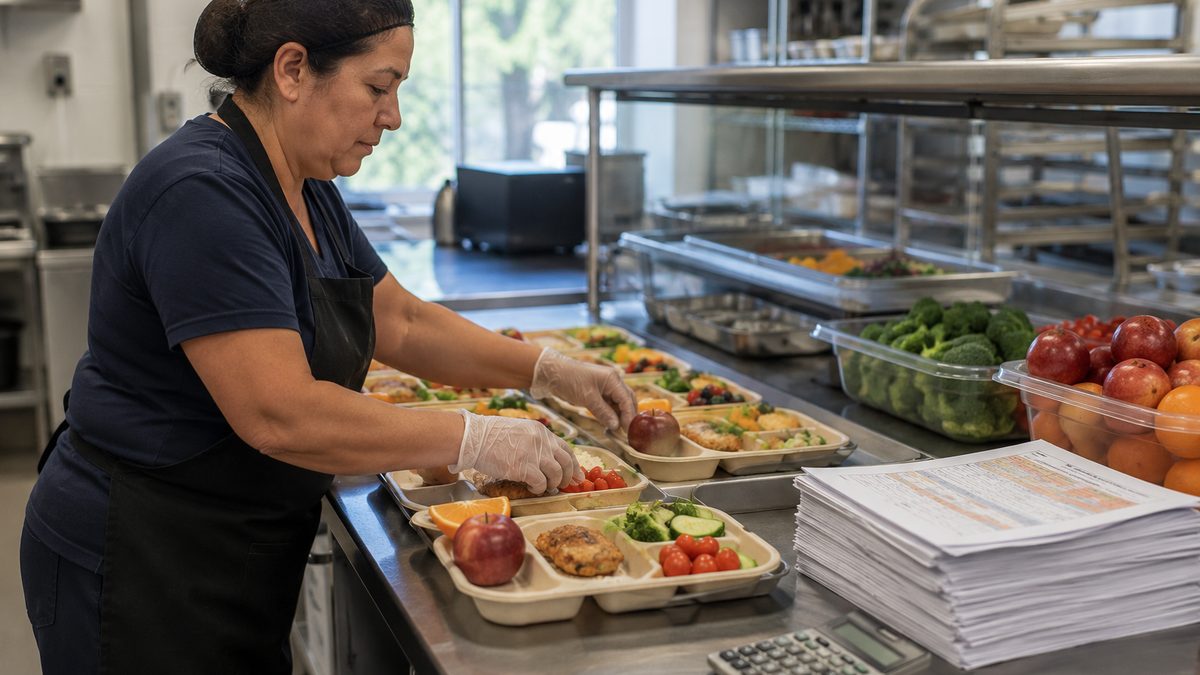
School meal rules can affect what cafeterias buy, how menus are planned, and what affordable foods students receive. Editorial illustration by TheDailyGlobe.
Key Facts
- Proposed limits on non-U.S. foods in school meals have raised questions about cafeteria costs and menu flexibility.
- USDA materials provide income eligibility guidance for school meal programs for the 2026-2027 school year.
- School meals are a family-budget issue because many households rely on cafeterias to help cover weekday breakfasts and lunches.
- Affordable imported foods, including examples such as bananas, can be part of school meal planning.
- It remains unclear how final rules, enforcement details or compliance timelines would affect schools, families and cafeteria menus.
A school lunch tray can look simple from the outside: fruit, milk, a main item, maybe a vegetable. Behind that tray is a budget calculation that cafeteria workers and school nutrition directors make every day.
Schools have to feed students at scale, follow nutrition rules, manage food costs, deal with supply limits and serve meals students will actually eat. That is why proposed limits on non-U.S. foods in school meals are drawing attention. A rule aimed at supporting domestic purchasing could also make some affordable, healthy cafeteria staples harder to serve.
The practical question for families is not only where school food comes from. It is whether cafeterias can keep offering low-cost, nutritious foods without sudden price pressure, menu changes or extra strain on school budgets.
Why Cafeteria Budgets Are Tight
School meal programs do not operate like ordinary restaurants. Cafeterias are not simply choosing a menu and charging whatever covers the cost. They work within federal nutrition rules, reimbursement rates, local budgets, vendor contracts and the number of students who qualify for free or reduced-price meals.
USDA income-eligibility guidance helps determine which students qualify for meal benefits. That makes school food a direct household-budget issue, especially for families that count on school breakfast or lunch to reduce weekday grocery pressure.
When food costs rise or menu choices narrow, schools have fewer easy options. They can change what they serve, look for different vendors, adjust portions within program rules or absorb higher costs elsewhere. None of those choices is simple when cafeterias are serving hundreds or thousands of meals.
The Domestic-Purchase Tradeoff
Rules that favor U.S.-produced foods are not new in spirit. The policy goal is understandable: public food spending can be used to support domestic farmers, food producers and supply chains.
But school meals create a hard tradeoff. Some foods that are affordable, familiar and popular with students are not easily grown in large quantities in the United States year-round. Bananas are the clearest example. They are inexpensive, easy to serve, widely recognized by children and useful for schools trying to put fruit on trays without adding preparation costs.
If rules sharply limit non-U.S. foods, cafeterias may have to find substitutes that meet nutrition standards, fit budgets and appeal to students. That may be manageable in some districts and harder in others, depending on location, vendors, season and existing contracts.
What Families Could Notice
Families may not follow federal purchasing rules closely, but they notice when school meals change. A student may come home saying a familiar fruit is gone. A parent may need to pack more lunches. A school worker may hear more complaints in the cafeteria line.
The impact would not be the same everywhere. Some schools may already rely more heavily on domestic products. Others may use imported foods because they are affordable, available and easy to serve. A rural district, a large urban district and a small suburban district may all face different vendor choices.
The issue also reaches beyond nutrition. School meals help families manage time and money. When cafeterias can provide a dependable breakfast or lunch, parents have one less daily cost to plan around. If menu changes make meals less appealing or more difficult to provide, the pressure can shift back to households.
Why Sudden Changes Can Strain Schools
Even when a policy goal is clear, timing matters. Schools buy food through planning cycles, contracts and vendor relationships. A sudden compliance shift can force nutrition directors to search for replacement foods, renegotiate supplies or adjust menus quickly.
That can be especially difficult for lower-cost foods. A cheap fruit or vegetable is not always easy to replace with another item that is equally affordable, available, nutritious and popular with students. A substitute that looks fine on paper may create more waste if students do not eat it.
Cafeteria workers also have to think about labor. Some foods are easy to serve with little preparation. Others require cutting, cooking, packaging or more storage. A rule that changes what schools can buy can also change the work required to get meals onto trays.
What Remains Unclear
The central uncertainty is how any final policy would be written and enforced. It is unclear which foods would be affected, what exceptions might be allowed, how much time schools would have to comply and whether districts would receive support if costs rise.
It is also unclear how much the rules would change actual menus. Some schools may be able to adjust with little disruption. Others may face higher costs or fewer practical options, especially if they rely on affordable foods that are not widely available from U.S. sources.
The next thing to watch is whether federal officials clarify the scope, timeline and exceptions for any domestic-purchase limits. For parents, school workers and local districts, the real test is straightforward: whether the rules support American food producers without making it harder for cafeterias to serve affordable, healthy meals students will eat.
Reporting note: Reporting draws on USDA school meal guidance, federal income-eligibility materials, established reporting on school food purchasing, and reviewed background materials. This article was produced with AI-assisted research and reviewed by an editor before publication.